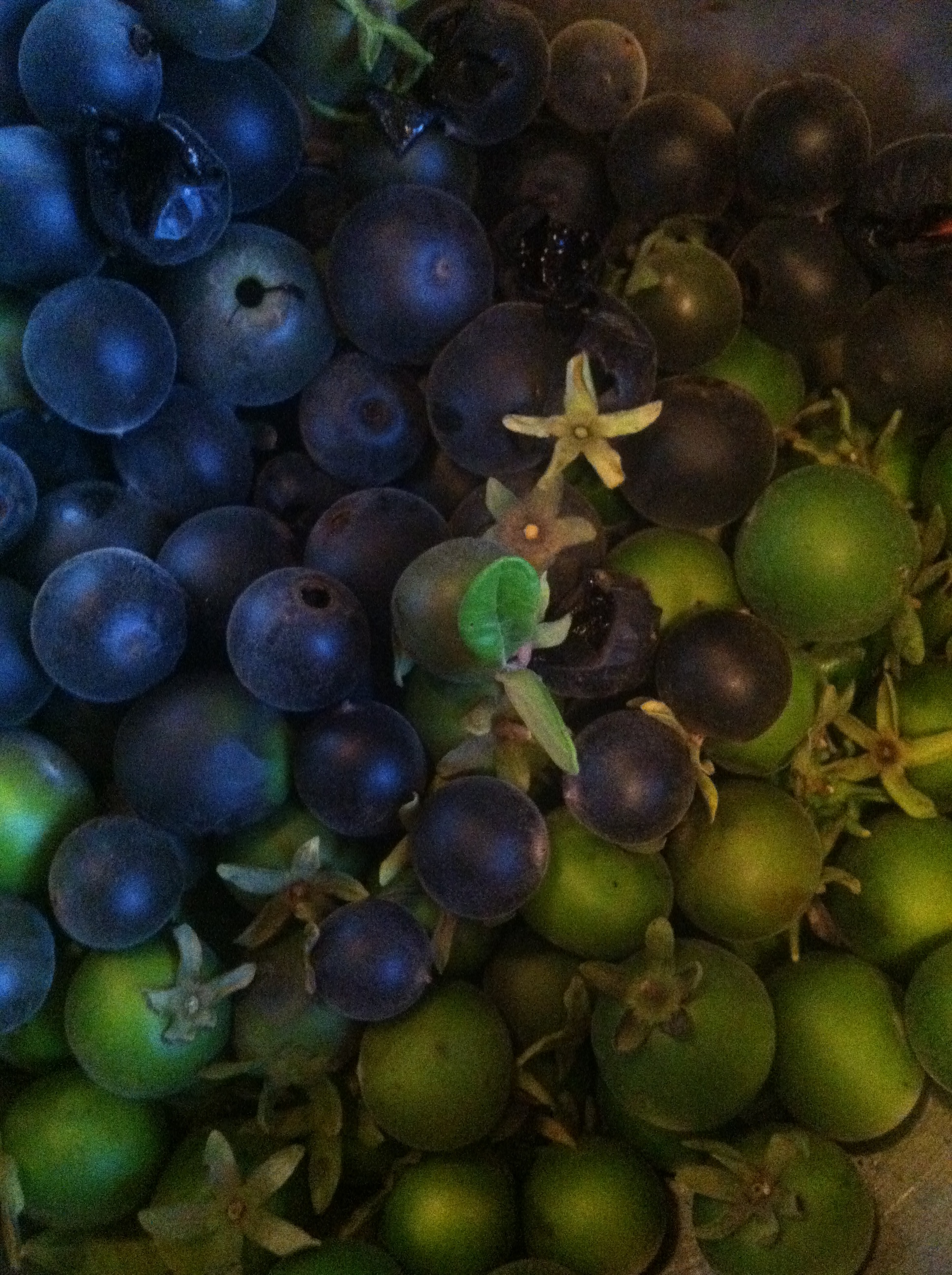
Time to harvest & soak the persimmons! This is something I can do with my left hand. My friend, Bettes, has encouraged me to paint warp skeins while I go thru my shoulder rehab. Wheels are turning!
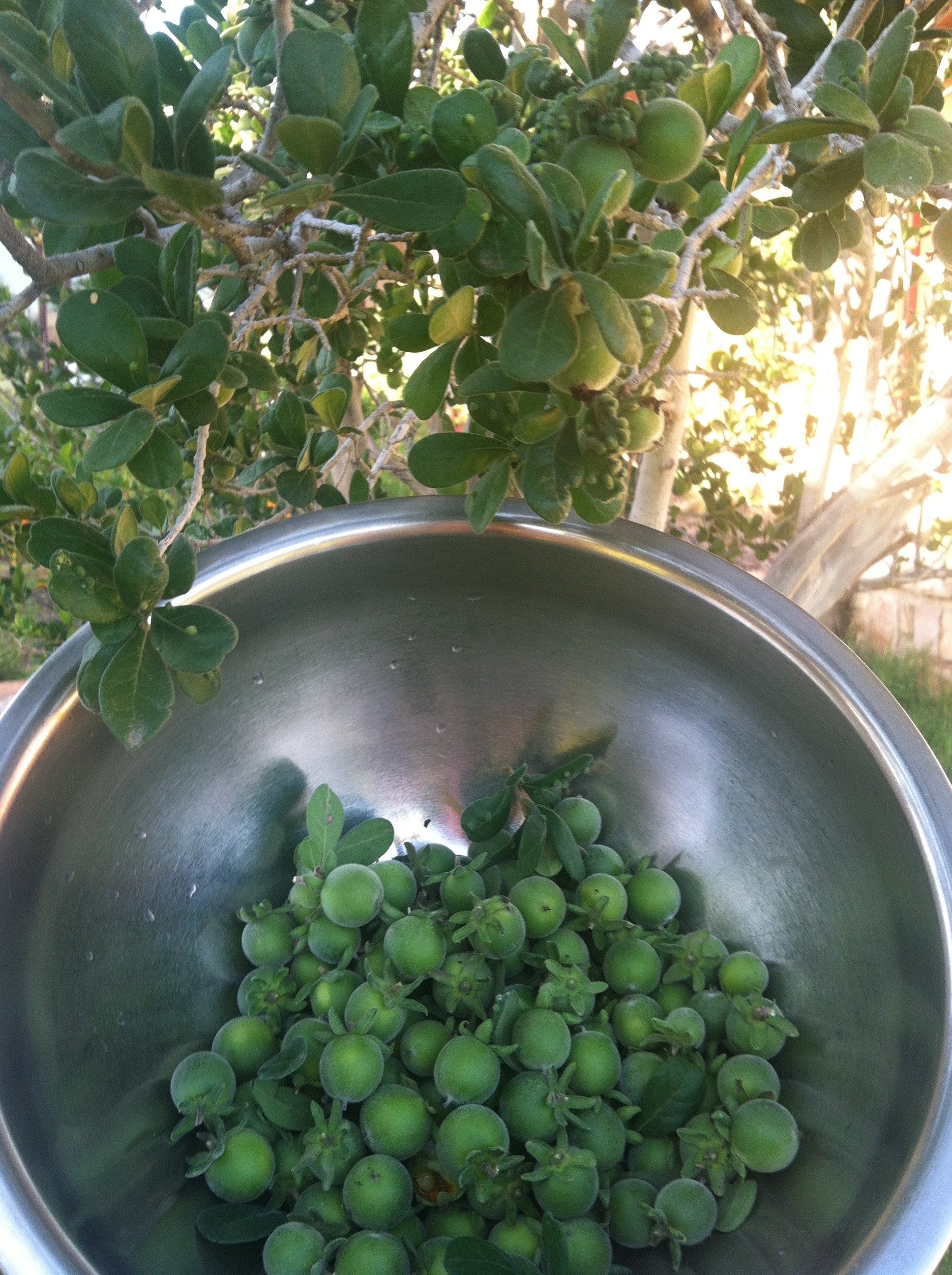
Time to harvest & soak the persimmons! This is something I can do with my left hand. My friend, Bettes, has encouraged me to paint warp skeins while I go thru my shoulder rehab. Wheels are turning!
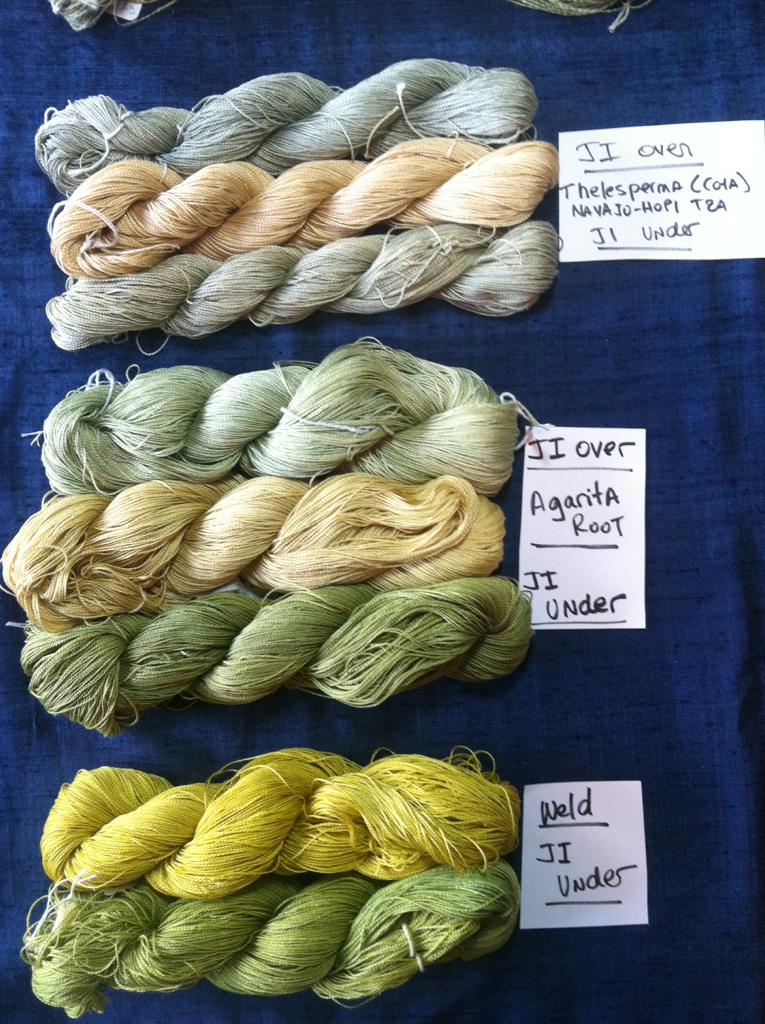
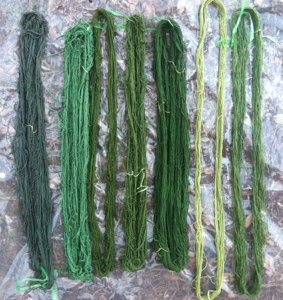
Here are examples of over dyeing and under dyeing with indigo. As I experiment with agarita, weld, cota and persimmon yellows it is fascinating to see the impact of the order color is laid on a yarn as one goes for green. Here are the resulting greens from my valley. My camera might not have captured all the green tones but they are there!
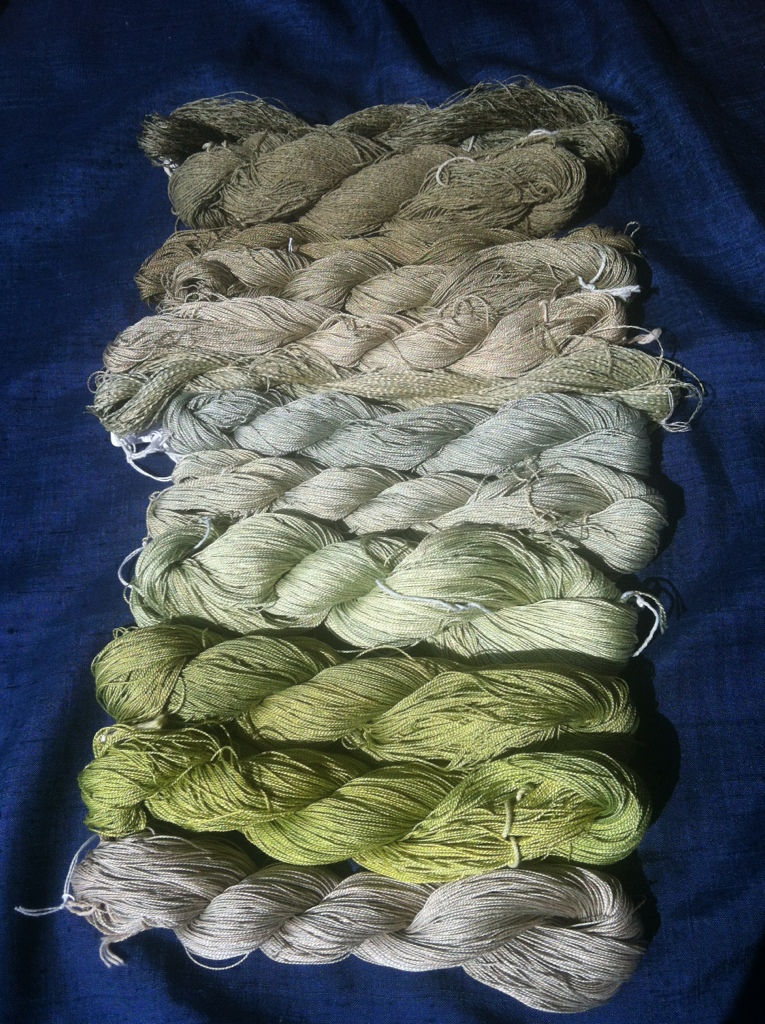
Now here are the different components. Where appropriate I have laid the yellow in the middle and placed the indigo overdyed above the yellow and the yellow over the indigo below the skein. It made quite a difference in green in how one does the color layers.
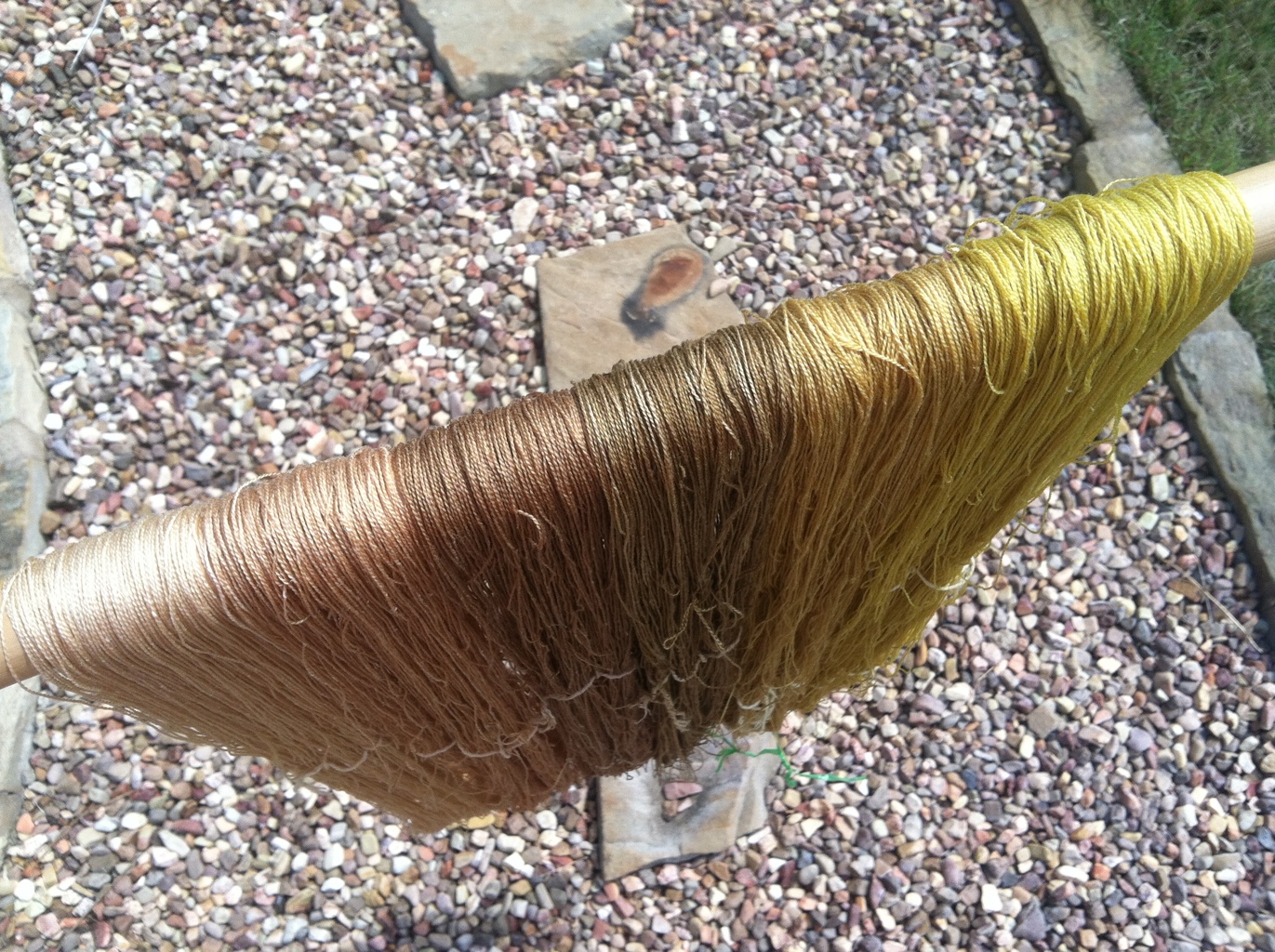
Finally here is the persimmon series. In this case I used blender indigo over the cold persimmon dip. I like that color layering better than using persimmon over indigo. It is more pleasing to my eye. The different substrates or yarns also took the dyes in different depths and yielded different tones.
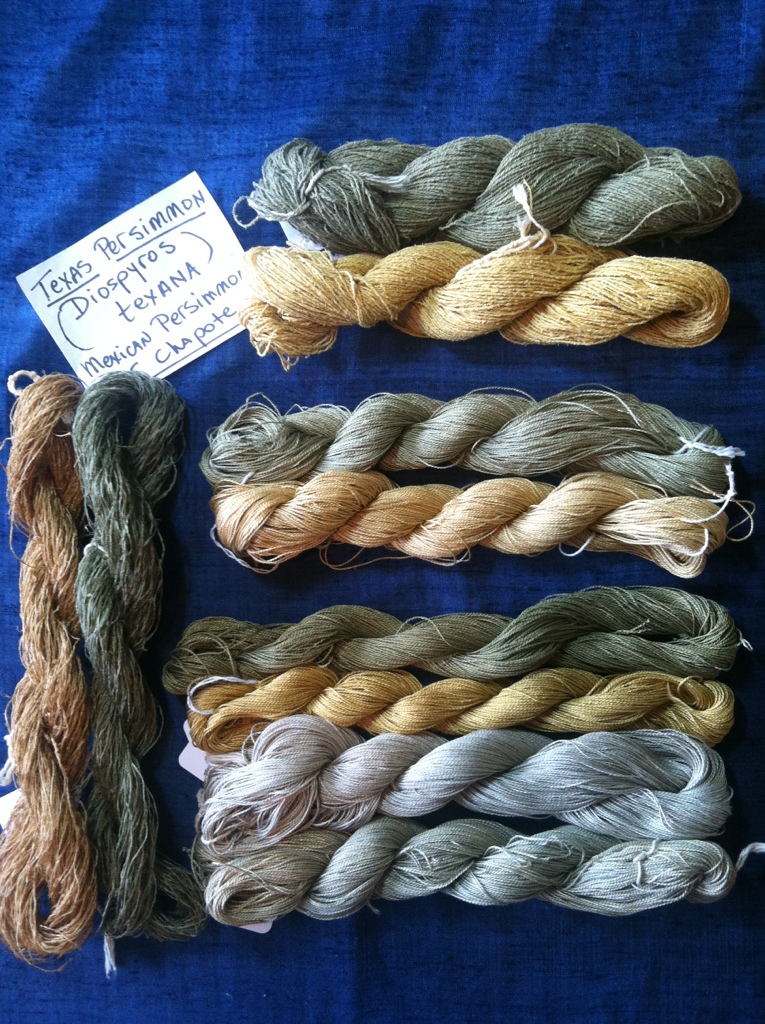
All in all a successful color journey in figuring out greens available to me in my valley!
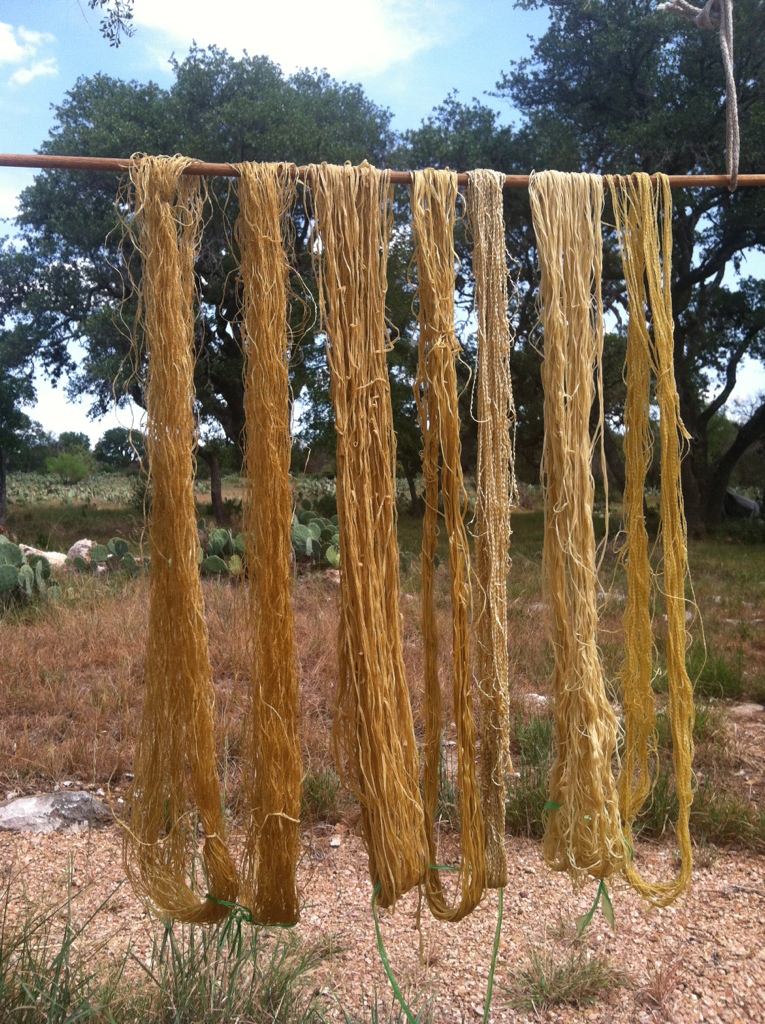
I have green samples of indigo overdyed with yellows but now I am trying indigo as the top color layer. The main experiment is overdyeing cold persimmon dips with some cota & lichen skeins thrown in. The cold dip persimmon (Texas Persimmon) appears below!
Hence the blender indigo as it doesn’t have the reduction chemicals and will impact the persimmon. Here are the wet skeins that are still changing over…definitely a different green when one flips the overdye. Will cure overnight and rinse tomorrow! The skein on the left is the lichen was a magenta.
These two recipes are my reference:
1. I’ve used the recipe at the bottom of this web page several times and it works well! I appreciate the time taken to write this up!
http://www.lustauffarben.de/faerben-faerberknoeterich-englisch.html
2. Rowland Ricketts also just posted this recipe, I need to try the 2nd recipe with some of my cotton/linen fibers. Rowland has an active indigo community on Facebook, look at http://indigrowingblue.com to track down the link.
Once again, thank you for sharing!
http://indigrowingblue.com/Dyeing_With_Fresh_Indigo_Leaves.pdf
These are silk scarf blanks that I dipped to pick up the extra blue leftover after my primary skeins! Always have something extra just to pull the leftover color! Can’t waste those leaves.
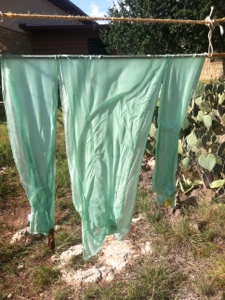
Persimmon – 2 dip Before the indigo
Look up category persimmon for more background on the Texas persimmon
To be specific I am working with Diospyros texana Texas persimmon, Mexican persimmon, Black persimmon, Chapote, Chapote prieto member of the Ebenaceae (Ebony Family)
This is a different species from the eastern persimmon used in Japan, Korea or other Southeast Asian countries which is known as the kaki. This fruit has a long tradition of being used as a cloth dye for protective measures. Here is a great article on that cultural use, also known as galot.
But I digress, I am trying to use the same techniques with our Texas persimmon, same family, most definitely a different species. I am glad to be corrected by a botanist.
So far I’ve experimented with both the green and the ripe persimmon. I’ve experimented with increasing the PH, simmering the fruit and also aging the fruit. At this point it seems that the green fruit gives one a yellow toned color and the ripe fruit pushes towards golden brown. So far I have a 1 year old green vintage which I’ve tested with one dip. More to come on that one. I need to test with iron to see how that pushes towards black but last year’s experiment just gave me a golden brown. I am certainly getting a good variety of yellow, gold and amber colors. All will make great undertones for over dyeing. I just need to decide what to over dye them with….agarita, Japanese indigo, madder root, or lichen?
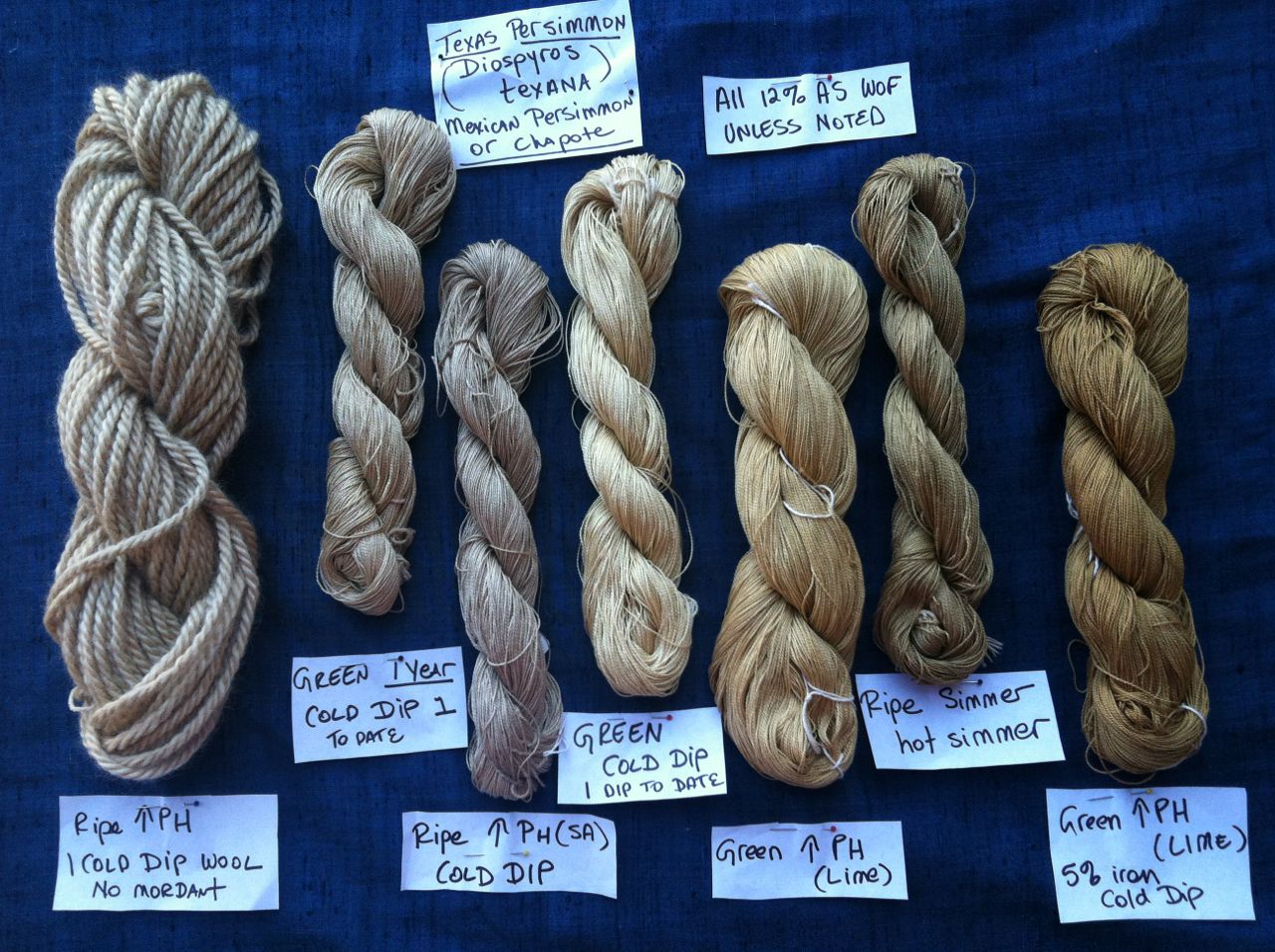
One can look at these colors for hours and convince oneself that these are yellow, but if one compares these skeins to the colors produces by cota, agarita and weld one can see how these persimmon colors are all heavily impacted by their tannin content. In other words, there are some beautiful browns, some with a yellow undertone but the brown (tannin) definitely shows.
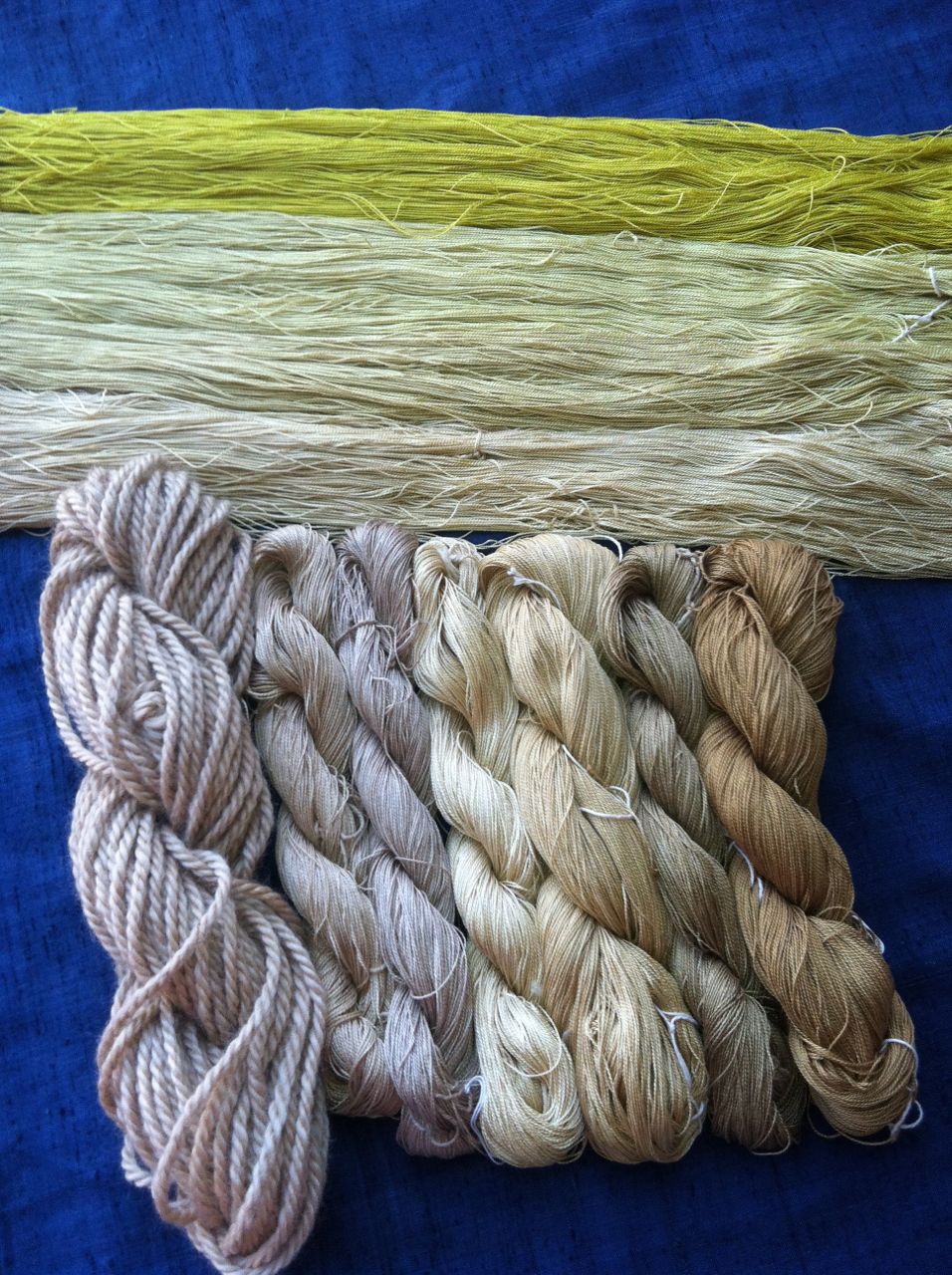
Here are some other parts of the process:
In process today, ripe persimmon with a tablespoon of soda ash added to kick up the PH. This skein will go thru the cold dye bath several times and oxidize in this nice warm sun. I’m still searching for that elusive black. No iron in this dye pot…..yet. I’ve set aside the seed and pulp to save for grinding for another dye pot. Next up is to overdye one of my Japanese Indigo skeins to test suitability for green shades.
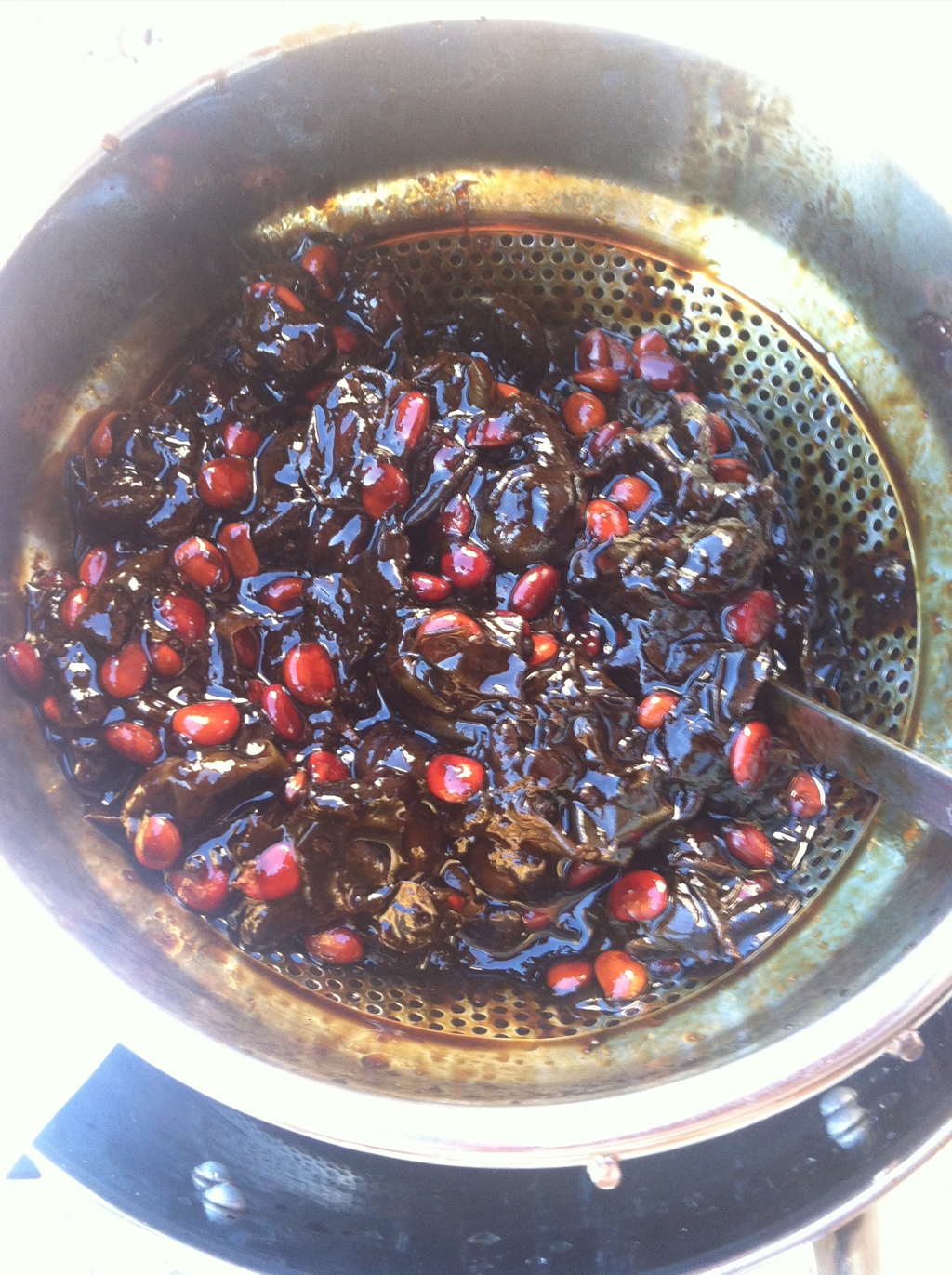
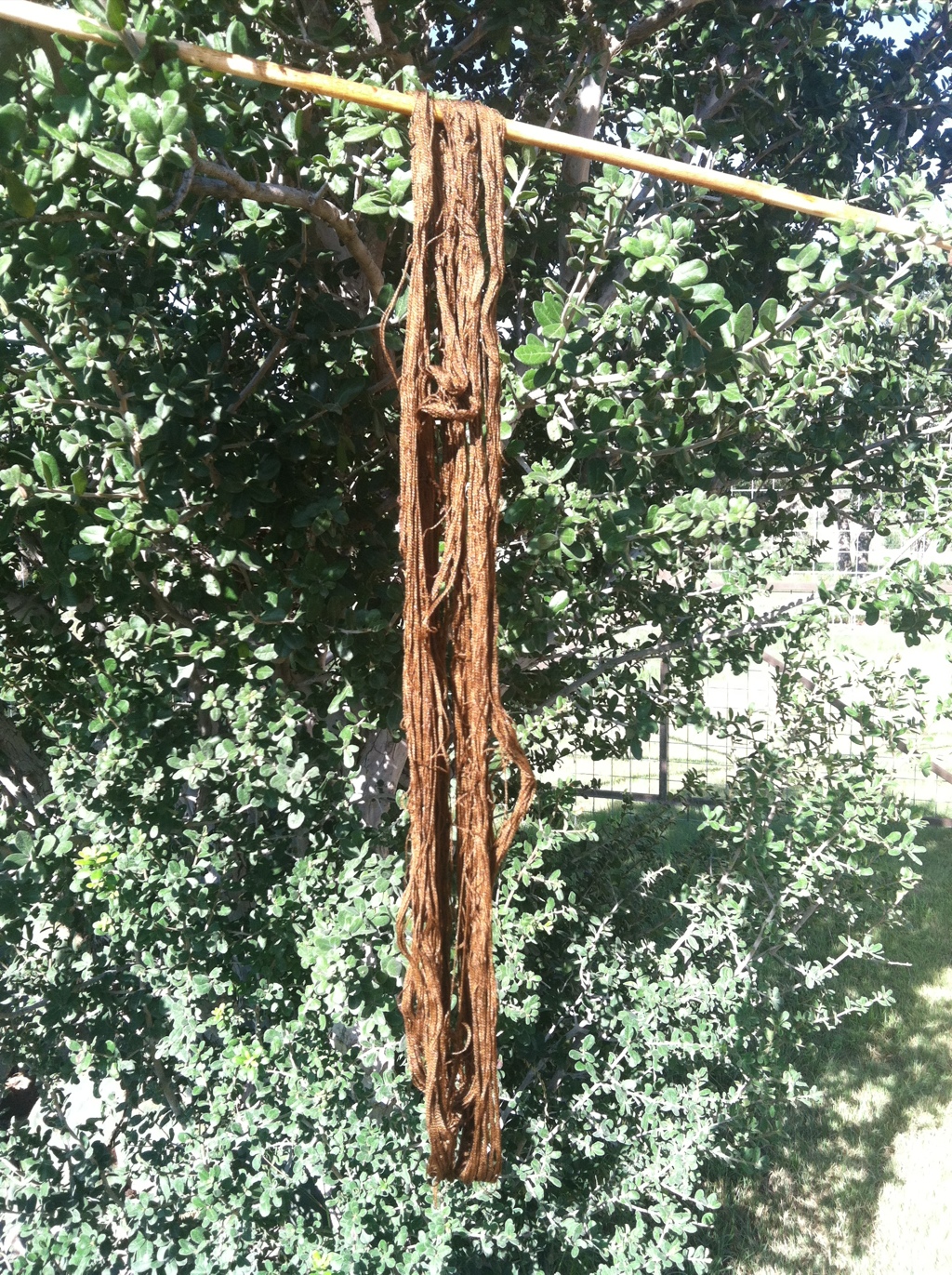
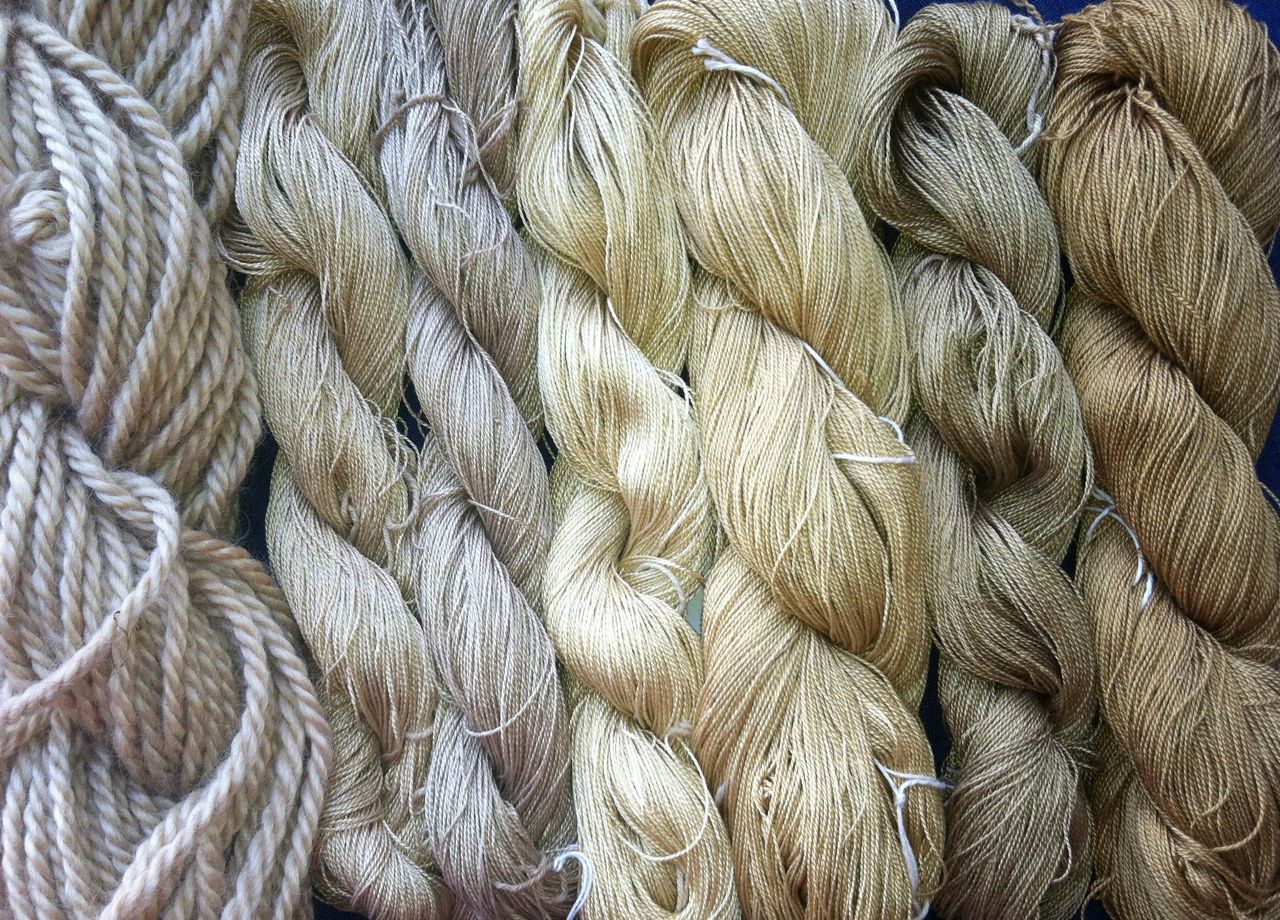
The dye skeins are drying before I wash them, this will let the dye bond strengthen. Oak bark with 3 different modifiers on the left. Fresh persimmon in the middle and agarita with two different modifiers on the right. A nice collection of neutrals to over dye or use to push a brighter color in the warp.
One of those agarita skeins is bound for the fresh indigo pot today to see how the green looks with indigo over the agarita yellow.
Recipes! You know, we are harvesting enough green & ripe persimmons that I think I’ll try making jelly or wine. A good idea from a friend was to pulp the fruit and freeze it. Defrost when needed.
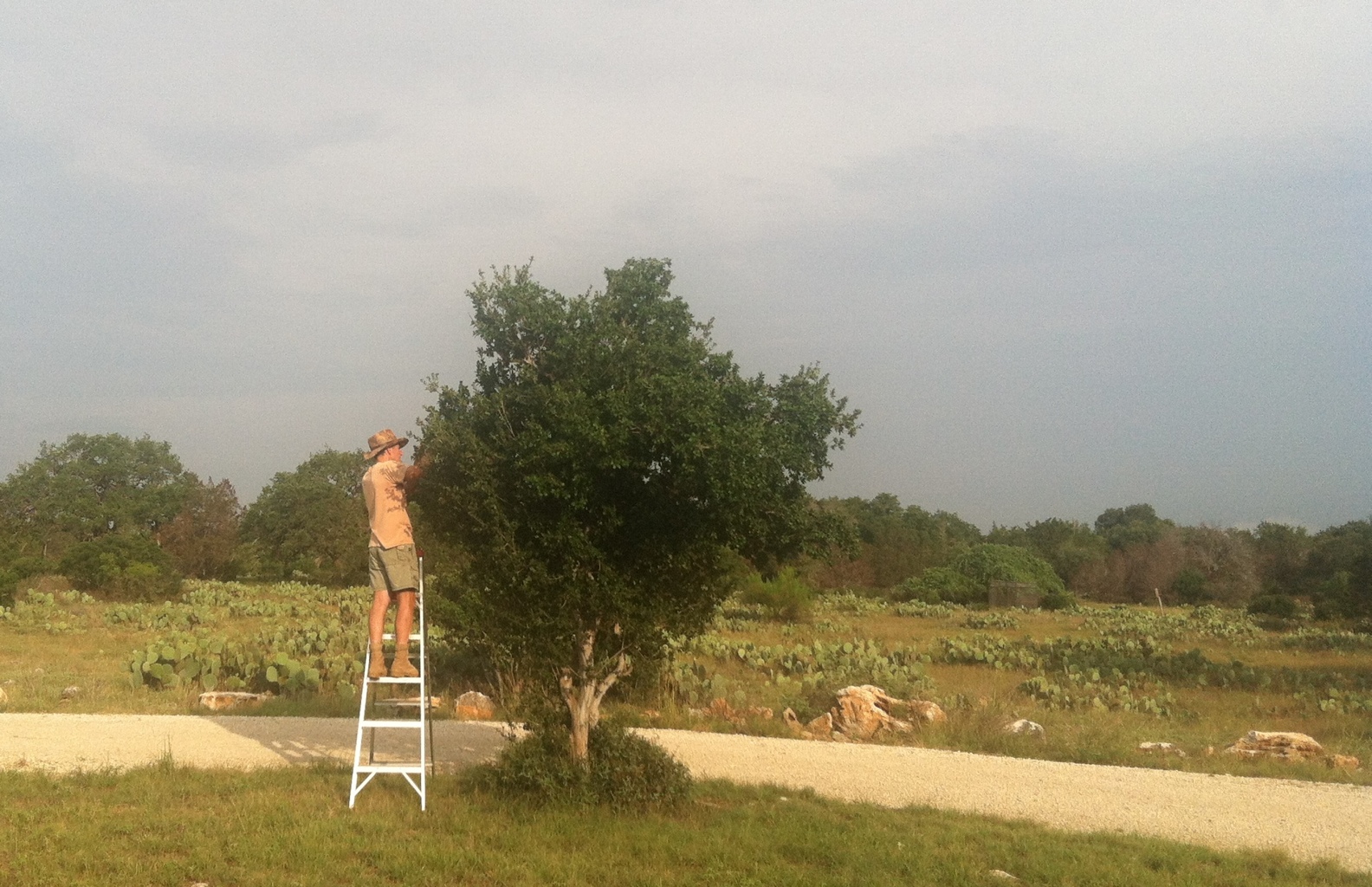
Texas Persimmon (Diospyros texana, Mexican Persimmon, Chapote ) is a very common shrub or tree here in Central, West, and South Texas. It can be found growing in thickets or mixed in with other trees in woodlands. It is very easy to spot with its smooth gray trunks and branches.  There are male and female trees so there will only be fruit on the female trees. This makes finding fruit more challenging since you can’t assume that each tree will have fruit. Instead you have to wander around looking for the black fruit on the trees. Even then you will find only a few ripe fruit among the many green fruit. If you find a small tree you can pull off the fruit by hand. If the branches are too high or thick to bend down, you can put down a tarp and shake the branch. I tried…
View original post 701 more words
I’ve posted photos of the size of the persimmons and some cross sections as they ripen. I have my 2011 vintage persimmon juice aging. The plan this year is to test the ripe persimmons immediately & after fermentation. The crop looks heavy enough that some will go to the indigo fructose pot also.
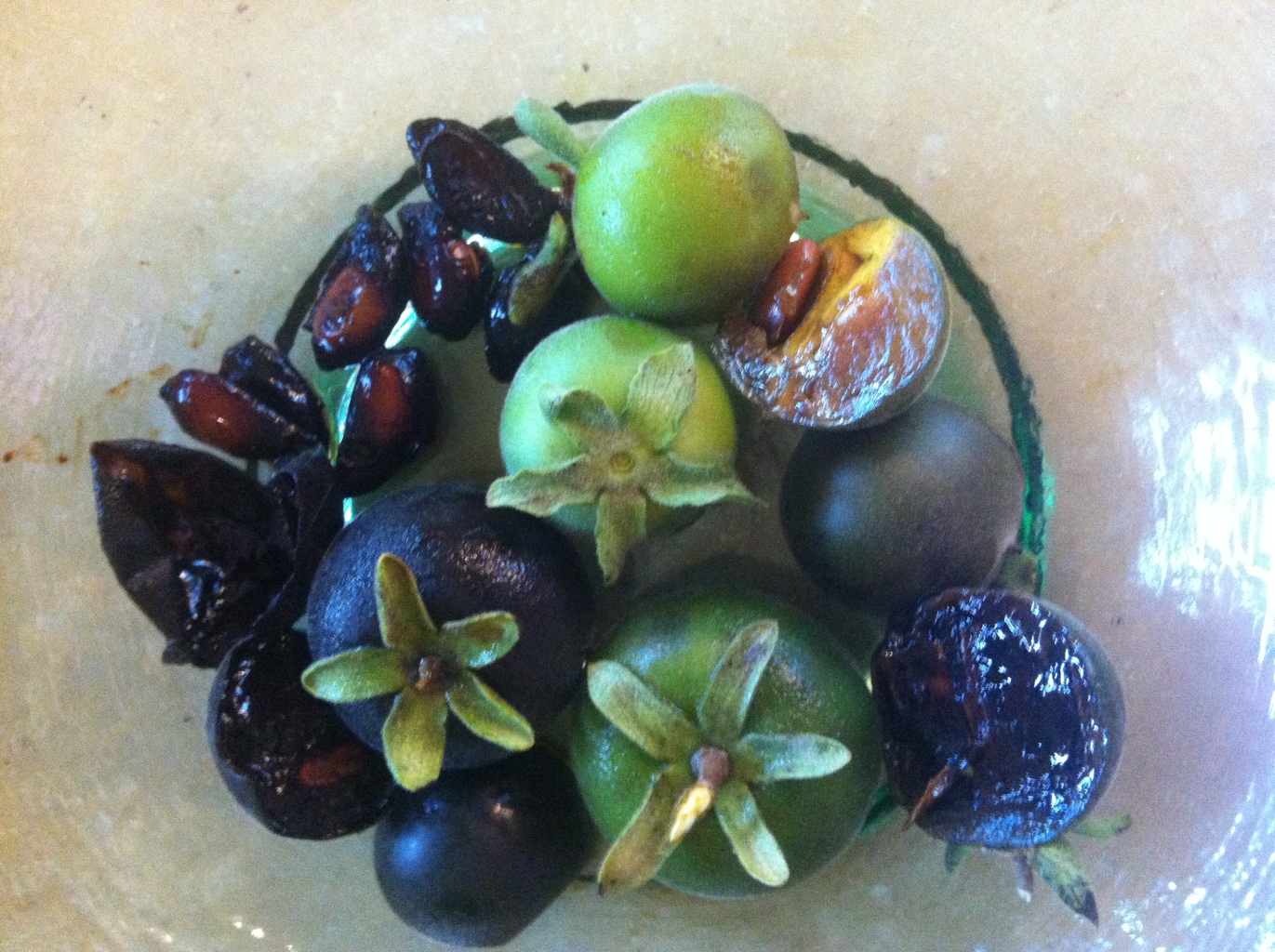
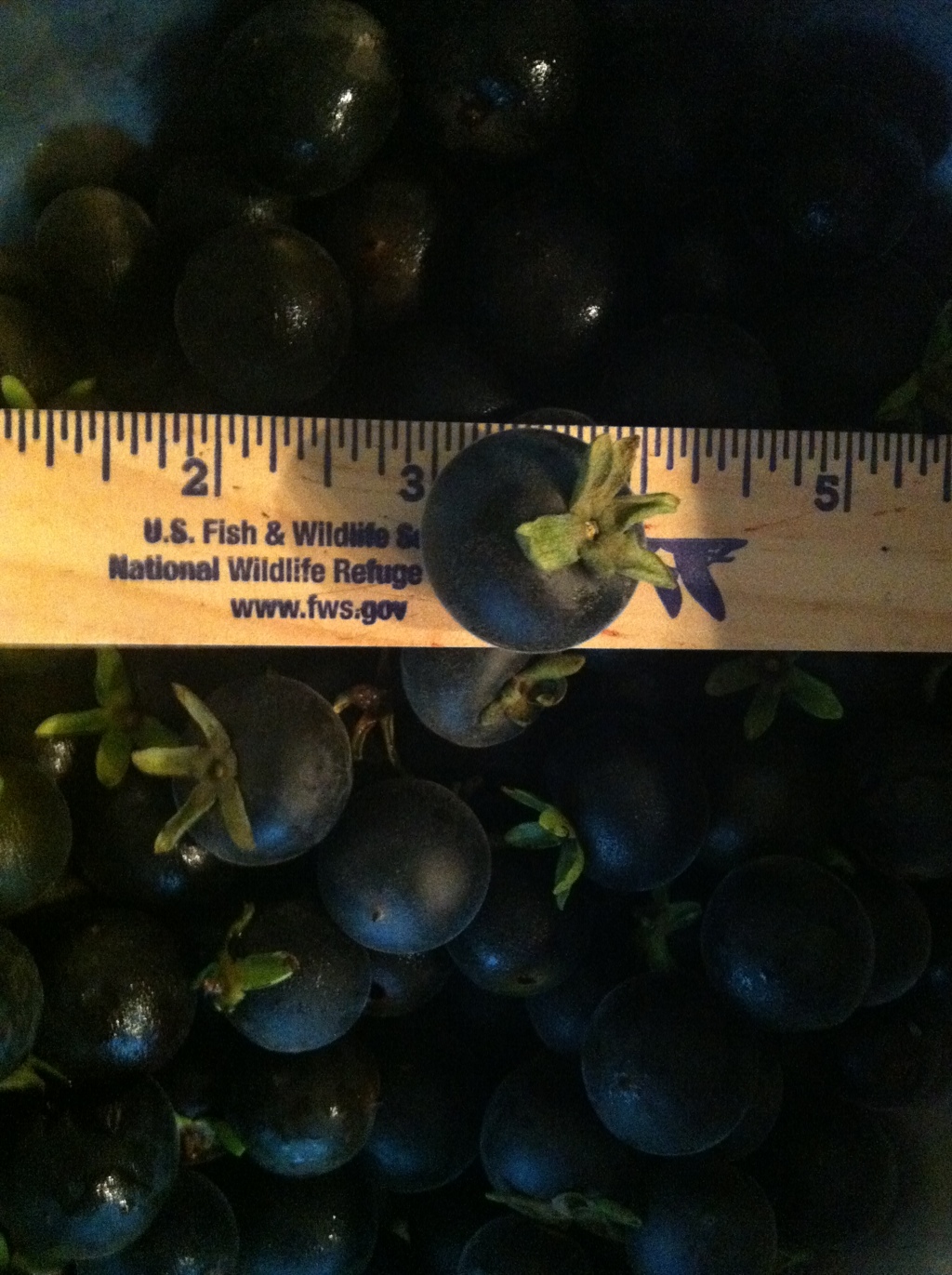
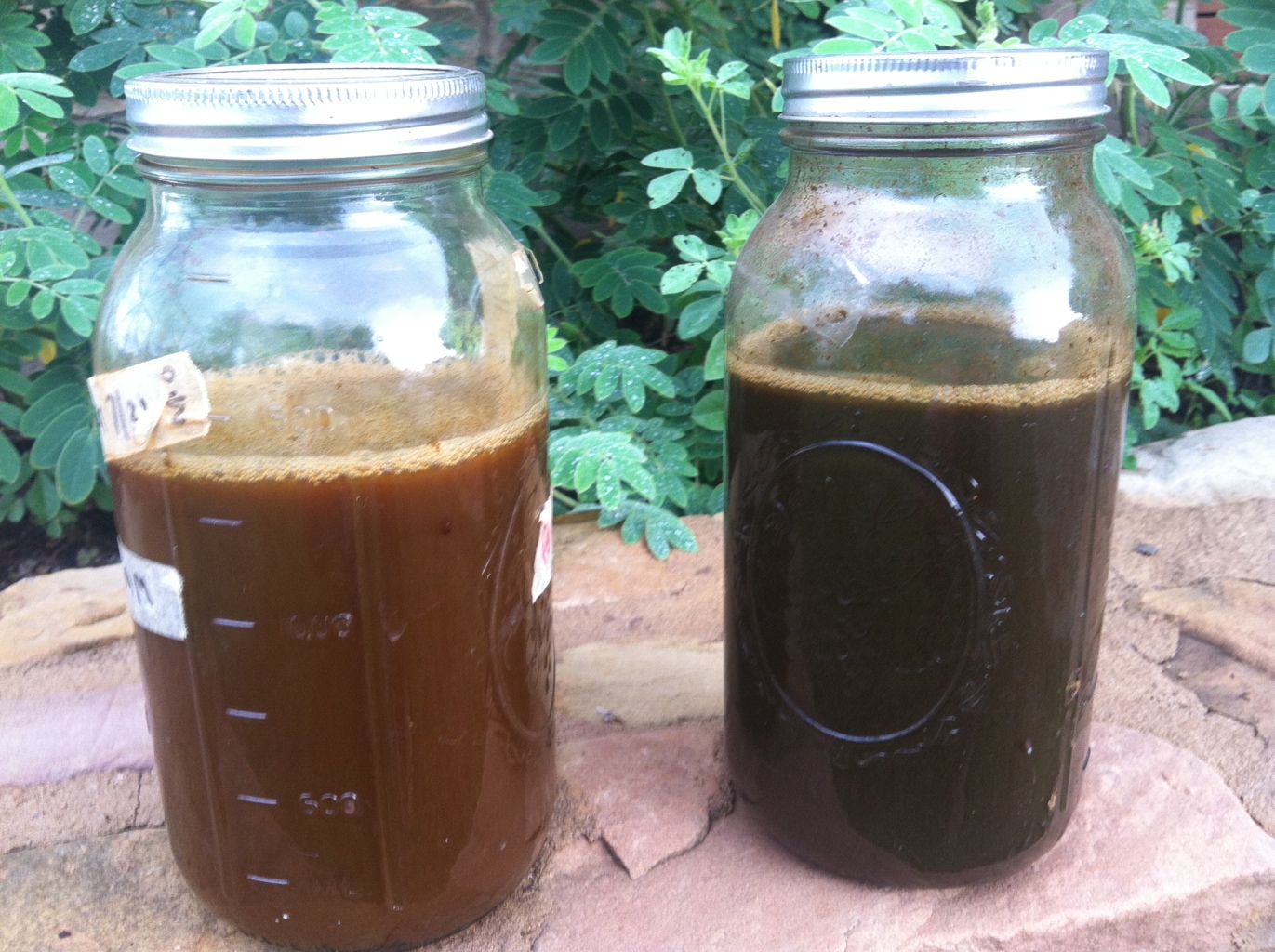
Well, the birds started early but I caught up with them before they took all the ripe persimmons. Over the next week I’ll work hard on sharing the dark purple fruit with my dye pot & the birds. Last year’s gold came from the green and purple blush fruit. This year I’ll experiment with the dark ripened fruit alone to test that color.
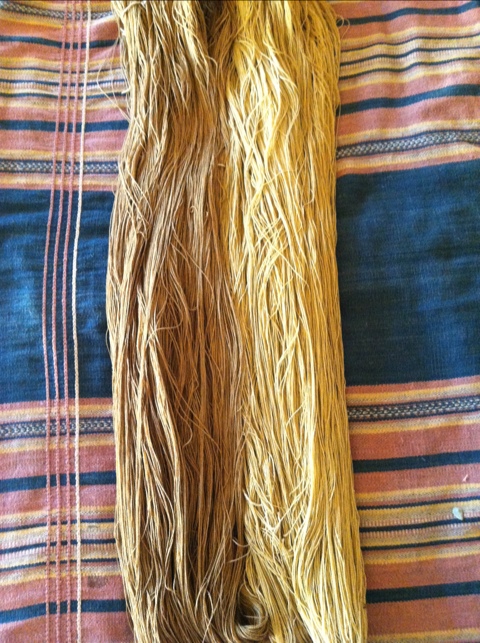
Well, I got some nice tannin golds from the persimmon. I used a bit of iron with one skein. They are displayed on top of a southern Lao cotton blanket. These skeins are destined to be over dyed with drought lichen to see what other color combinations lurk here in my valley.

 debmcclintock
You must be logged in to post a comment.