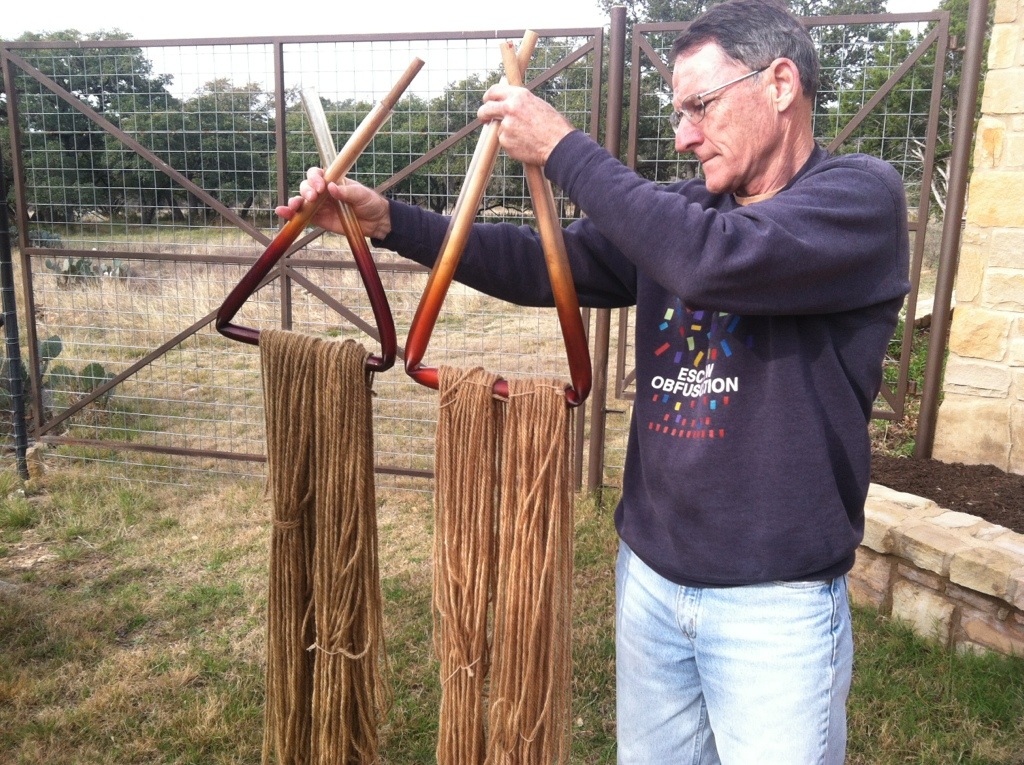
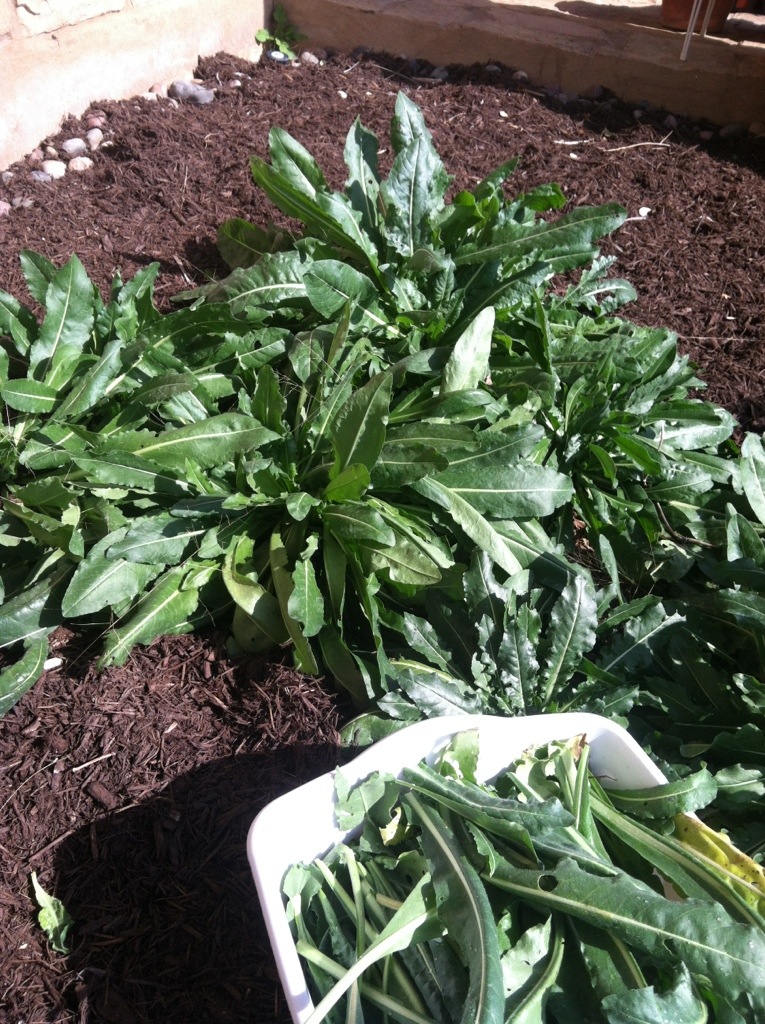
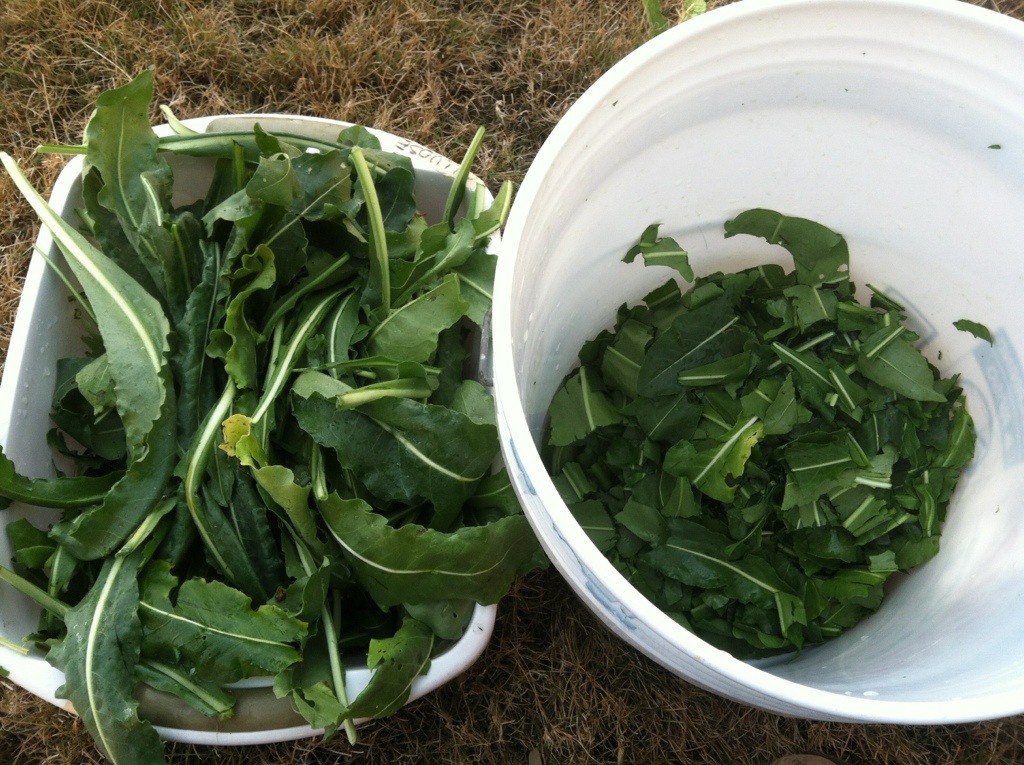
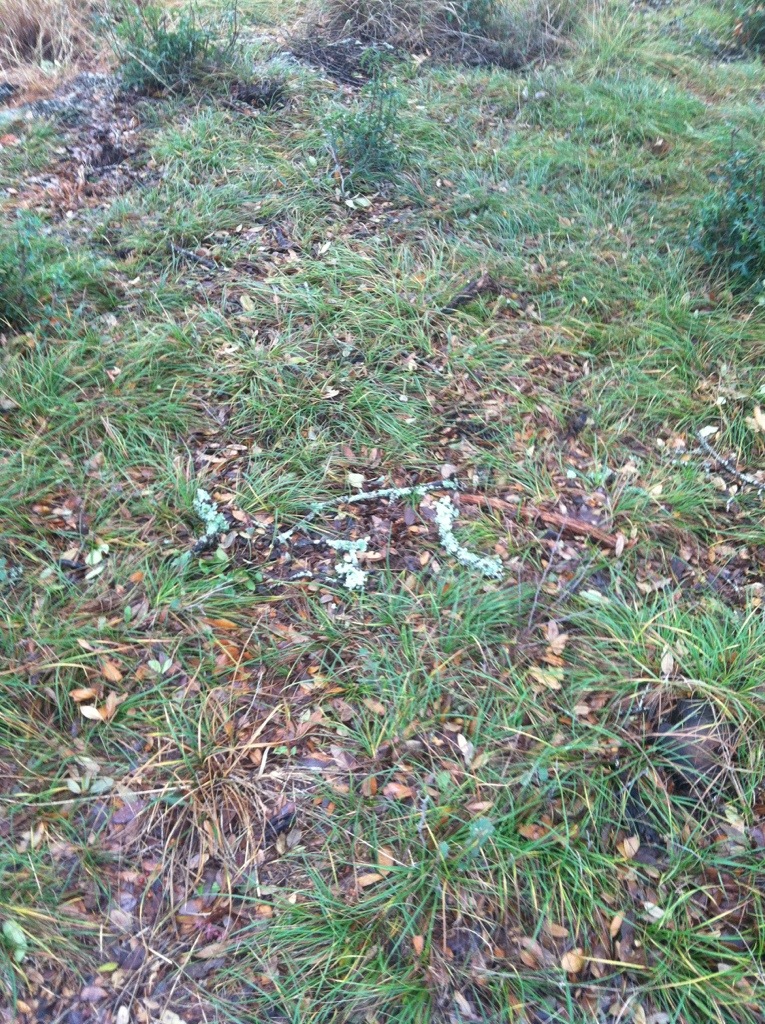
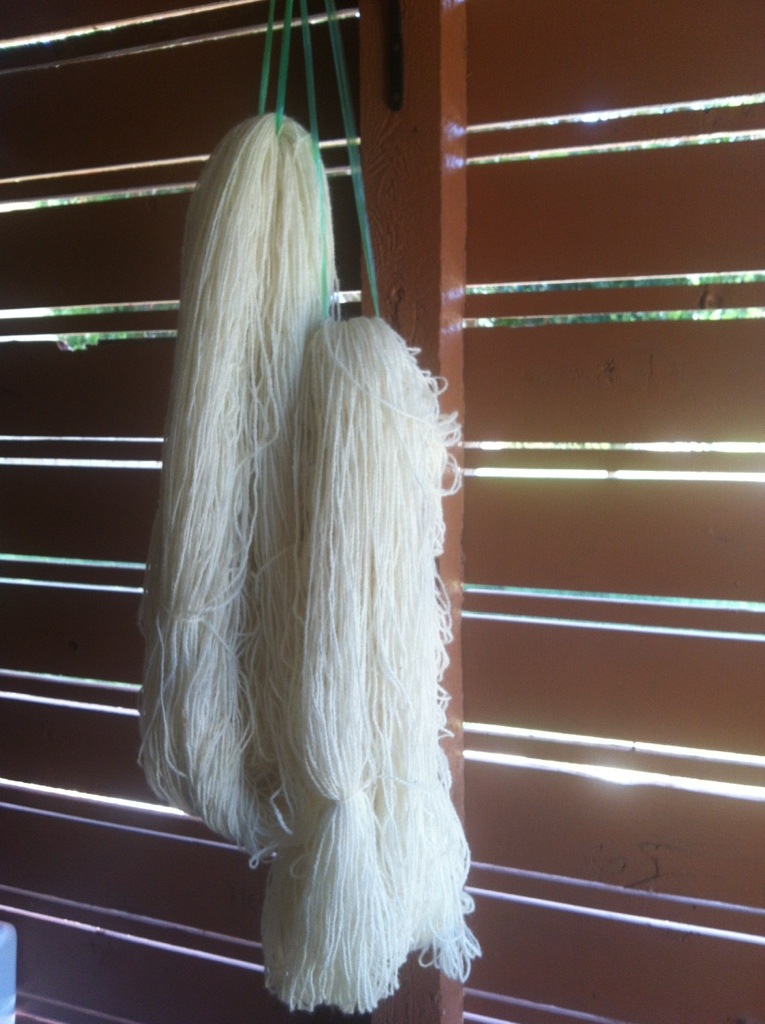
One of the most important prep steps in mordanting is scouring the substrate. In this case Crown Colony wool is the substrate. It’s been in the Orvis bath to take out spinning dirt and grease. Next up my husband is helping me with the mordant bath of alum sulfate and cream of tarter. The dyestuff will be my weld that we’ve been harvesting this year. I’ll run a comparison bath to my dried weld leaves from last year. At least that’s the plan for now!
Chemical dyes with training wheels
21 JunI drove down to San Antonio to the Surface Design Association Conference marketplace earlier this month. I met some friends from New York, Delaware and Colorado. We had a great time going thru the art galleries and fiber art supply venders. One of my short term goals was to do some warp painting or other surface design on some warps while I wait for my shoulder to come back into action. My shoulder is on the mend but I have limited range of motion and cannot lift. Throwing a shuttle and lifting dye pots or wet skeins is a no go right now! So I picked up some supplies from Marlene Glickman at http://silkdyes.com/supplies.html She walked me thru making silk blanks into beautiful scarves using a baggie, the dyes and taking advantage of the crease dye method. I saw the potential for some easy warp painting!
When all the conference attendees were off in the keynote speech I took advantage of Marlene’s time and she gave me an intro to using the silk paints. They only work on protein fibers, attach when wet and don’t require heat setting, an interesting acid dye formulation. Since I am a chemical dye rookie this seem like the least investment of time and effort to do some training wheel chemical dyeing.
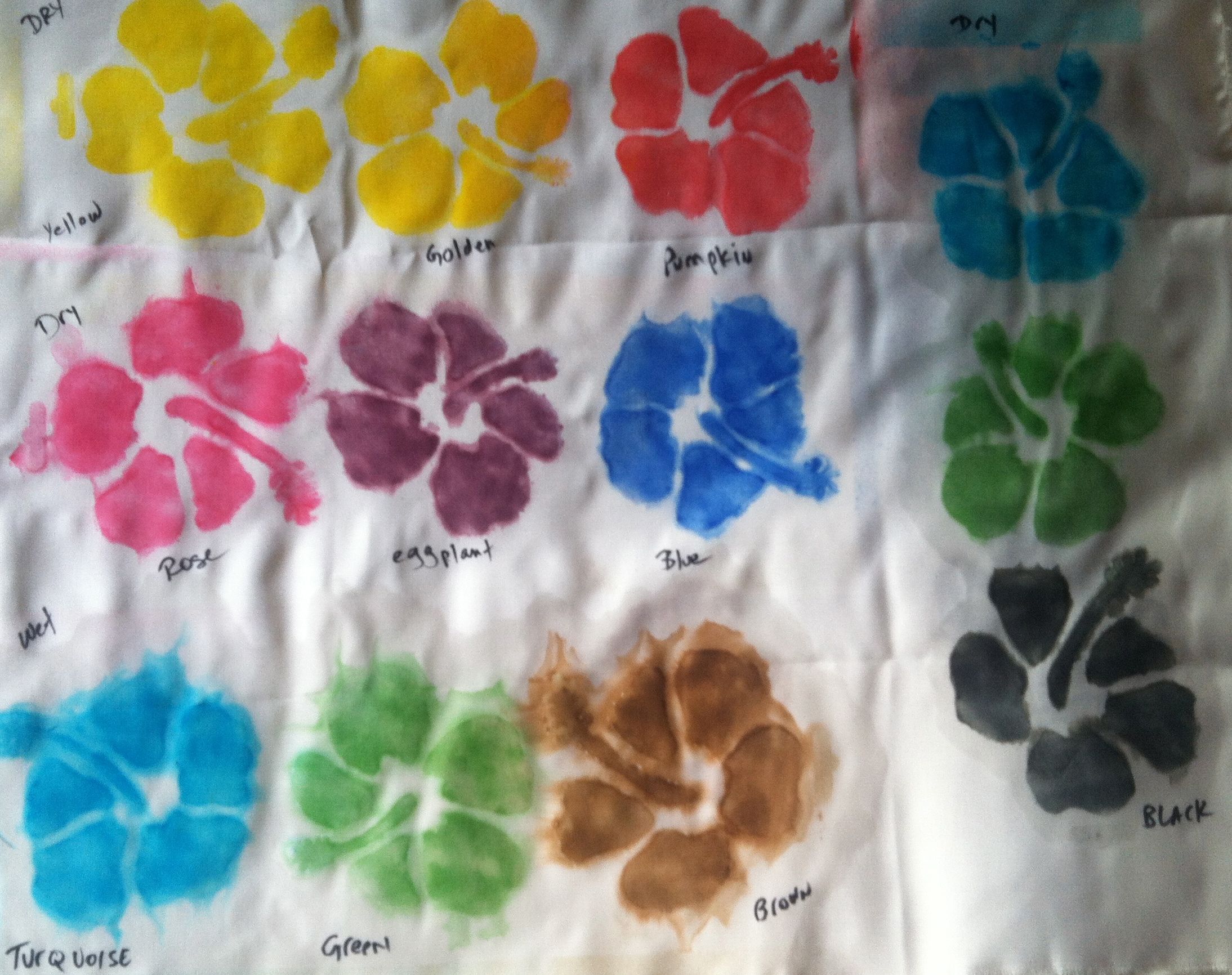
The goal is to prep a couple of warps and see how they look with the stenciling. Before I tackle a warp (which requires winding – more shoulder action) I worked with some stencils and some screen stencils. I also worked with an open stencil on dry and wet silk fabric and made myself a color chart of the 10 colors on hand, all prepped at the same strength.
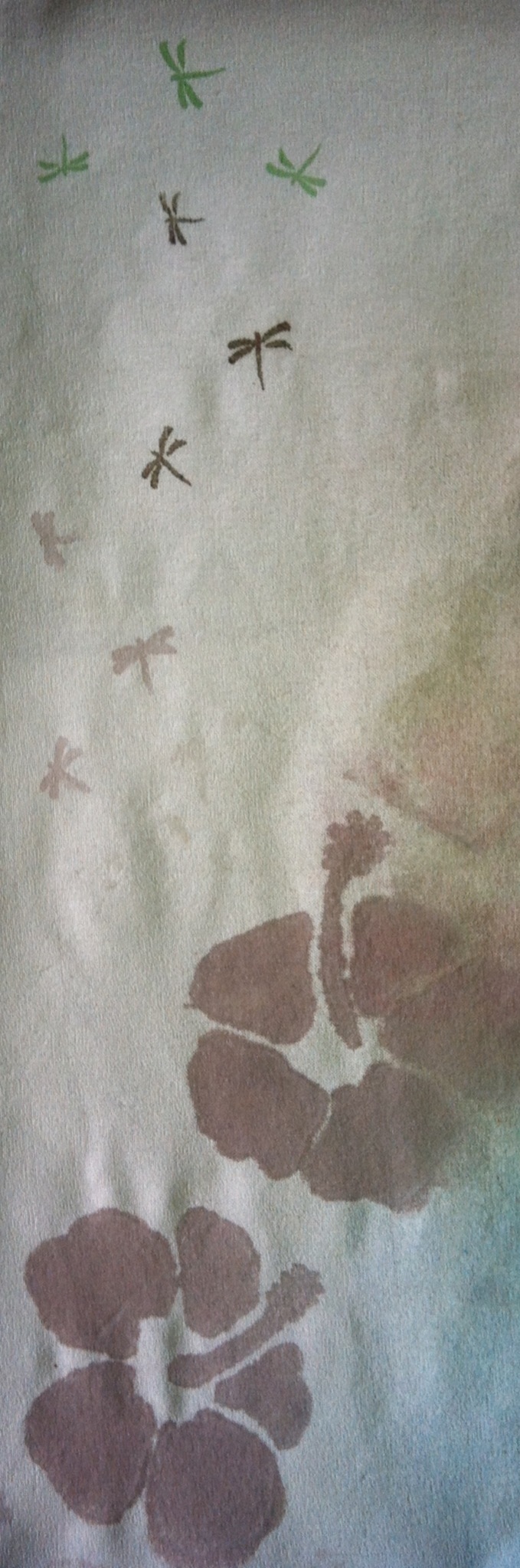
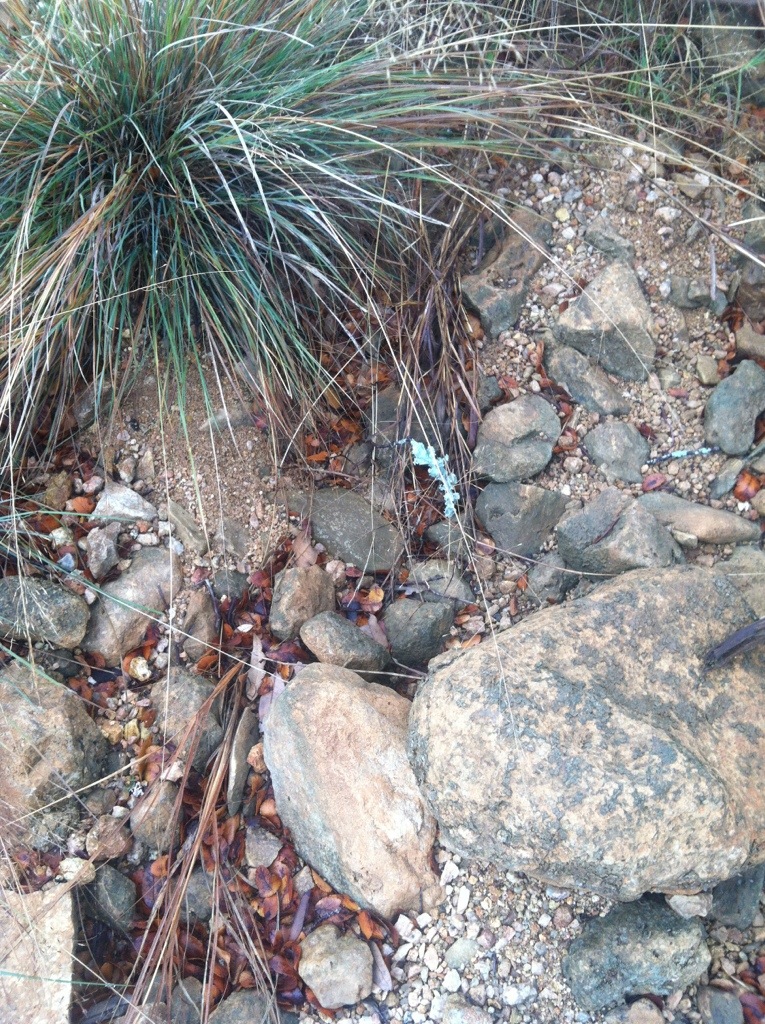
Marlene introduced me to using shaving cream as a medium to use a silkscreen to transfer a dye. The dragonflies below start with the green dye and a rose & green mixed together using the shaving cream as the transfer media. I also pulled some lichen and mixed in into the next cream batch and gave that a try. The lighter color rose brown is the lichen screen print.
So now I’ll wash and iron the results and ponder the next step. I have guar gum I can use for the transfer media with my lichen and persimmon so that would be another direction. Perfection in the printing is not my goal. An ikat image on a warp is definitely going to be fuzzy so I’m not concerned with the open stencil wet edges. For now I’ll stay with my chemical dyes and see what else I can do with them.
Diospyros Texana Persimmon Smashing
13 JunOnce again I am working with Diospyros texana Texas persimmon, Mexican persimmon, Black persimmon, Chapote, Chapote prieto member of the Ebenaceae (Ebony Family).
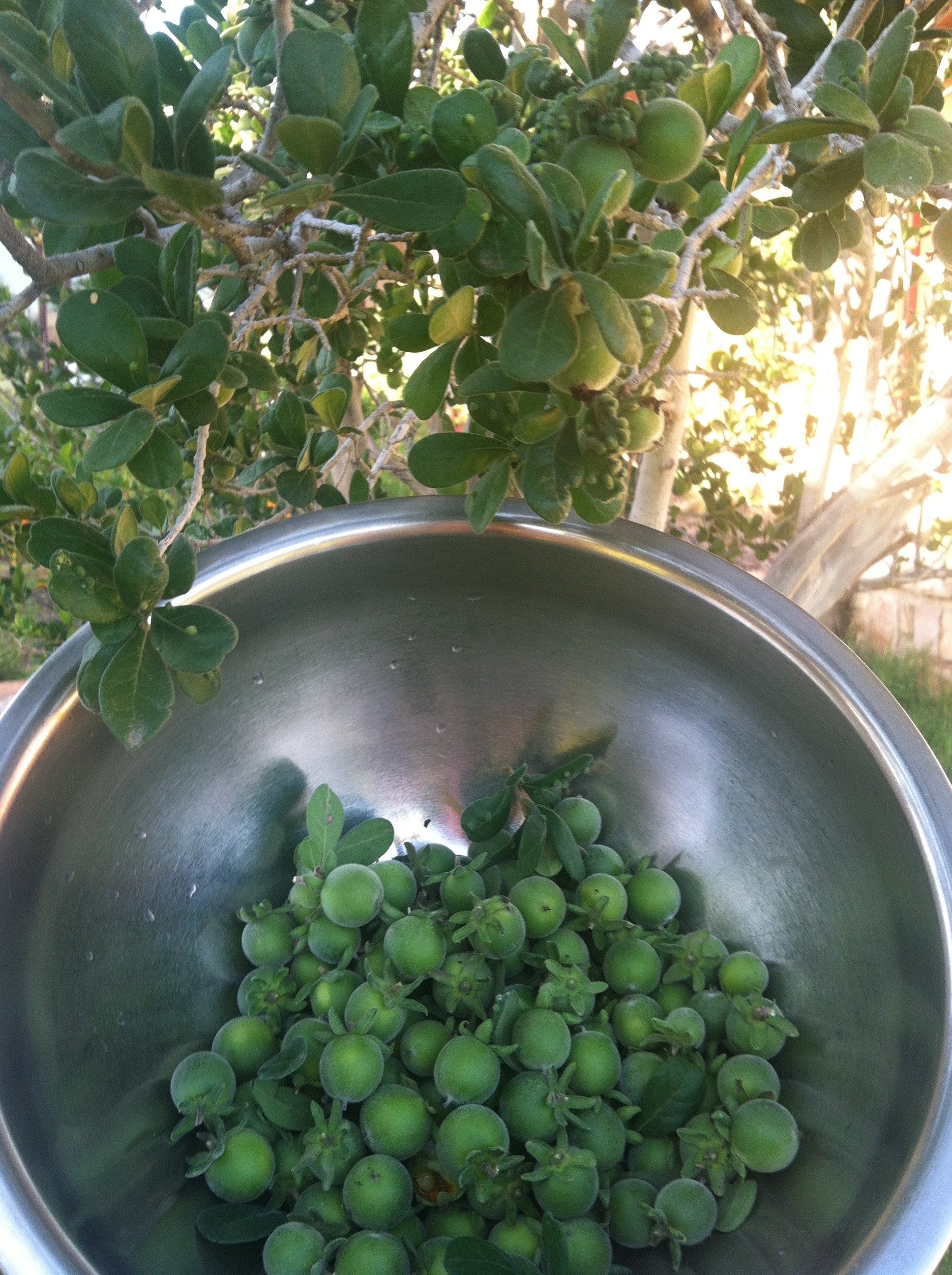
About two weeks ago I did an early pick. The persimmons were green and hard, not a hint of softness. They’ve soaked for two weeks so they are very easy to smash. I dumped them into my plastic tub & pulverized them as best I could. The meat and seeds were released and one can see the yellow dye. They’ve gone back in the jar for another week’s soak and then it will be time for some dyeing.
Other branches have already been weighed down by the persimmons’ weight OR broken by raccoons starting their tastings early. John and I trimmed those and I’ve started another jar soaking. To my eye and feel it still looks early for good color but one just has to test to understand the color window!
My Lecture at Textile Museum
11 JunI am sharing the news of my lecture at the Textile Museum on July 18th in Washington DC.
Some of you have seen my lectures on the Lao, Cambodian and other looms in the Southeast Asia region via Complex Weavers or thru a weaving guild presentation.
I give full credit to the folks on this side of the ocean that taught me to weave and gave me the opportunity to teach, the weavers on the other side of the ocean in Southeast Asia that proudly showed me how they wove and the anthropologists that patiently assisted along the journey’s way to understand the cultures around the loom.
I am happy to have been given the opportunity to explain how these exquisite cloths are created by traditional and contemporary weavers on very simple looms from the weavers’ point of view. If you cannot make it, please mark your calendar on July 18th and send me calming thoughts! Please pass the word to any whom you may think would be interested in this lecture.
Regards Deb McClintock, Independent Scholar & Weaver
Weld & Shoulder progress
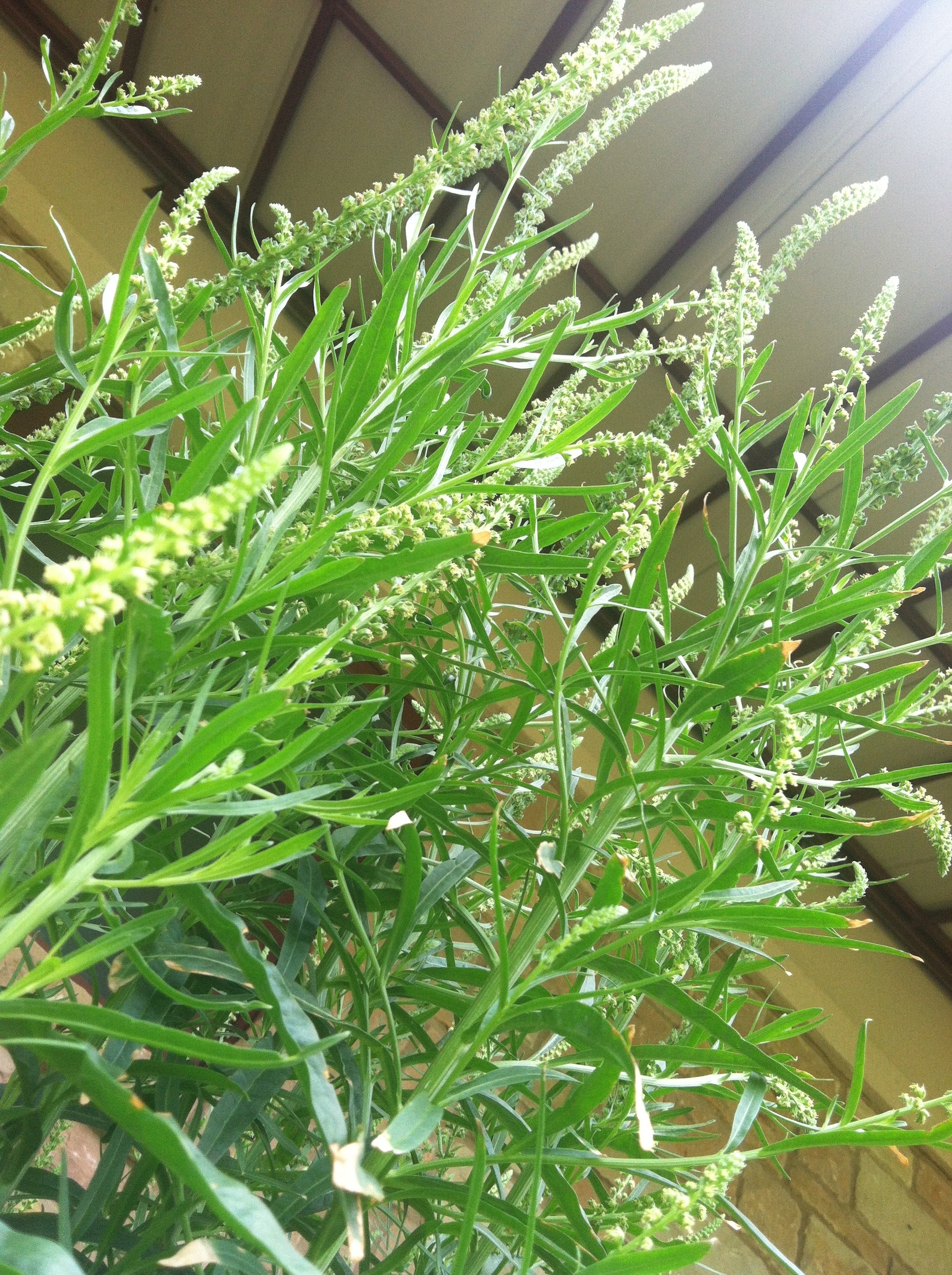
28 MayMy weld and madder root are close to harvest, both for color and seeds. Below is a photo of the tiny weld blooms.
I did end up with shoulder surgery on May 8th. My bicep head tendon was partially torn and needed stitches and some shoulder spurs had to be removed. Fascinating! Both combined to create pain and slow me down on the dye front. I’m out of lifting action until Aug at least.
In the meantime I’m pursuing time at the loom with some light short term weaving and designing for some rugs. I’ll be ready to create once my arm recuperates !
But I’ll need to be very nice to my hubby so I can run this weld seed dye pot soon!
Overdyeing acorn & oak galls with woad on the side!
7 MarTest drive today for my shoulder with my husband’s help! I got on his calendar!
Acorn and oak gall to be over-dyed with my Parmotrema Austrosinense lichen. Purple over yellow tones, I’m thinking a brown. Hopefully a nice neutral brown to brighten other colors. We’ll see. There is always the iron afterbath to take it darker.

In the meantime as my hero is learning how to turn wool skeins in the dye pot I am harvesting 2nd year woad to over-dye some last year woad blue that I want a shade darker.
Shoulder sidetrack and a great source of dye basics!
3 FebI am taking a break from dyeing due to a shoulder injury. Shoulder spurs are painful and greatly discourage one from heaving wet wool around in dye pots! I should be back in operation soon. My husband is pondering a block and tackle system for me on a small scale to give me a couple more years at the dye pot. I’d be interested in hearing from folks if they have come up with a solution. My first thought was a tripod game hoist but I’ve been talked out of that!
I wanted to remind folks about Maiwa’s blog. They are a fantastic source for natural dye supplies and information if the Canadian dollar exchange is on our side. It ebbs and flows, but they have a great blog here
http://maiwahandprints.blogspot.ca/2010/09/natural-dyes-introduction.html
They do a great job of illustrating and explaining the basics. Enjoy! We are lucky to have that resource.
Parmotrema Austrosinense
1 JanWe have not had significant rain since September 2012 so it was really nice to get the .3 inches of rain for the new year! This moisture made the morning walk gathering lichen much easier as the lichen has rehydrated and has a greenish gray glow against the winter grasses and the wet weather creek bed. We haven’t had enough rain for the creek to run but I can assure you that the lichens are happy.

Over the past dry months we’ve had 3 significant wind events so I’ve gathered the branches against the tree trunks waiting for moisture to make it easier to separate the windfall lichen from the tree branches. I think this will be a good lichen harvest week, until the sun sneaks back out and dries everything out again.
Happy New Year to all!
Looms of Southeast Asia – Nov 8th in San Antonio
5 NovHi guys, I thought I’d let folks know that I will be presenting a program on the Looms of Southeast Asia at the San Antonio Guild Meeting at 9:30am. The guild starts at 9:30 am with coffee and a short business meeting and I am up after the business meeting. I hope to see some of you there! Very few people teach this subject and I am glad to teach it here in Texas.
Here is the guild webpage: http://sanantoniohandweavers.com/SA_Handweavers_Guild/Welcome.html
Program: Travel with Deb to Southeast Asia and learn about the simple looms used to create intricate patterns. We’ll compare loom mechanisms and their differences in Vietnam, Laos, Thailand, Cambodia, and Burma. We’ll also look at how reeds are handmade to order. Towards the end of the seminar, those who are interested will learn about making heddles by hand. Deb will have sample textiles and tools for you to touch and look at.
Check out an earlier blog entry for other travel info https://debmcclintock.wordpress.com/2012/07/08/vietnam-side-trip-weaving/
Directions: The guild meets at Colonial Hills United Methodist Church in a room over their Child Development Center. URL for a Mapquest map is below. Basically, get to the northwest segment of Loop 410, exit Vance Jackson, go north a short way past a largish intersection at Callaghan, and the campus will be on your left, and what you see from the street will probably look deserted. At the far left of the campus there is a drive going past a couple of yellow and green recycling bins to the back side of the buildings. You will find plenty of life back there. We will have a hostess at the door.
map link is http://mapq.st/OUulJA
The street address of the church is Colonial Hills United Methodist Church, 5247 Vance Jackson Rd, San Antonio, TX 78230


You must be logged in to post a comment.