Archive | Dye RSS feed for this section

Chemical dyes with training wheels

21 Jun

I drove down to San Antonio to the Surface Design Association Conference marketplace earlier this month.  I met some friends from New York, Delaware and Colorado.  We had a great time going thru the art galleries and fiber art supply venders.  One of my short term goals was to do some warp painting or other surface design on some warps while I wait for my shoulder to come back into action.  My shoulder is on the mend but I have limited range of motion and cannot lift.  Throwing a shuttle and lifting dye pots or wet skeins is a no go right now!   So I picked up some supplies from Marlene Glickman at  http://silkdyes.com/supplies.html  She walked me thru making silk blanks into beautiful scarves using a baggie, the dyes and taking advantage of the crease dye method. I saw the potential for some easy warp painting!

When all the conference attendees were off in the keynote speech I took advantage of Marlene’s time and she gave me an intro to using the silk paints.  They only work on protein fibers, attach when wet and don’t require heat setting, an interesting acid dye formulation.  Since I am a chemical dye rookie this seem like the least investment of time and effort to do some training wheel chemical dyeing.

The goal is to prep a couple of warps and see how they look with the stenciling.  Before I tackle a warp (which requires winding – more shoulder action) I worked with some stencils and some screen stencils. I also worked with an open stencil on dry and wet silk fabric and made myself a color chart of the 10 colors on hand, all prepped at the same strength.
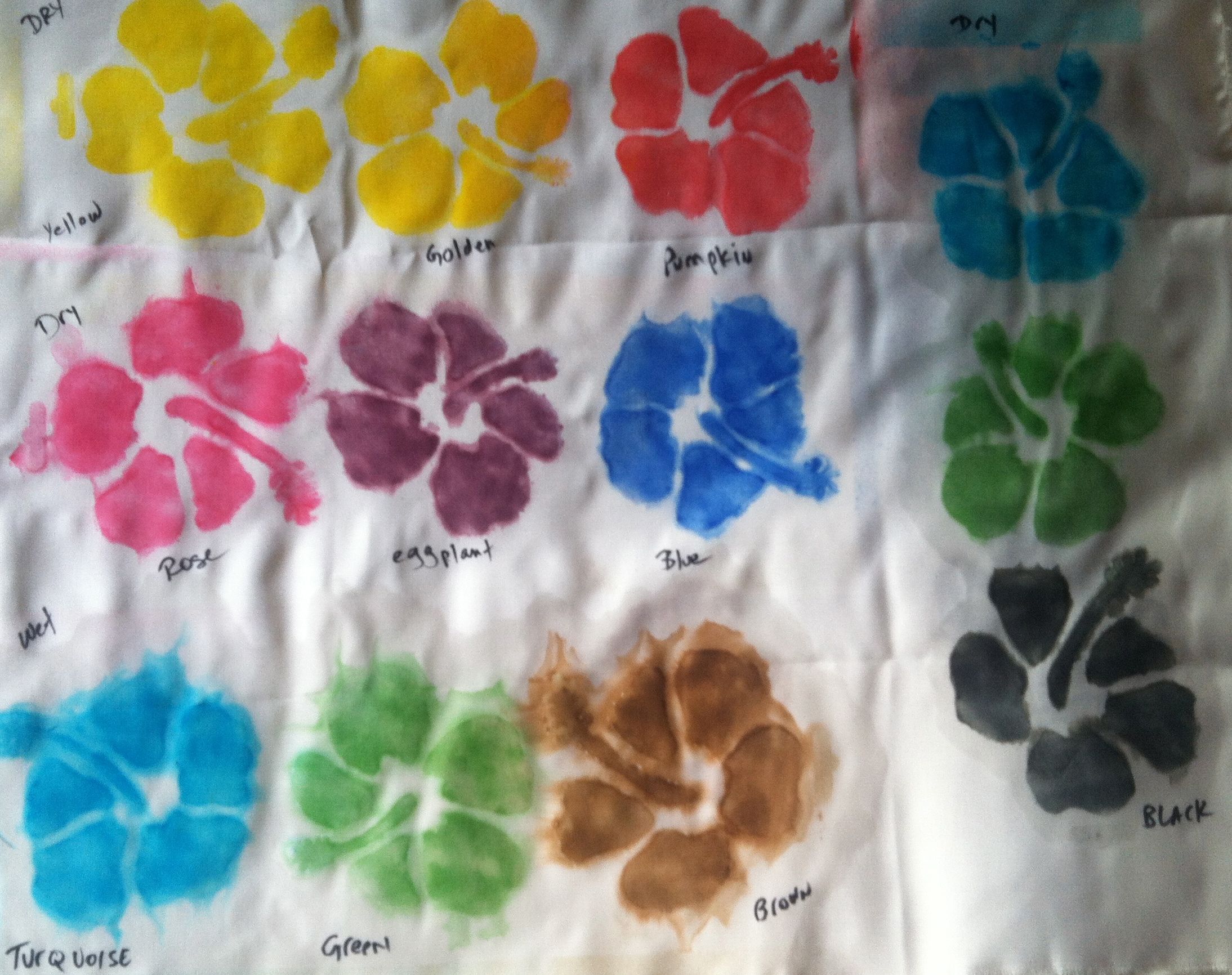
Experimenting with dry & wet application

Experimenting with dry & wet application

Marlene introduced me to using shaving cream as a medium to use a silkscreen to transfer a dye.  The dragonflies below start with the green dye and a rose & green mixed together using the shaving cream as the transfer media.  I also pulled some lichen and mixed in into the next cream batch and gave that a try.  The lighter color rose brown is the lichen screen print.
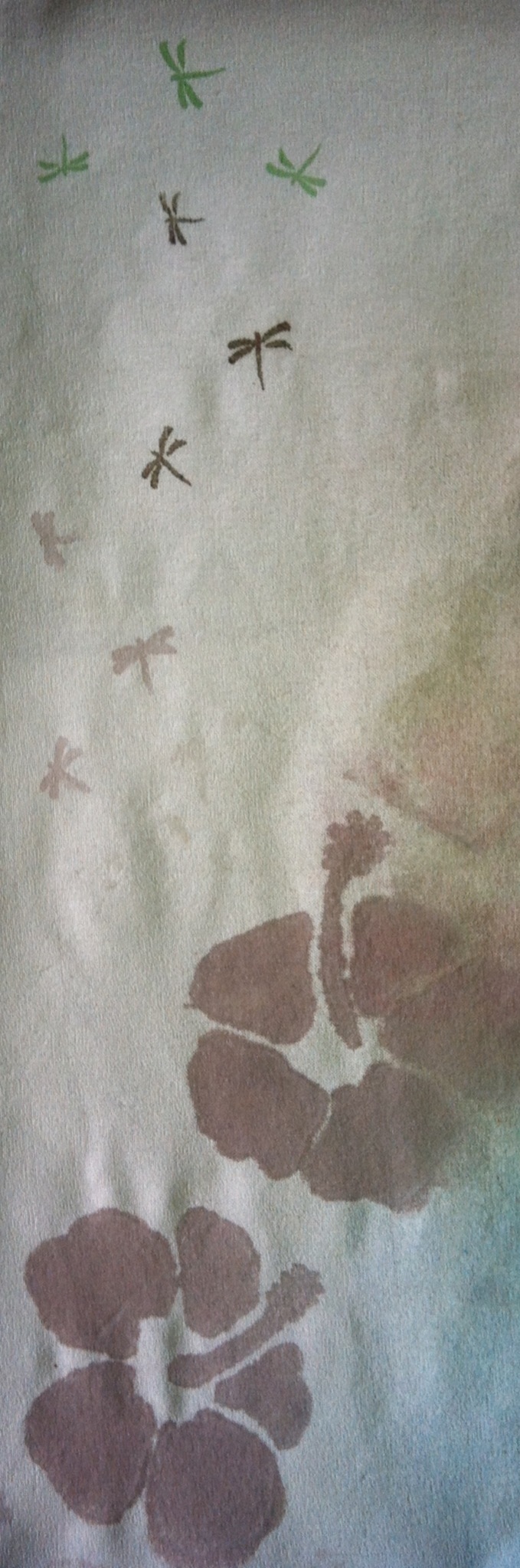
Experimenting with shaving cream and lichen

Experimenting with shaving cream and lichen

So now I’ll wash and iron the results and ponder the next step. I have guar gum I can use for the transfer media with my lichen and persimmon so that would be another direction. Perfection in the printing is not my goal. An ikat image on a warp is definitely going to be fuzzy so I’m not concerned with the open stencil wet edges. For now I’ll stay with my chemical dyes and see what else I can do with them.

Diospyros Texana Persimmon Smashing

13 Jun

Once again I am working with Diospyros texana Texas persimmon, Mexican persimmon, Black persimmon, Chapote, Chapote prieto member of the Ebenaceae (Ebony Family).

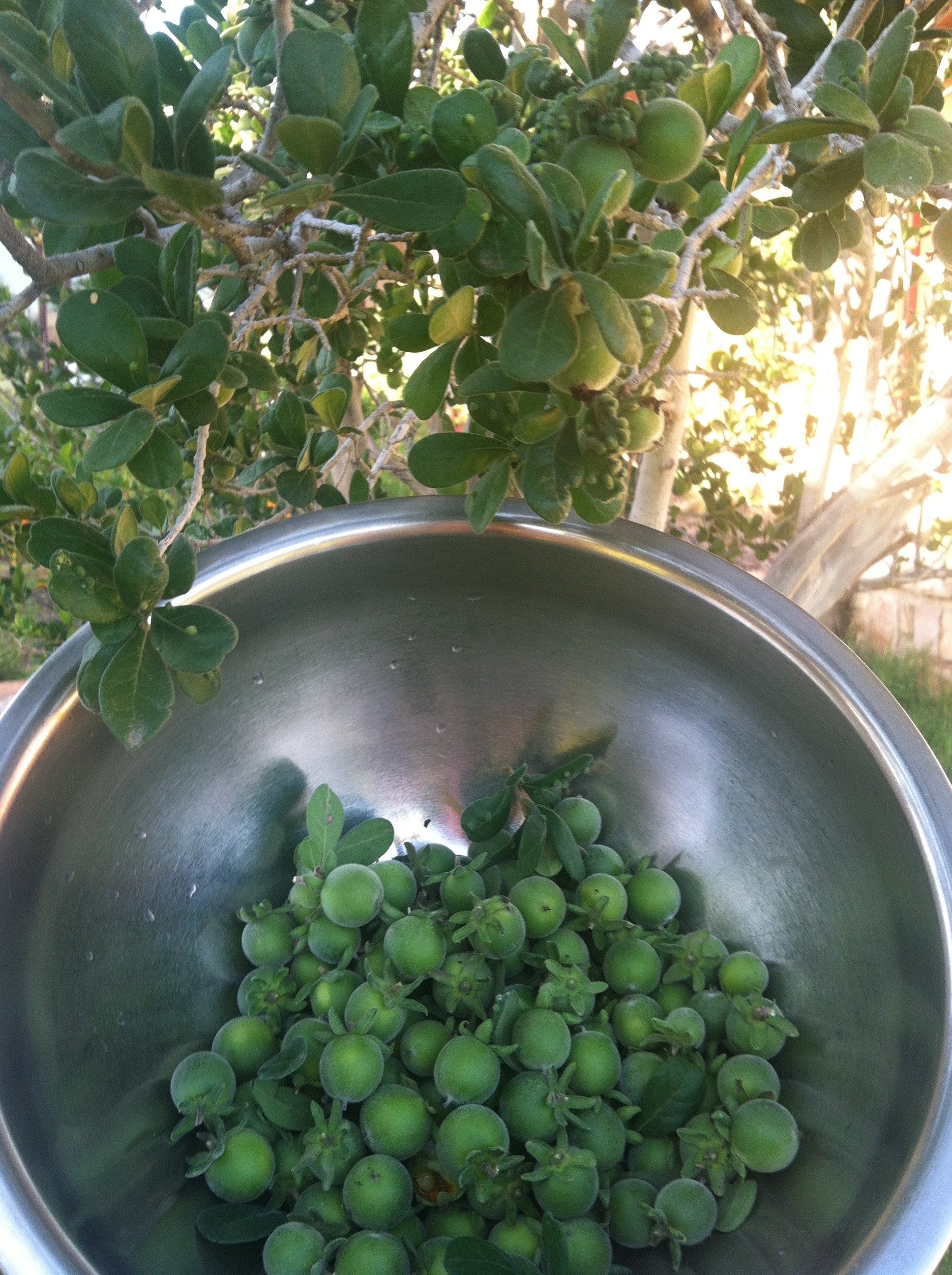
About two weeks ago I did an early pick. The persimmons were green and hard, not a hint of softness. They’ve soaked for two weeks so they are very easy to smash. I dumped them into my plastic tub & pulverized them as best I could. The meat and seeds were released and one can see the yellow dye. They’ve gone back in the jar for another week’s soak and then it will be time for some dyeing.

20130613-161836.jpg

20130613-161849.jpg

Other branches have already been weighed down by the persimmons’ weight OR broken by raccoons starting their tastings early. John and I trimmed those and I’ve started another jar soaking. To my eye and feel it still looks early for good color but one just has to test to understand the color window!

20130613-162015.jpg

Time to harvest persimmons

5 Jun

Time to harvest & soak the persimmons! This is something I can do with my left hand. My friend, Bettes, has encouraged me to paint warp skeins while I go thru my shoulder rehab. Wheels are turning!

20130604-192534.jpg

Weld & Shoulder progress

28 May

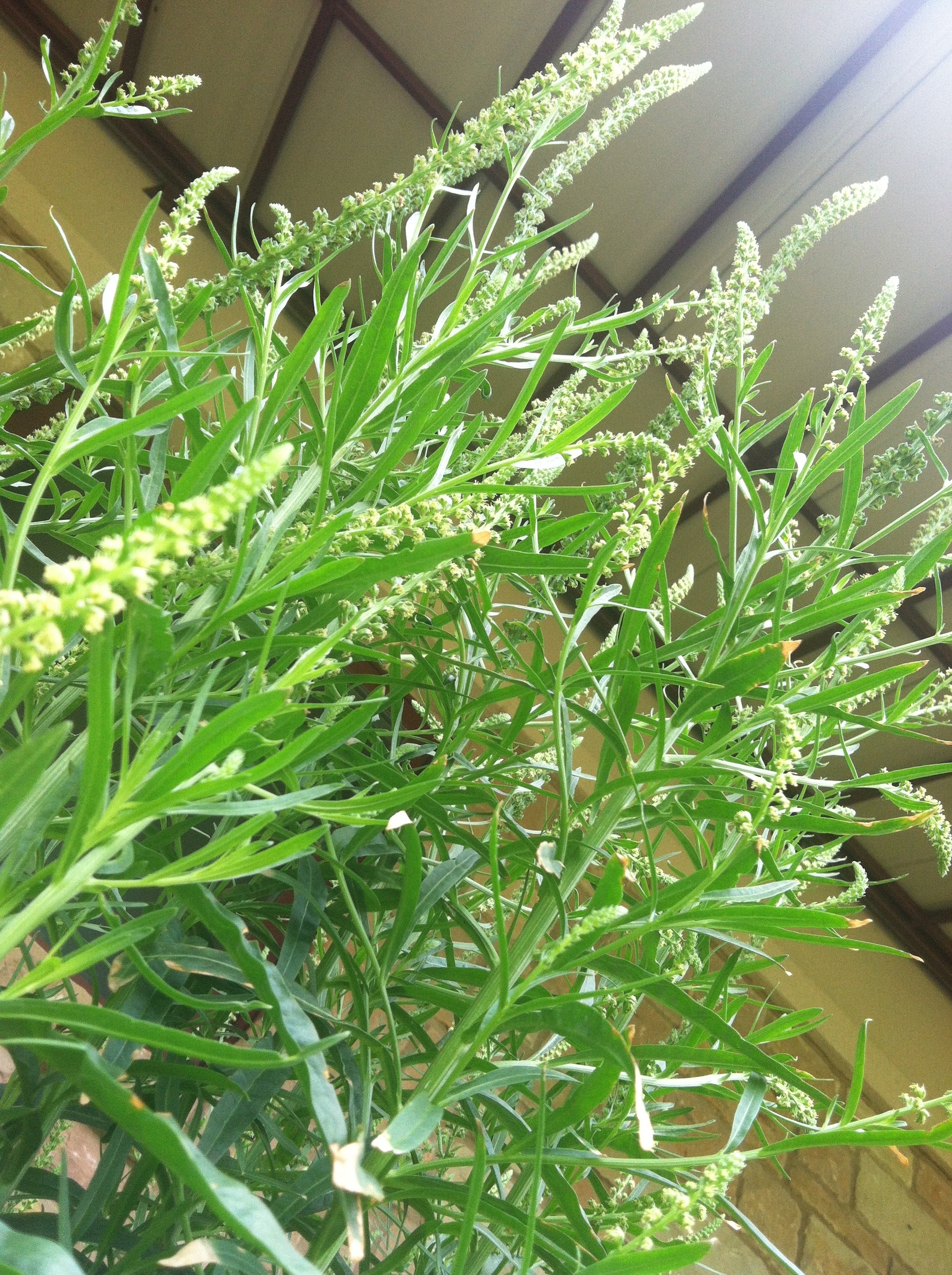
My weld and madder root are close to harvest, both for color and seeds. Below is a photo of the tiny weld blooms.

I did end up with shoulder surgery on May 8th. My bicep head tendon was partially torn and needed stitches and some shoulder spurs had to be removed. Fascinating! Both combined to create pain and slow me down on the dye front. I’m out of lifting action until Aug at least.

In the meantime I’m pursuing time at the loom with some light short term weaving and designing for some rugs. I’ll be ready to create once my arm recuperates !

But I’ll need to be very nice to my hubby so I can run this weld seed dye pot soon!

20130528-120939.jpg

Overdyeing acorn & oak galls with woad on the side!

7 Mar

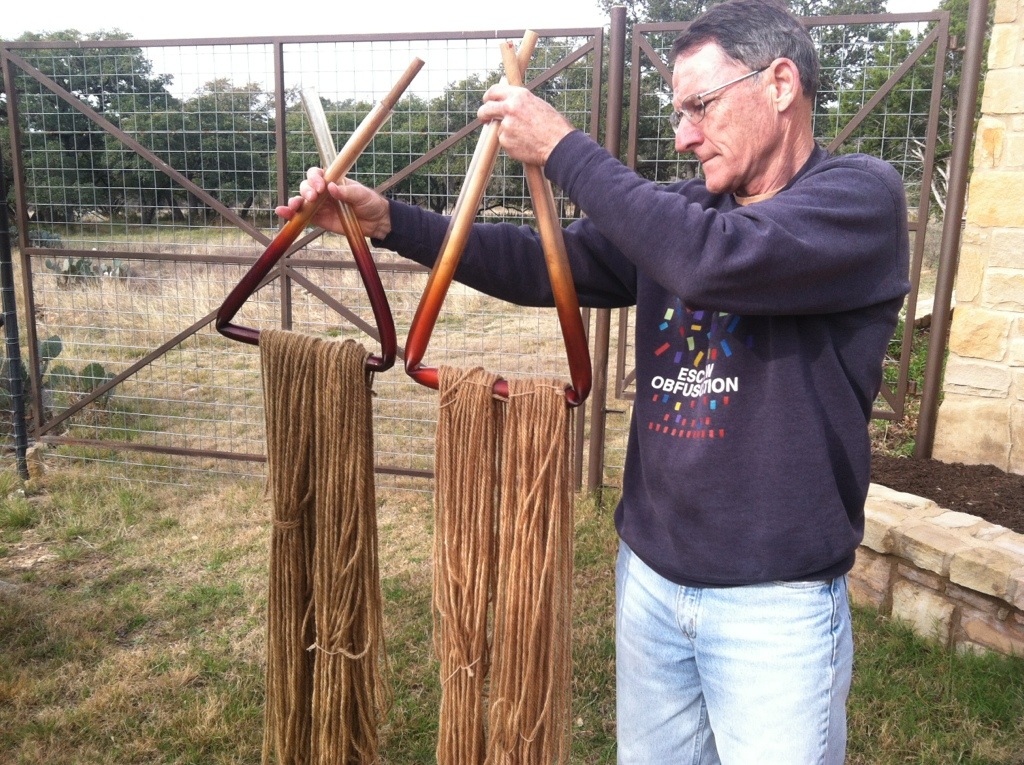
Test drive today for my shoulder with my husband’s help! I got on his calendar!

Acorn and oak gall to be over-dyed with my Parmotrema Austrosinense lichen. Purple over yellow tones, I’m thinking a brown. Hopefully a nice neutral brown to brighten other colors. We’ll see. There is always the iron afterbath to take it darker.

20130307-121525.jpg
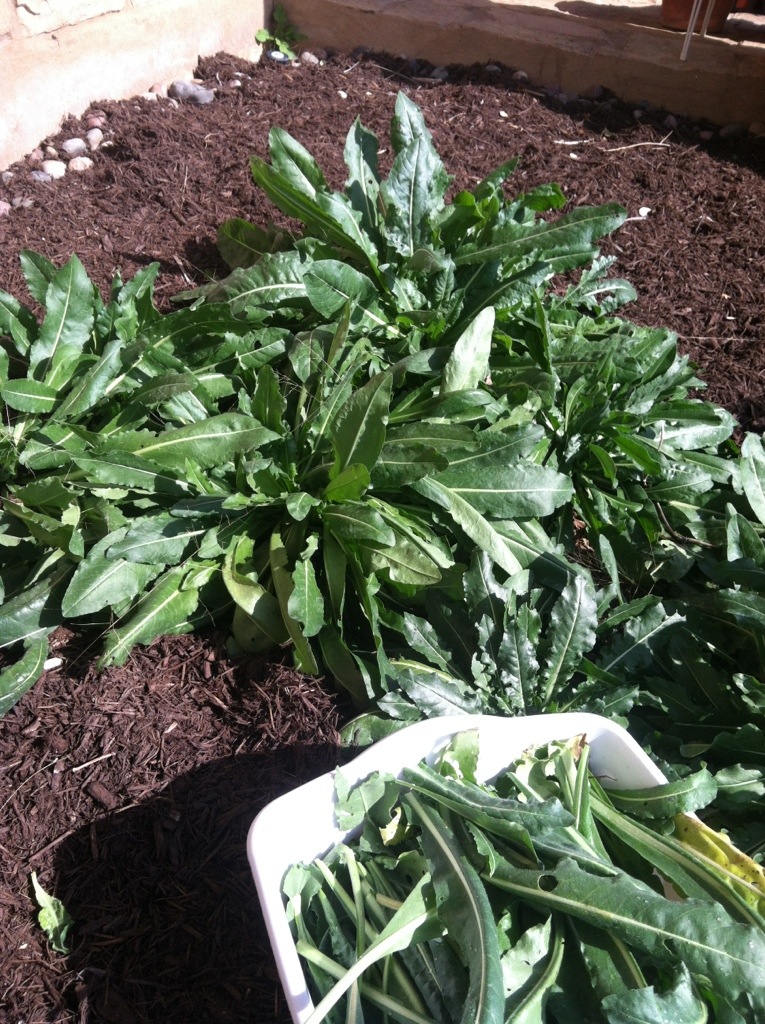
In the meantime as my hero is learning how to turn wool skeins in the dye pot I am harvesting 2nd year woad to over-dye some last year woad blue that I want a shade darker.

20130307-121656.jpg

20130307-121737.jpg

Shoulder sidetrack and a great source of dye basics!

3 Feb

I am taking a break from dyeing due to a shoulder injury.  Shoulder spurs are painful and greatly discourage one from heaving wet wool around in dye pots!  I should be back in operation soon.  My husband is pondering a block and tackle system for me on a small scale to give me a couple more years at the dye pot.  I’d be interested in hearing from folks if they have come up with a solution.  My first thought was a tripod game hoist but I’ve been talked out of that!

I wanted to remind folks about Maiwa’s blog.  They are a fantastic source for natural dye supplies and information if the Canadian dollar exchange is on our side.  It ebbs and flows, but they have a great blog here

http://maiwahandprints.blogspot.ca/2010/09/natural-dyes-introduction.html

They do a great job of illustrating and explaining the basics.  Enjoy!  We are lucky to have that resource.

Parmotrema Austrosinense

1 Jan

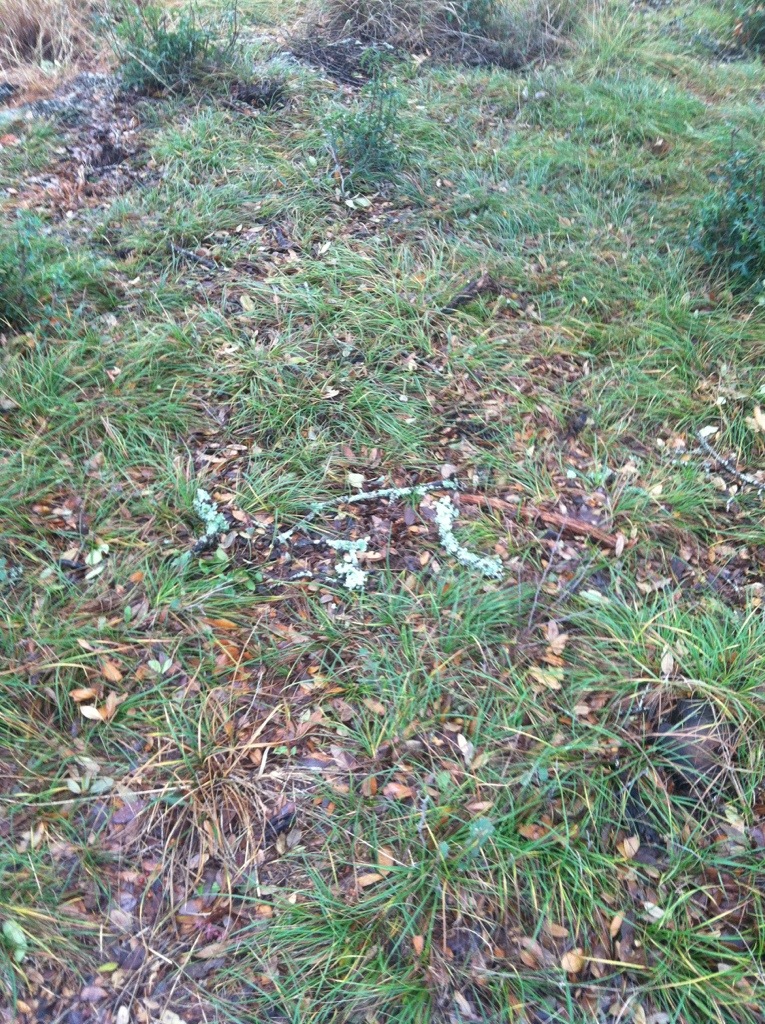
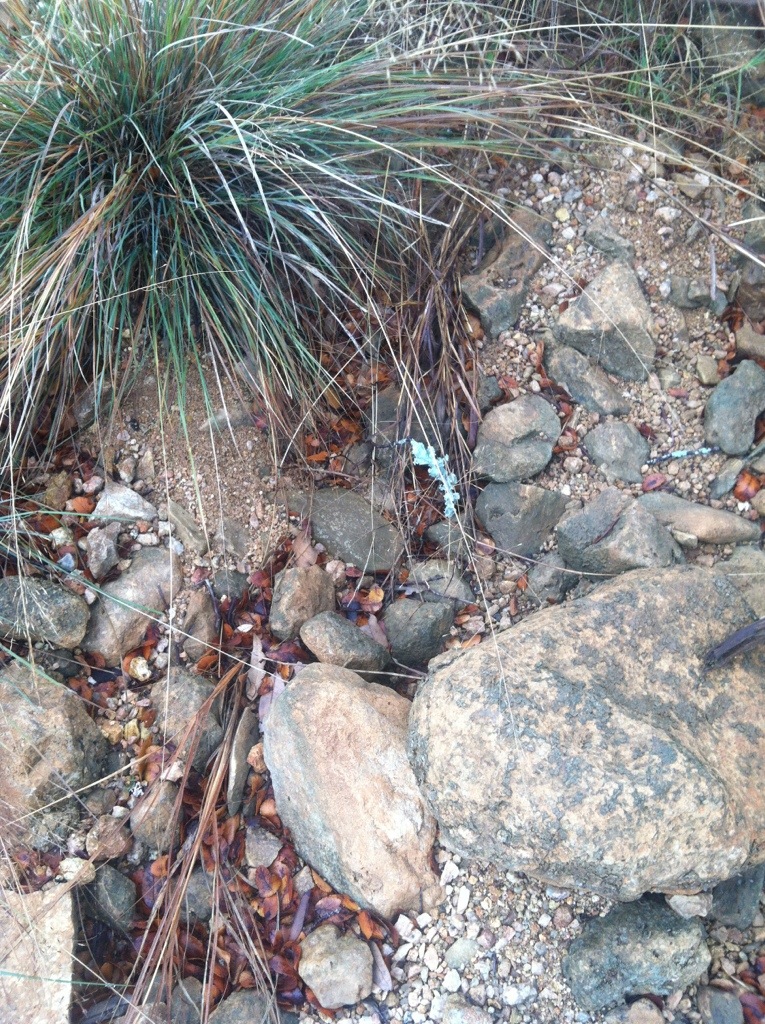
We have not had significant rain since September 2012 so it was really nice to get the .3 inches of rain for the new year! This moisture made the morning walk gathering lichen much easier as the lichen has rehydrated and has a greenish gray glow against the winter grasses and the wet weather creek bed. We haven’t had enough rain for the creek to run but I can assure you that the lichens are happy.

20130101-142816.jpg

20130101-143004.jpg
Over the past dry months we’ve had 3 significant wind events so I’ve gathered the branches against the tree trunks waiting for moisture to make it easier to separate the windfall lichen from the tree branches. I think this will be a good lichen harvest week, until the sun sneaks back out and dries everything out again.

Happy New Year to all!

teloschistes exilis

24 Oct

A quick picture post, more words later.

20121024-170725.jpg
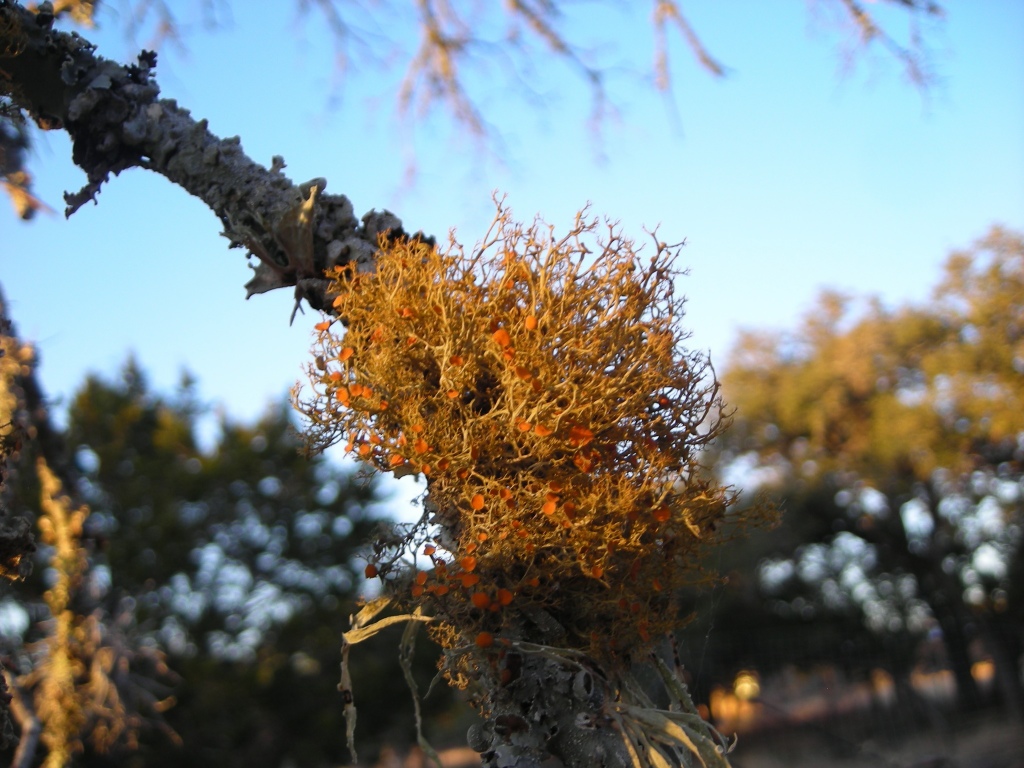
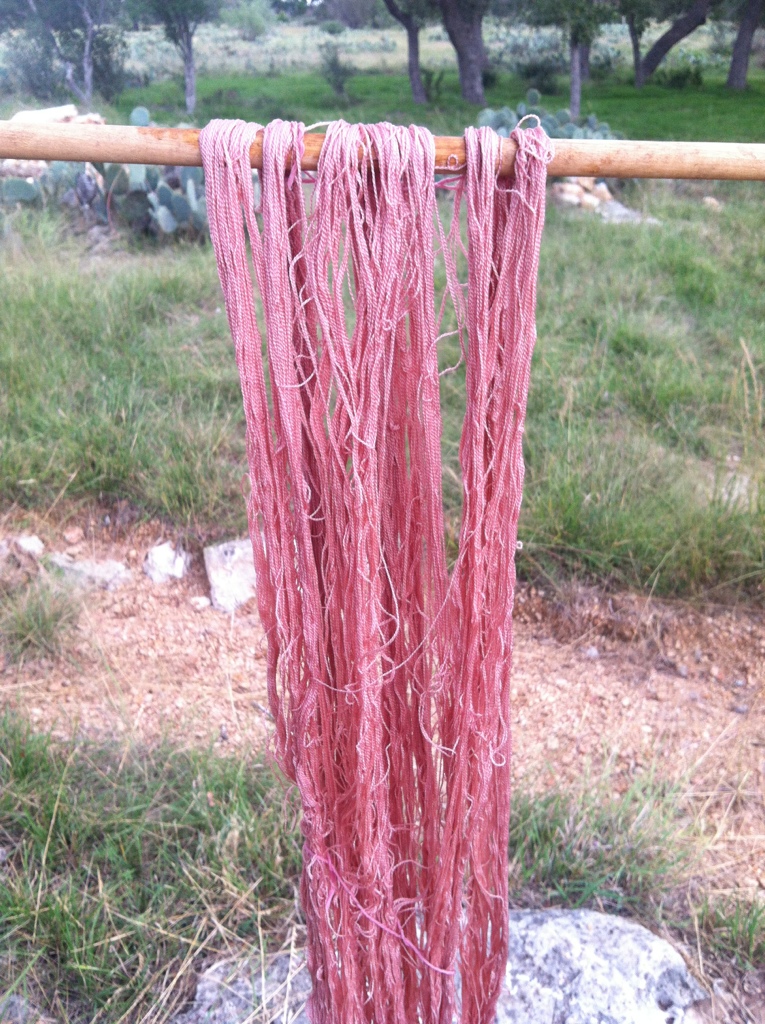
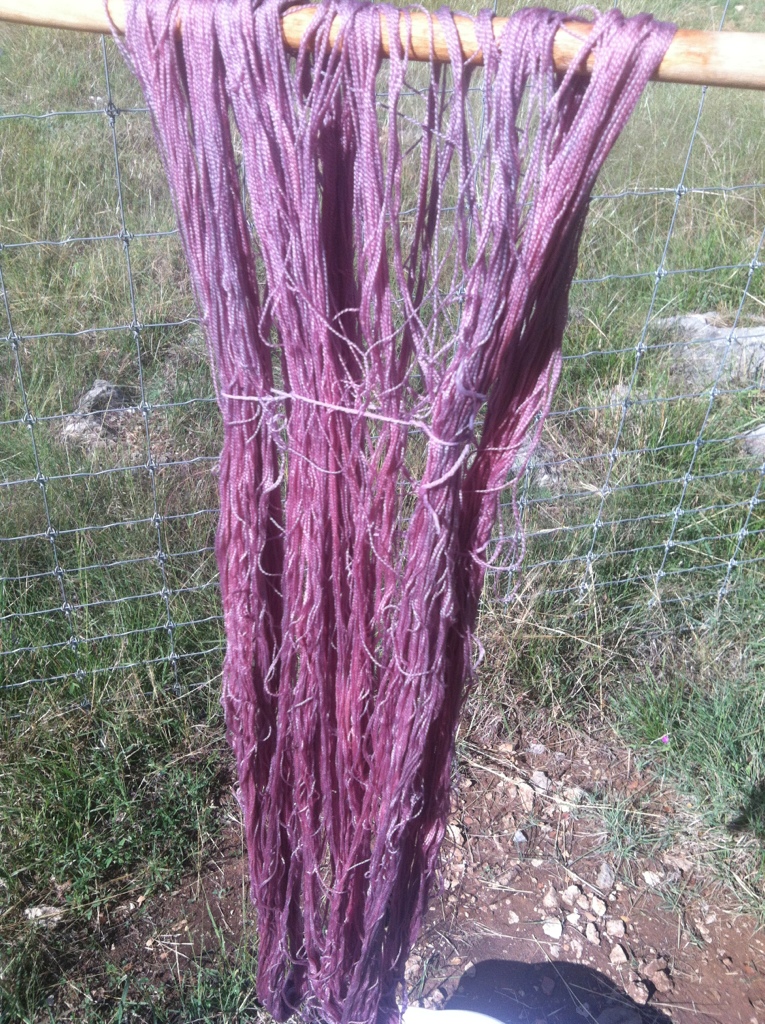
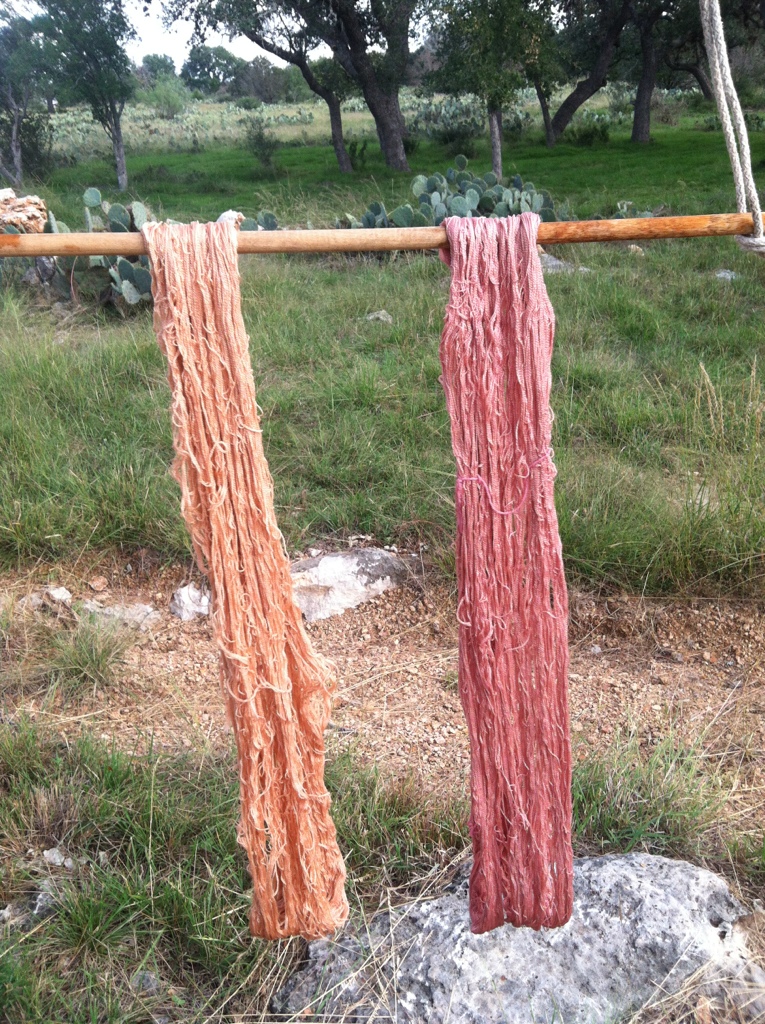
Below is my dye experiments with teloschistes exilis or slender orange bush lichen. It took over two years to collect 2 ounces of this windfall lichen plus one big damaging wind storm. The substrate is silk. I now know this process works as well on silk as well as wool!

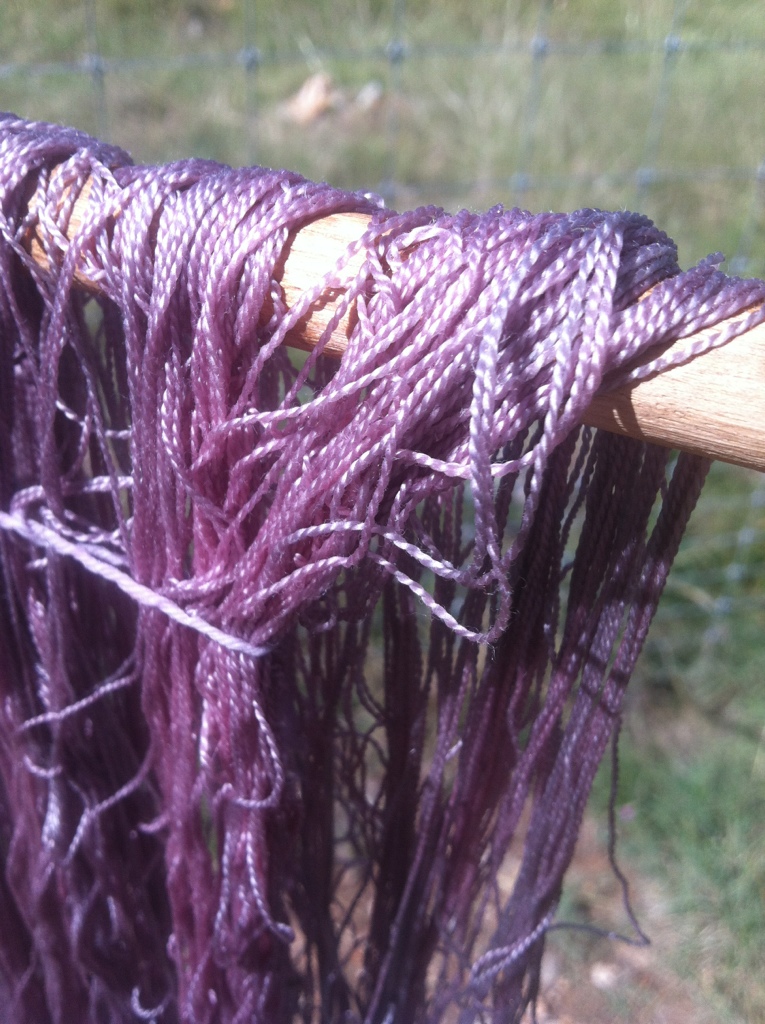
The lichen was soaked for about two months in one part ammonia and 2 part water. An amazing solar photosynthesis happens when you allow the skein to dry slowly in the sun.

If anyone can provide input/resources on the chemical reaction taking place please let me know. For now, I am enjoying the color! Of course if I want to keep the pink I would allow the skein to dry in the shade.

See the time lapse below for the transformation from pink to blue.

20121024-170409.jpg

20121024-170437.jpg

20121024-170458.jpg

20121024-170516.jpg

20121024-171132.jpg
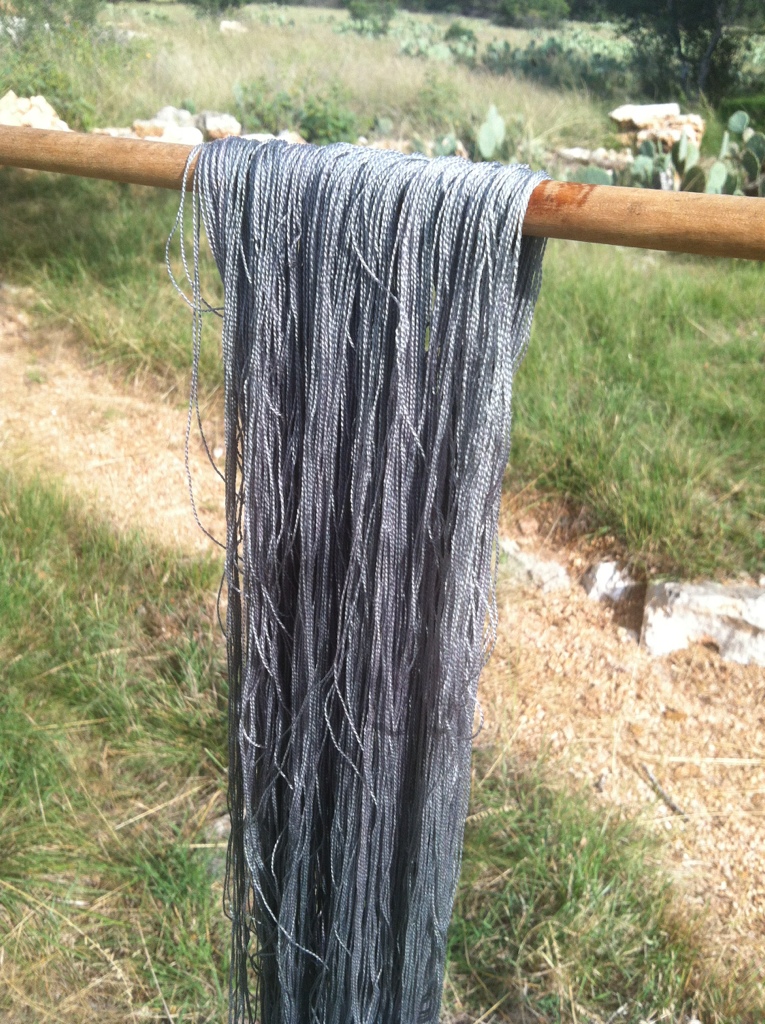
This final photo show the two original skeins, the one on the left was rinsed with vinegar, in other words I took the ph down. The one on the right was the one which went to blue under the sun!

Tannins on Wool

8 Sep

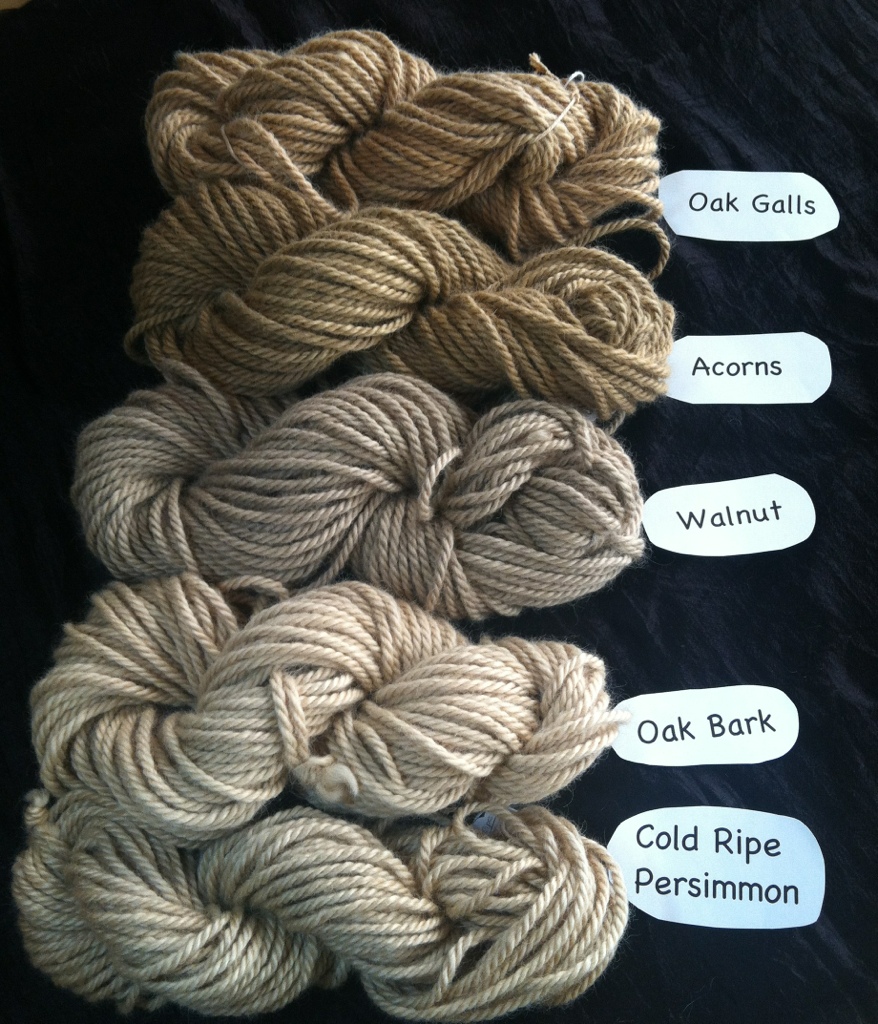
So, in the meantime I’ve been soaking some tannin material for use on my rug wool. Some of these have been soaking since last year. We had a great crop of acorns a year ago. Those have been fermenting away.

I’ve collected many oak galls during my lichen gathering over the past two years. Those have been soaking in 8 oz jars, it’s all about the pickle jars and how much they can hold!

We lost an oak to the drought and the woodpeckers & raccoons thoughtfully stripped the bark for me.

Friends north of here, both in Texas, Colorado and Pennsylvania have gifted med with various species of walnuts.

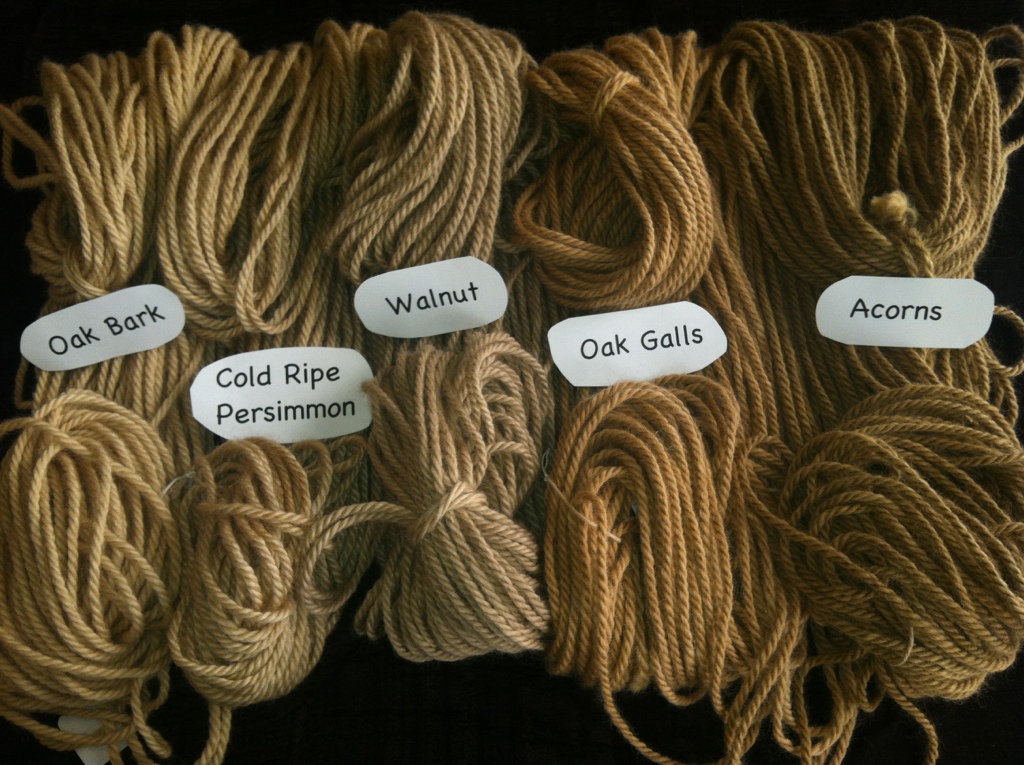
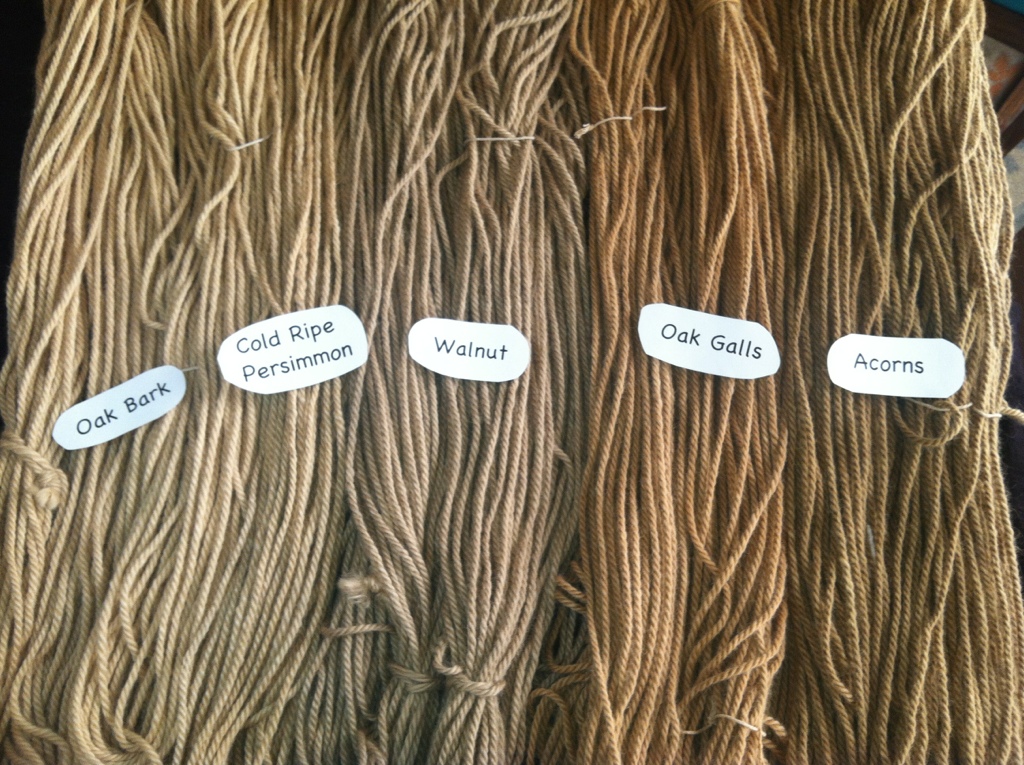
All of these colors were done with a minimum of dyestuff to see what I could get with a minimum of effort. Really, I am lazy! All are mordanted with alum sulfate at 12% wof, rinsed and cured for about a month before dyeing

My favorite color is the oak gall. I am prepping for a much larger dye run in the next batch. It will make a beautiful neutral with the lichen rose & garnet tones. I am starting to visualize a rug series based on a water motif using the colors from my valley.

It is tough to capture the different tannin tones. In summary, I would describe them as acorn-golden tones, oak bark-silver brown, oak gall-rose brown, and walnut-light brown.

Walnut will get redipped to push darker and I think the others will get an iron modifier to see how dark they go.

20120907-205712.jpg

20120907-205731.jpg

20120907-205751.jpg

Greens – over or under

2 Sep

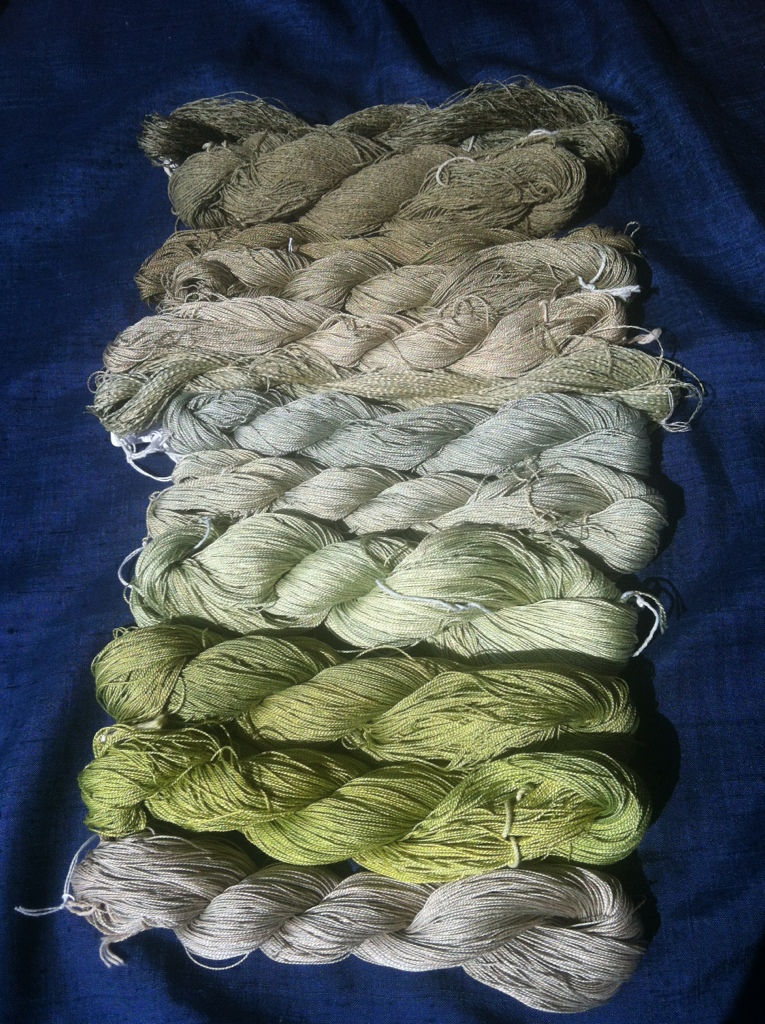
Here are examples of over dyeing and under dyeing with indigo. As I experiment with agarita, weld, cota and persimmon yellows it is fascinating to see the impact of the order color is laid on a yarn as one goes for green. Here are the resulting greens from my valley. My camera might not have captured all the green tones but they are there!

20120901-223640.jpg

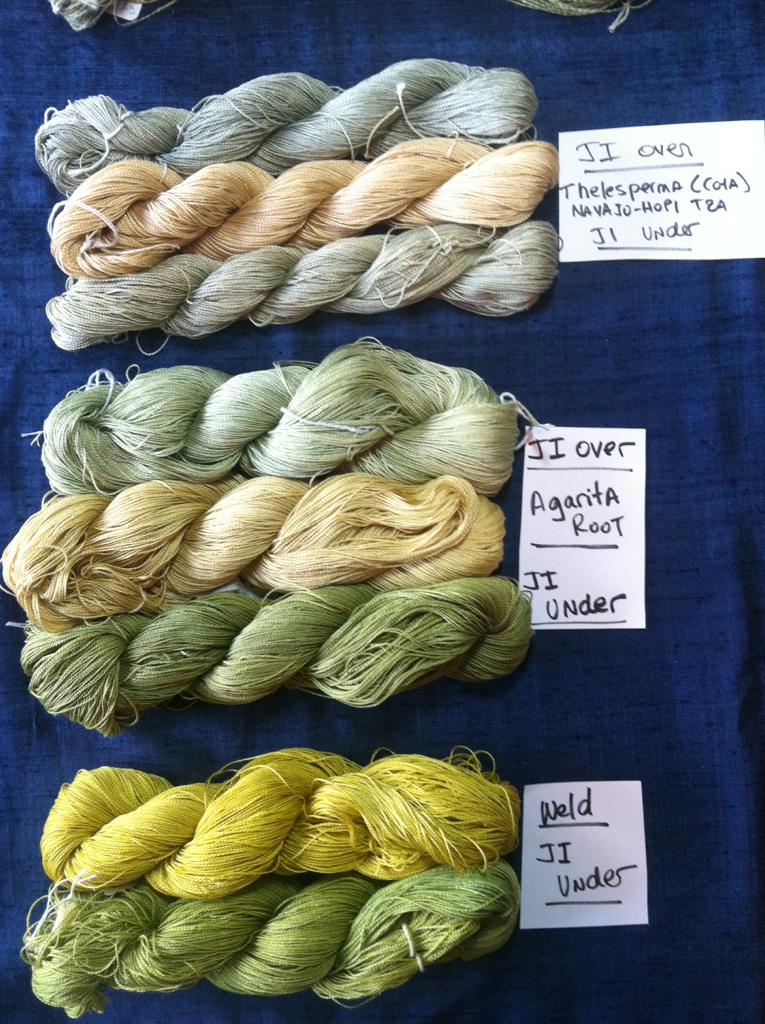
Now here are the different components. Where appropriate I have laid the yellow in the middle and placed the indigo overdyed above the yellow and the yellow over the indigo below the skein. It made quite a difference in green in how one does the color layers.

20120901-223948.jpg

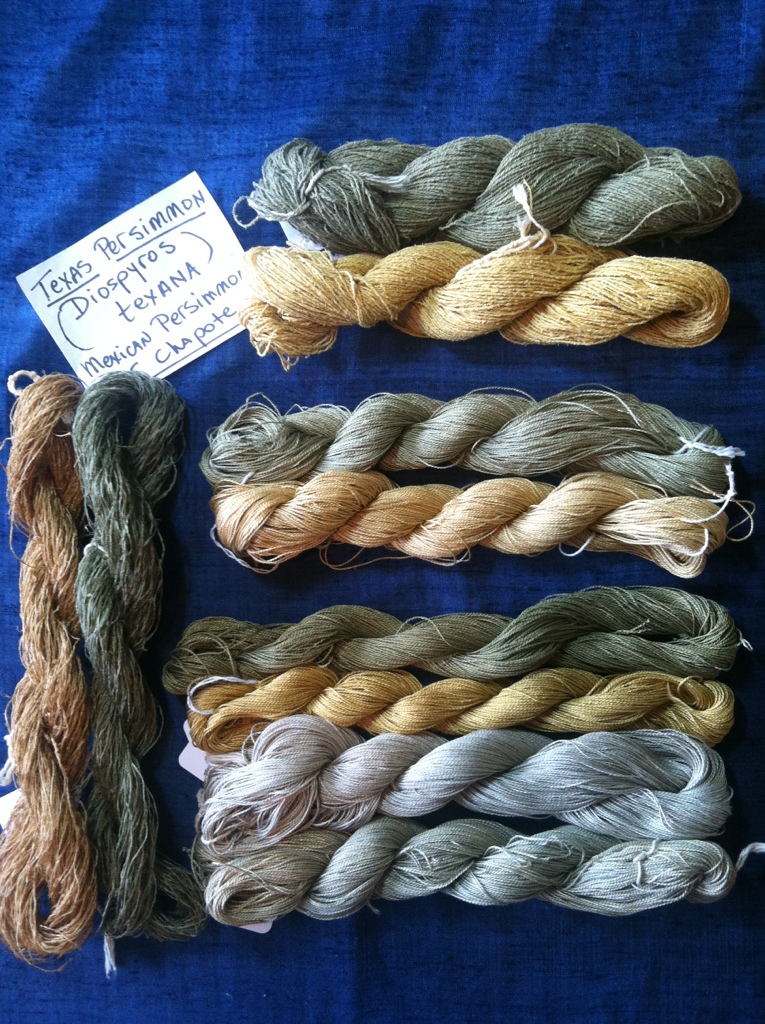
Finally here is the persimmon series. In this case I used blender indigo over the cold persimmon dip. I like that color layering better than using persimmon over indigo. It is more pleasing to my eye. The different substrates or yarns also took the dyes in different depths and yielded different tones.

20120901-224423.jpg

All in all a successful color journey in figuring out greens available to me in my valley!