Screen Print – Take 1….impact of ammonia on iron?

24 Aug

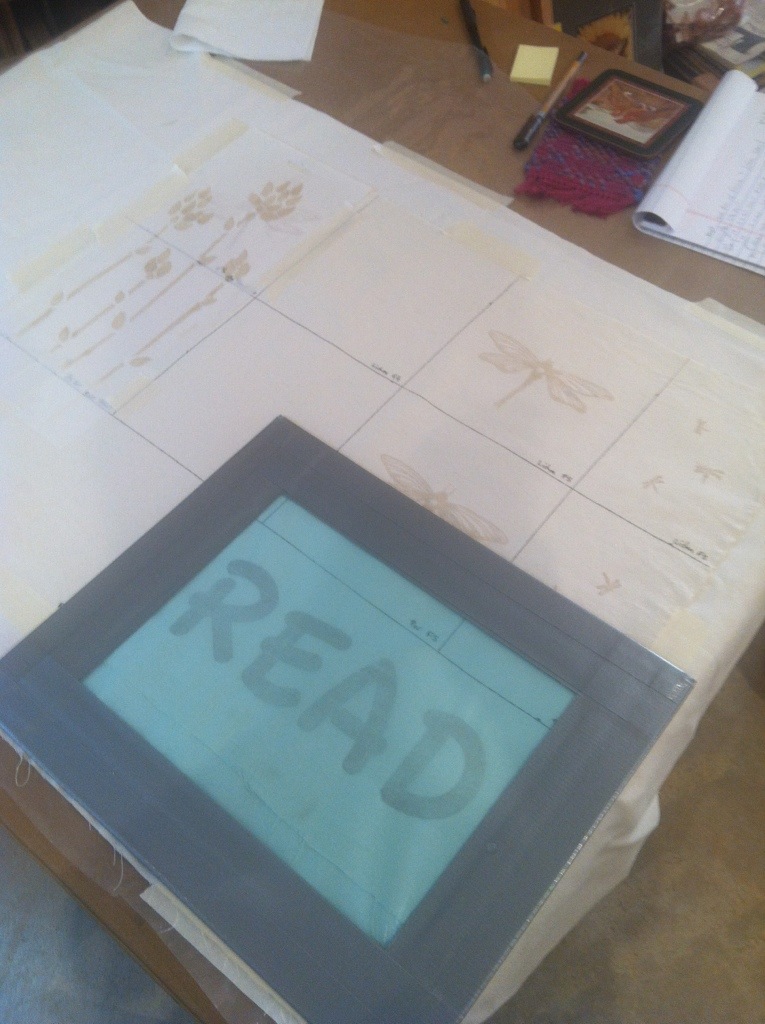
My arm is now well enough to use from my shoulder surgery but not quite up to dye pot or wrangling shuttles. So I’ve had time to puzzle over a Catherine Ellis workshop presented in San Antonio in Feb 2012.  I am having a lot of fun but do have some questions.  I hope some of my dye blog buddies and dye list mentors will offer some insight.   This photo shows you the stenciled iron ferrous print that I did on mordanted silk yardage.
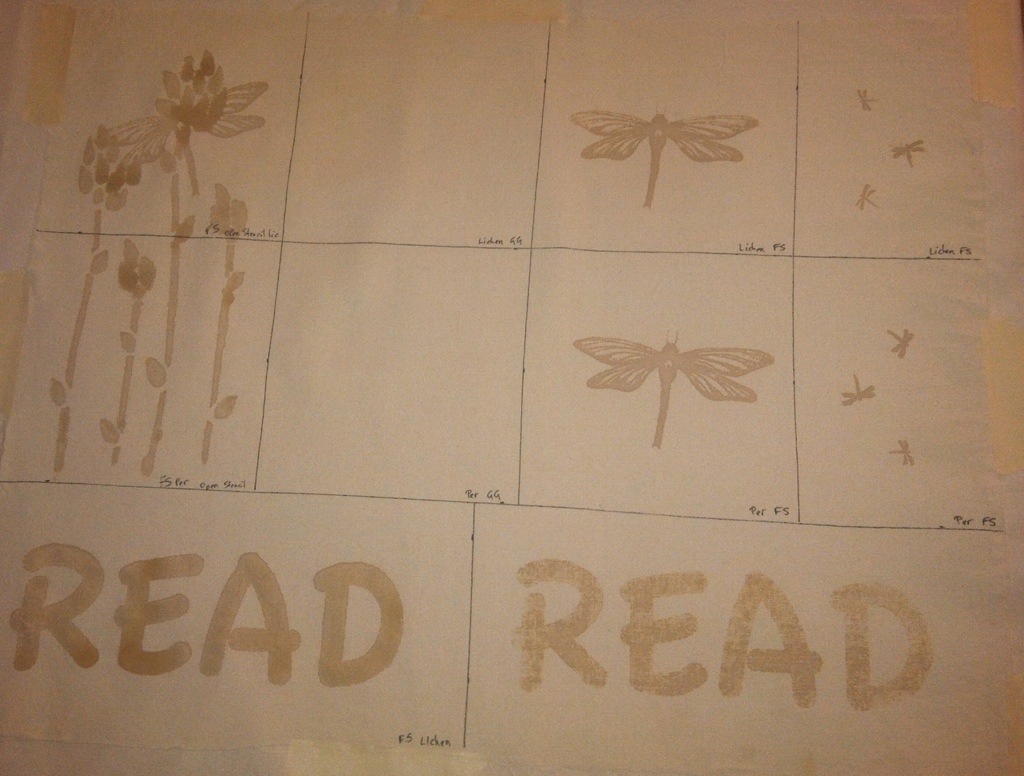
Ferrous sulfate stencil before its trip thru the dye posts

Ferrous sulfate stencil before its trip thru the dye posts

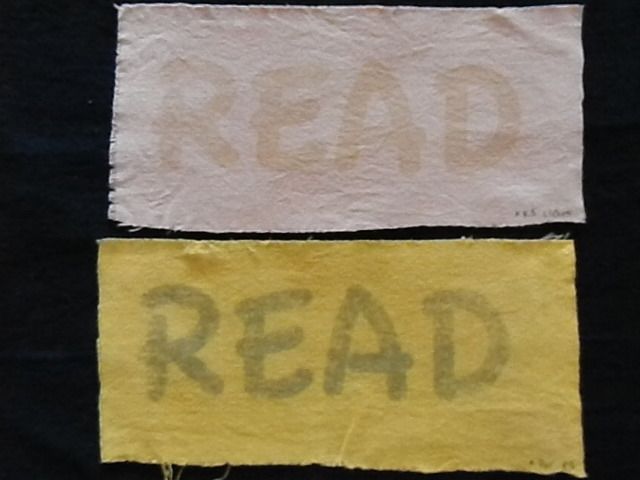
Now here is my puzzle,  you’ll see the photo comparison of my persimmon bath to my lichen bath.The big question is why did the iron screen print not hold up to the lichen dye?  It did hold up to the persimmon.  Here are the pieces after their trip thru the dye bath.
RSCN2186

Top is lichen, bottom is persimmon, both with ferrous sulfate print

DSCN2184

Top is lichen, bottom is persimmon, both with ferrous sulfate print, compare to the screen print above before cold dips

Facts:

  • I am working with my persimmon dye and my lichen dye from here on my property.
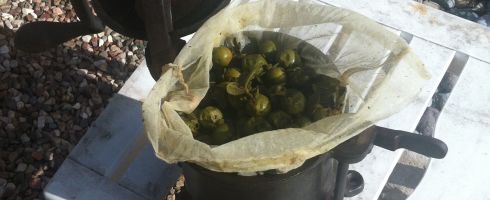
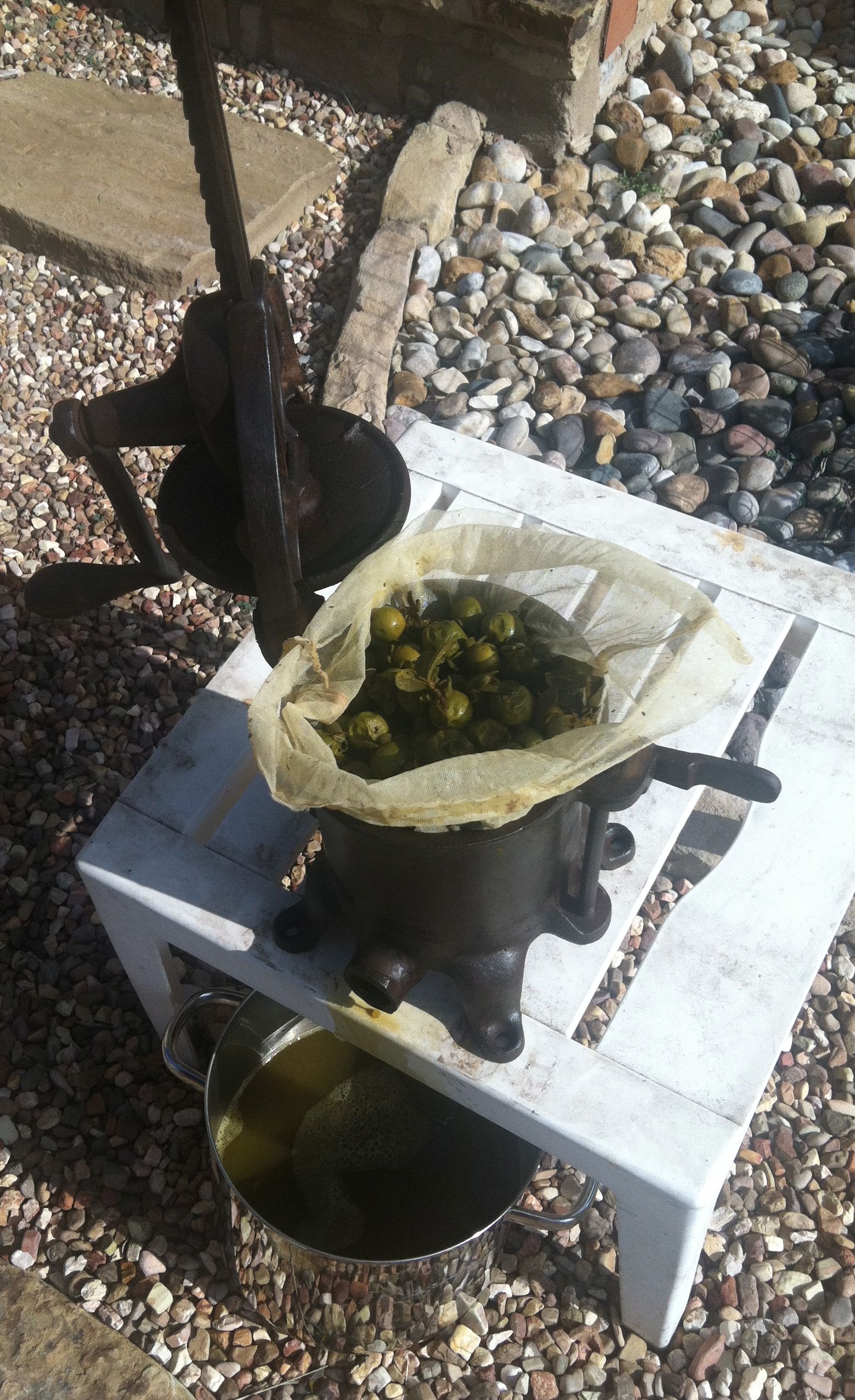
  • The persimmon is just juice from the persimmon that has been aged and smashed to extract it. (high tech machinery is a sausage stuffer)
  • The lichen has soaked in an ammonia and water bath for about 4 months to extract the color.
  • The silk I am working with was scoured and PREMORDANTED with alum acetate PRIOR to printing.
  • I did so using the Ferrous Acetate mixture straight or diluting it with the persimmon or the lichen.
  • After screen printing my samples I dunged them with calcium carbonate, rinsed them and allowed them to dry.
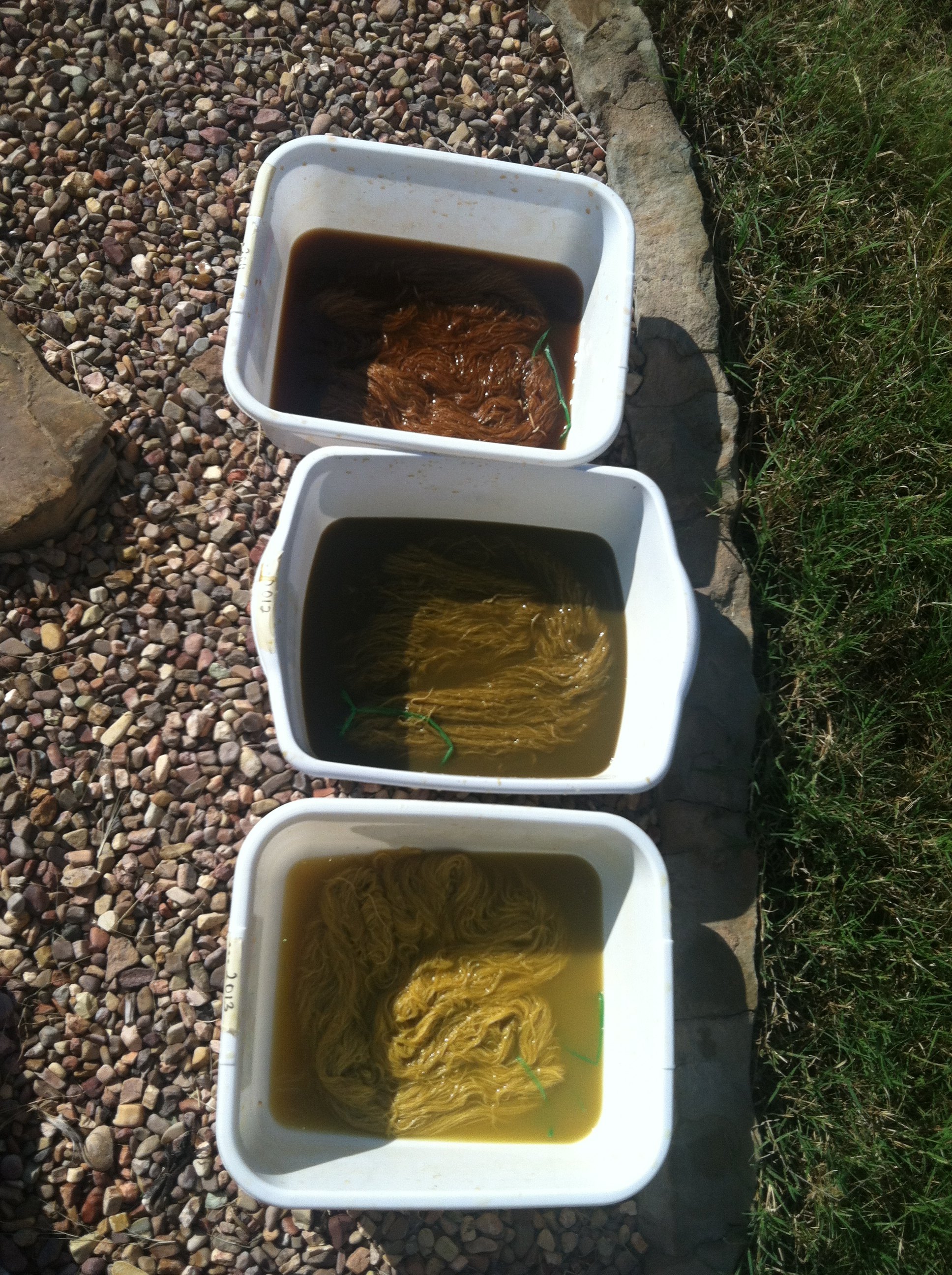
  • All samples then took a trip thru either my persimmon or lichen cold baths.  My lichen usually is fixed by heat.  I used the cold soak just to see what happened.
  • Both prints of ferrous sulfate were dark prior to entering the dyebath. Silk samples were soaked either 5 minutes or 10 minutes in a cold bath.

On all my lichen samples the 100% ferrous sulfate came out lighter than the persimmon samples. I am mystified.

Do you think the lichen/ammonia mixture impacted the ferrous sulfate. In other words, does ammonia affect iron mordant? It is a very high ph. The smell is strong and the ph is high 1 part ammonia to 3 parts water for the color extraction. Normally when I take it to the dyepot I dilute it with water and put vinegar in to take the ph down. So I have two possible culprits, the ammonia and the vinegar that might have affected the ferrous print.

Overall the printing is fun, I am a strict novice on applying stencils or any other surface design but it is a fun journey to think in that direction with natural dyes. Of course I could make this all the more easier if I would use the natural dye extracts but since I can get these two colors (lichen and persimmon) from my valley I am running out the possibilities with them for now.

Obviously the persimmon is a strong candidate for more experimentation along with an indigo over dye.

The other issue is to put the lichen thru a heat process to ensure that the lichen color deepens and stays.  I have no problem with skeins taking the lichen under a heat method.  Screen printing appears to need a different approach for my lichen brew.  Any brain biscuits would be welcome!
Plumbing Leak and Indigo Fructose Pot

20 Aug

Maiwa has the best blog. They are blogging about the indigo fructose pot chemistry. One must read this series! Better color thru chemistry! I will add their other blogs as they go thru the process!

Maiwa’s blog about the organic indigo vat, the basics

The fruit vat building upon the above link

Organic Vat Recipes 3 variations

Ferrous Indigo vat for silk & cotton

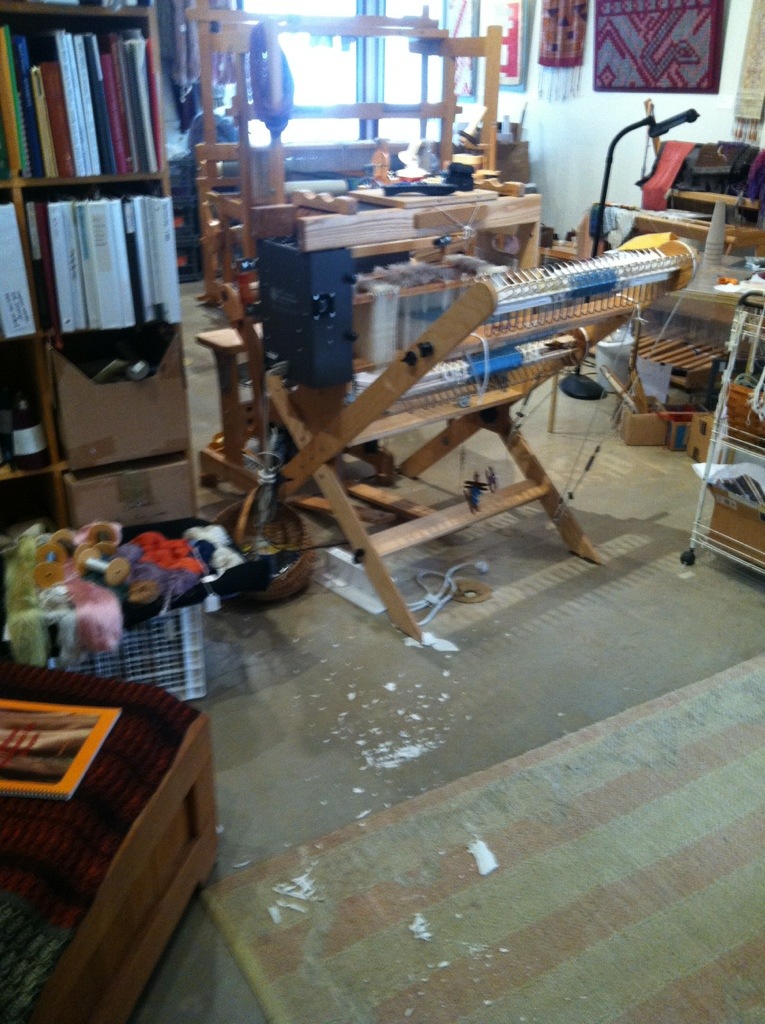
In the meantime on the local dyefront, things have come to a full stop as we deal with a plumbing leak. This means moving things from the work area and covering everything with a plastic tarp to avoid drywall and plaster repair dust. And did I mention repainting? The water missed my AVL WDL by about 3 feet, it could have been much worse. Now it is just annoying!

20130820-092501.jpg

Meet Persi

6 Aug

Some of you know that I am now interested in reduce the stress on my arms due to a shoulder operation.  So….meet Persi, short for Persimmon.  I met him at an antique mall masquerading as a sausage stuffer.

Persi with the full press on the persimmons

Persi with the full press on the persimmons

Persi will be replacing my cedar post, which was used to smash the persimmons.  I would put the soaked persimmons in a 5 gal bucket and smash away.

Put persimmons in 5 gal bucket, proceed to smash to release juice and expose seeds for more tannin

Put persimmons in 5 gal bucket, proceed to smash to release juice and expose seeds for more tannin

Now, I soak the persimmons as usual and then move them into a paint strainer bag and let Persi have at them.  Actually he works fairly well, breaking the skin and releasing the juice.  I still need to do some repairs on the o-ring to reduce leakage but progress is being made!

Swinging lid to put in mesh bag of soaked persimmons

Swinging lid to put in mesh bag of soaked persimmons

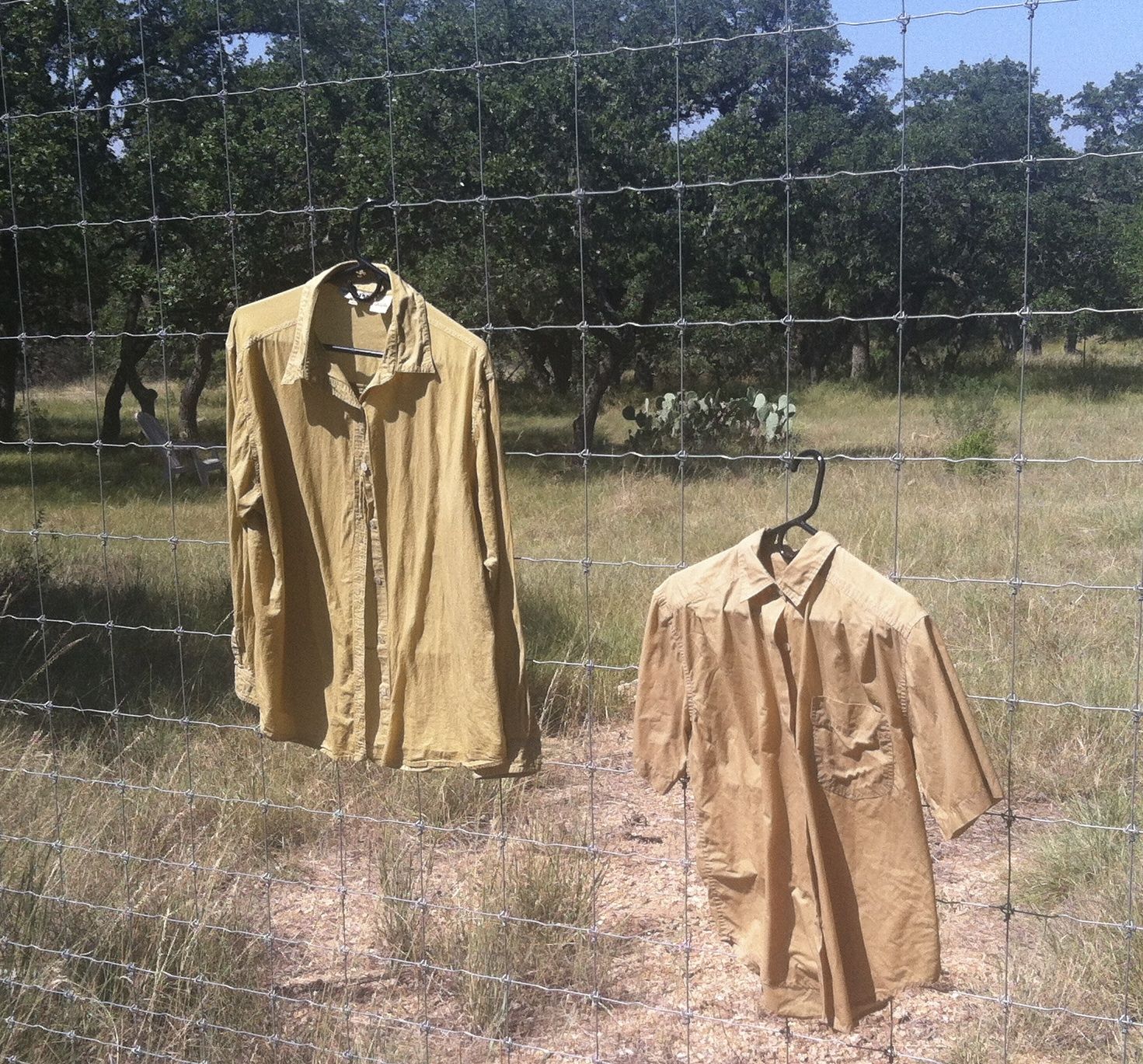
He is made of iron, so I will always be adding a bit of sadness to my color.  I decided to run some shirts thru the bath that came out of the press to see how sad the color was.  Looks good to me! These shirts started out as beige and brown and the yellow shining thru.

Persimmon juice on shirts

Persimmon juice on shirts

Ferrous Sulfate Printing with Natural Dye

3 Aug

20130802-192650.jpg
My shoulder surgery therapy has moved to strengthening (1-2# weights). Things are moving in the right direction. In the meantime I am trying to explore areas that I can maybe use on painted warps in the future. Hopefully giving my shoulder time to calm down from the weight exercises.

Today I am venturing into screen printing with natural dyes. I’ve learned from Michel Garcia and Catherine Ellis about using the iron modifier in your thickener to screen print THEN run your natural dye bath. So, I mixed my guar gum and created ferrous acetate from my ferrous sulfate and let fly with the screens.

The test silk is drying now. I am risking my test silk to see if it is damaged by the iron. Tomorrow I’ll dung it with calcium carbonate to fix the iron. Once it is dry the iron is bonded and won’t migrate from the print. Then some pieces will take a trip thru my persimmon dye and some thru the lichen. Once I am happy with my tests I’ll move on to some silk scarves and a silk shirt for a real skill test.

The blank squares on the piece were left for just printing with lichen and the guar gum, always room for one more test! I’ll be able to see if my lichen and persimmon dyes are strong enough to cold print and solar set.

20130802-192712.jpg

New blog on SE Asian looms

1 Aug

Hi guys, just sharing with you a new blog, Simplelooms, focusing on my travels in Southeast Asia and recapping the different looms, the tools and the relationship of the pattern device to the weaver. Those of you familiar with my blog in the early 2000’s will remember I lost a lot of organized teaching information when Apple discontinued mac.com

I’m smarter now (I hope) and will rebuild that resource with my photos and videos. It will be slow but it will come! I will continue my dye blog and will keep the SE Asian blog separate. Enjoy this first installment!

Regards Deb McClintock

Lichen Recap

28 Jul

20130728-091657.jpg

I’ve had many questions on my lichen processing. Most of my skeins are mordanted with 12% wof of alum sulfate. sometimes I add 6% Cot.

Here is a recap from my old blog and some great reference links.

Collecting windfall-easiest to peel off branches on wet dew or rainy morning

https://debmcclintock.wordpress.com/2013/01/01/parmotrema-austrosinense/

My old blog, still transferring info slowly and surely with the recipes

http://debmcclintock.com/Debmcclintock/Debs_Dyepot_Blog/Entries/2011/1/31_Lichens_and_Color.html

My photos on my old blog with more process examples:

http://debmcclintock.com/Debmcclintock/Dye_Photos/Pages/Lichens_and_Color.html

A nice article by Glenna Dean in the Turkey Red Journal on lichens. It was nice to meet her to get a scientific point of view on my lichen journey:

http://www.turkeyredjournal link no longer works, article worth searching for

Finally a group collaboration led by Glenna Dean in comparing our process notes and working thru Glenna’s process in Turkey Red Journal. Most of us had worked with lichens before so there were some great conversations.

http://www.turkeyredjourna link no longer works, article worth searching for

And an example of photo synthesis with a different lichen, Teloschistes Exilis

https://debmcclintock.wordpress.com/2012/10/24/teloschistes-exilis/

Enjoy!

Color choices from My Valley

27 Jul

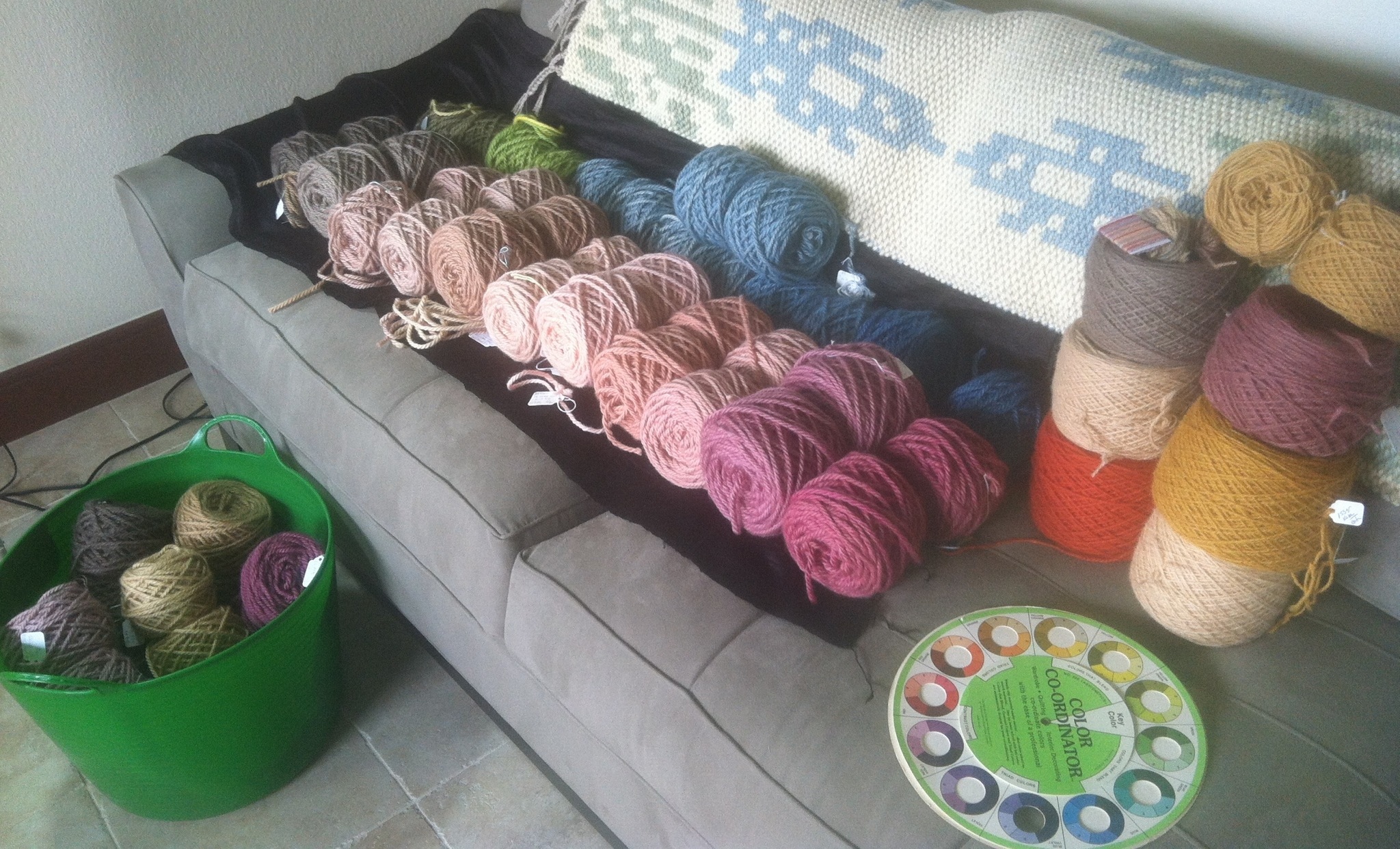
These are my natural color choices for my rugs. Time to figure yield and do some color design! I tend to design my graphic with 3 color triads.

20130727-155123.jpg
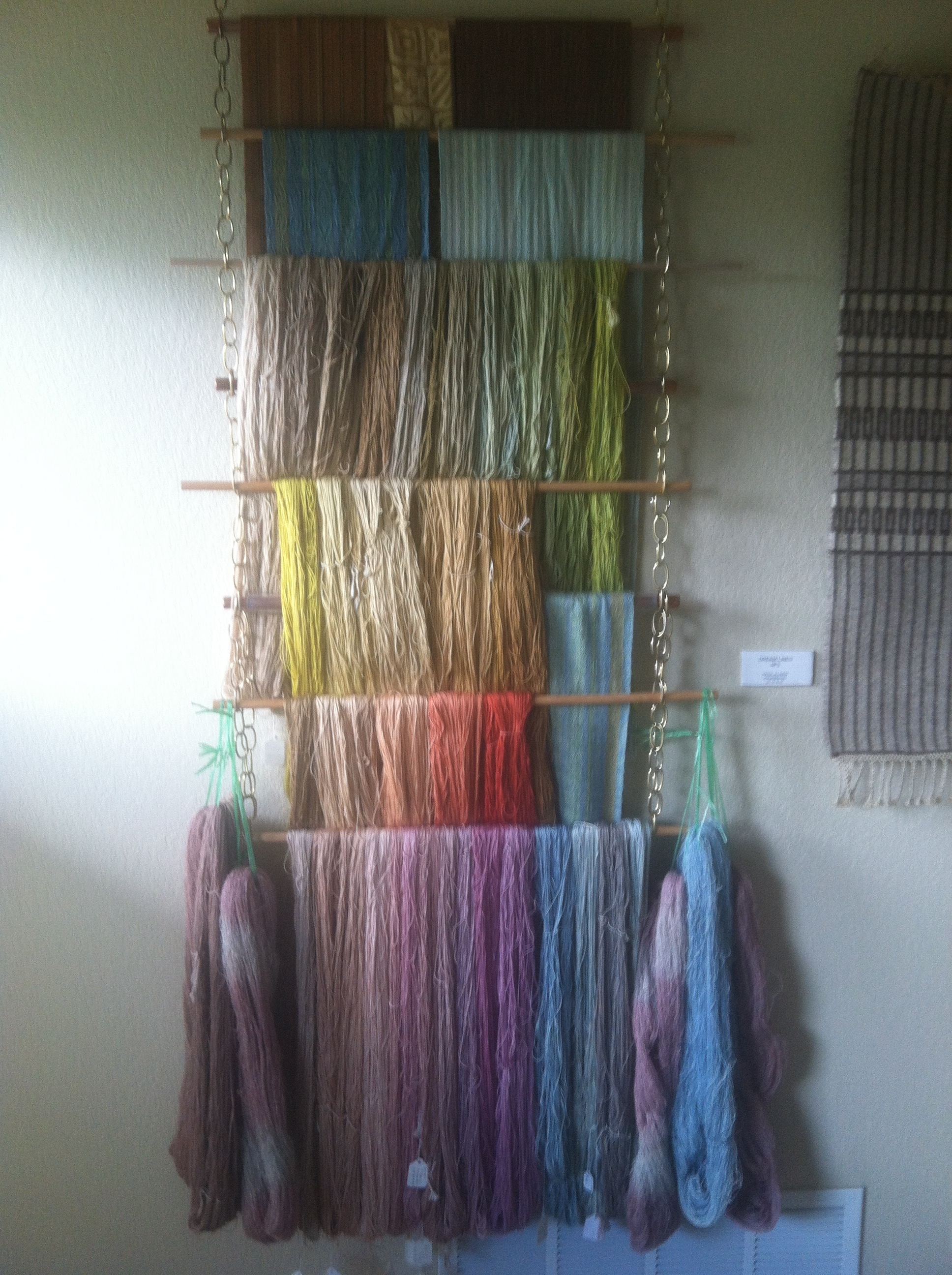
And these are my shawl natural color range choices. Twill or satin or lace, want to keep simple to show off colors!

20130727-155431.jpg

Image

Lichen, Persimmon Vintages and fresh Weld results

23 Jul

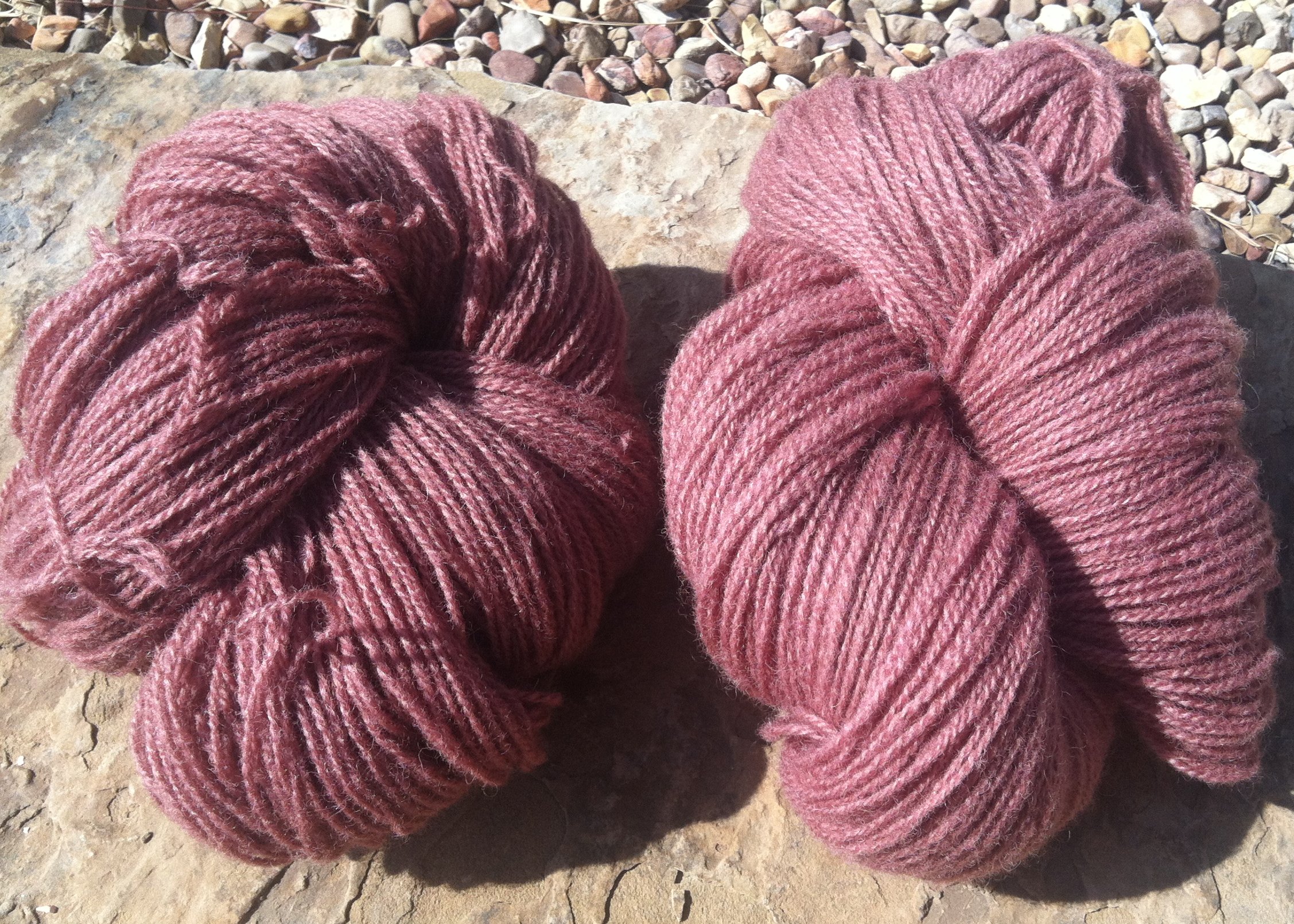
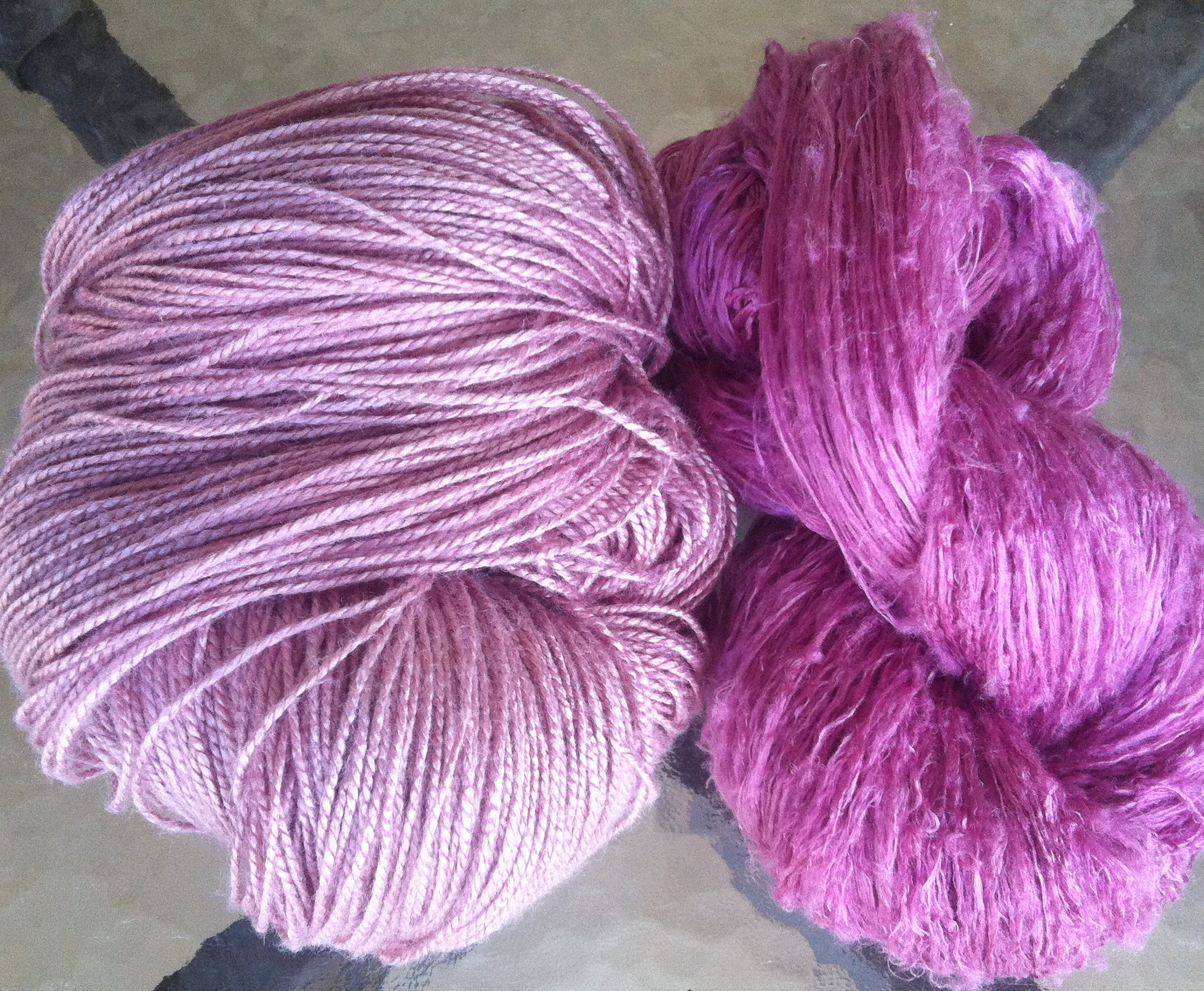
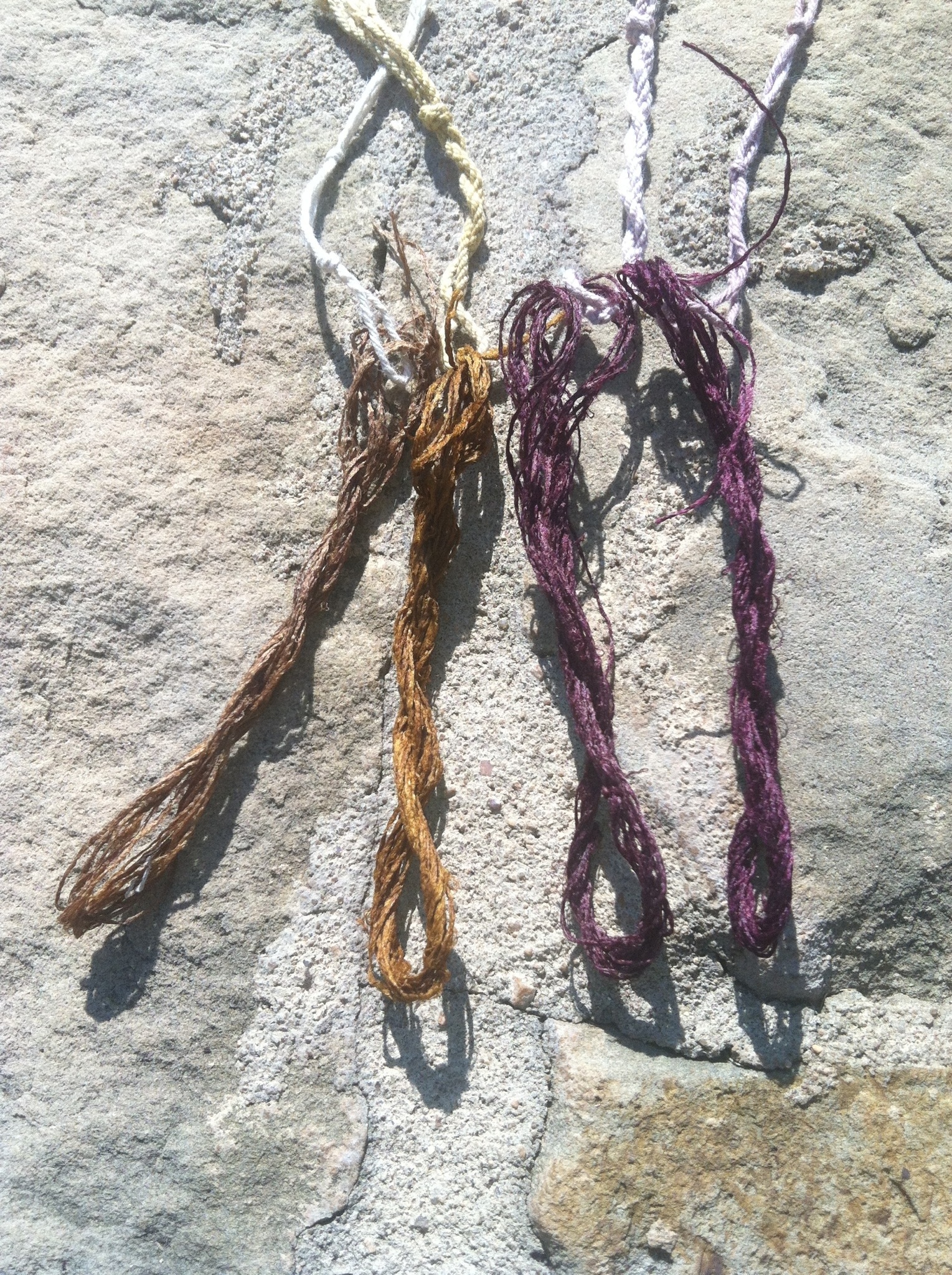
I am a little late posting my results but better late than never!  May I add that it was not the smartest practice for me to run lichen (purple) and yellow (persimmon and weld) baths at the same time.  I had to be way more obsessive with my pot washing to ensure I did not mix the two colors on my skeins.  I’ve also decide I like running one substrate at a time.  The two type silks and wools work easily in the dye bath but they required different lifting and processing.  That is because I was doing some clean up overdyeing and dyeing some stash busters.  I’ll be more orderly in the future!

Lichen Over dye

This wool was over dyed with my lichen (some leftover 2nd & 3rd exhausts).

The first photo is some easter cedar which was a nice golden beige but I wanted to see what the lichen would do over the beige.

The lower photo is what I got with the lichen over dye. Nice,one really cannot see the yellow beige shining thru the purple lichen.  This is going into my rug planning.

IMG_1279

IMG_1403

Easter cedar over dyed with lichen

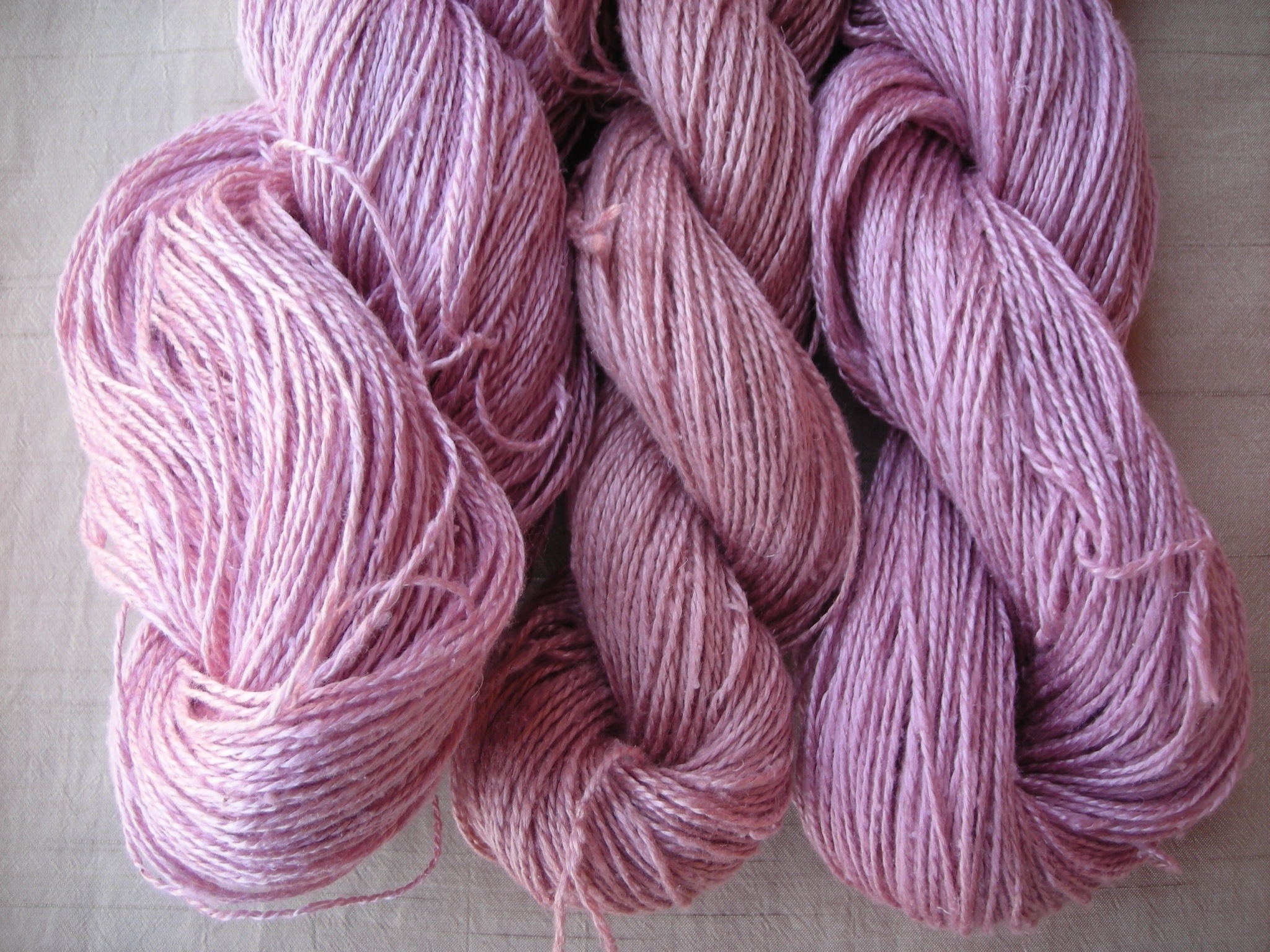
In the meantime, I had some silk that I had degummed Rapenzul from Henry’s Attic and some Habu silk.  They both took the 1st exhaust lichen in a very BRIGHT way!  The raw silk really took on a bubble gum pink which is startling to me.  I’m trying to get use to it but I’m thinking an iron overbath might make it more bearable for me.  Or maybe indigo…..it is almost time to do the first indigo harvest…..

IMG_1406

Weld

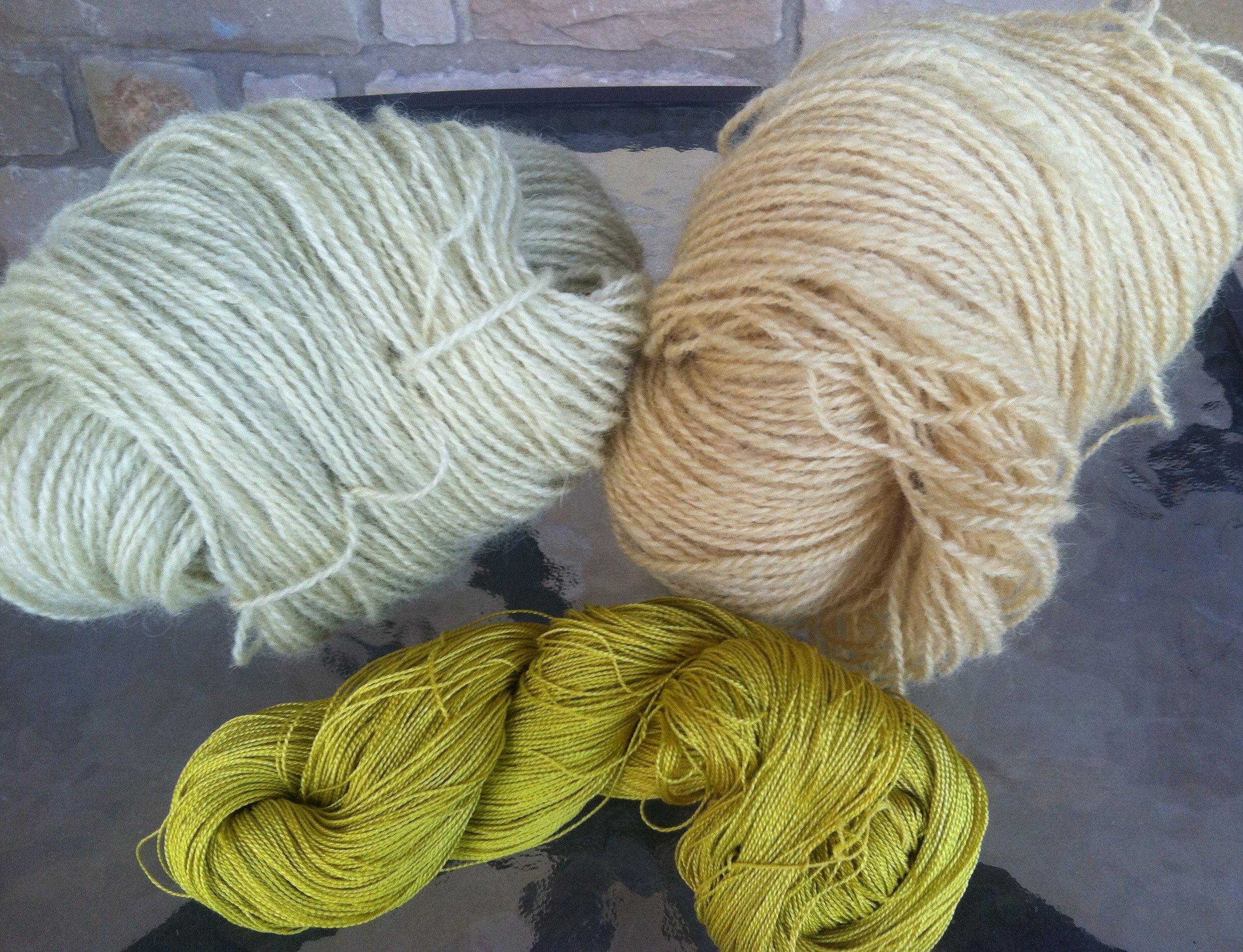
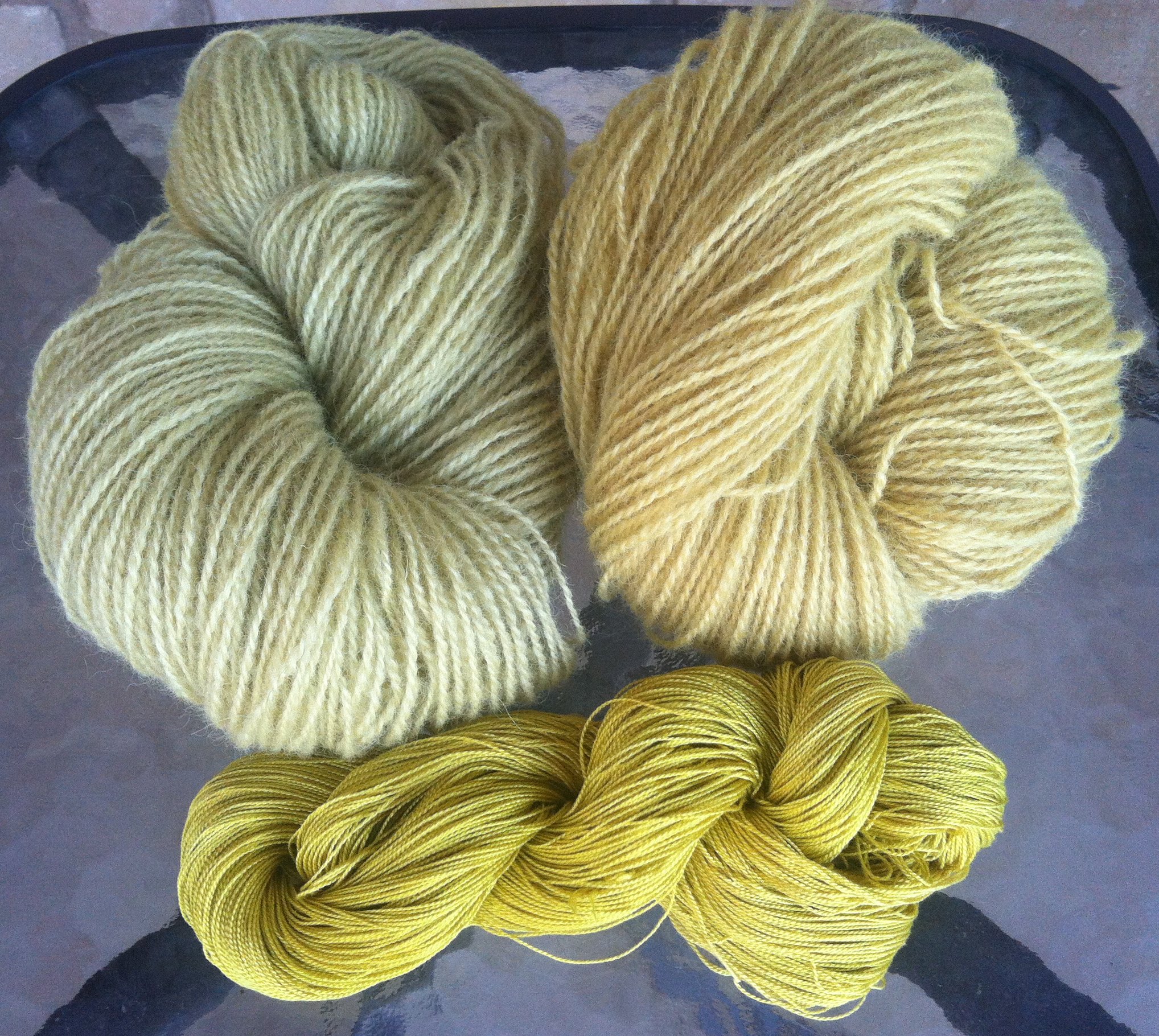
I tried my fresh weld and got a much fainter yellow on my wools than I got on my silk last year.  So I pulled my dried leaves from last year and cut much more fresh weld and redyed the wools.  Can you see the difference?  Both took on a much deeper yellow.  Still not as bright in comparison to last year’s vibrant yellow on the silk!  These large skeins will be broken down and dipped in indigo to create some greens.


IMG_1391IMG_1402

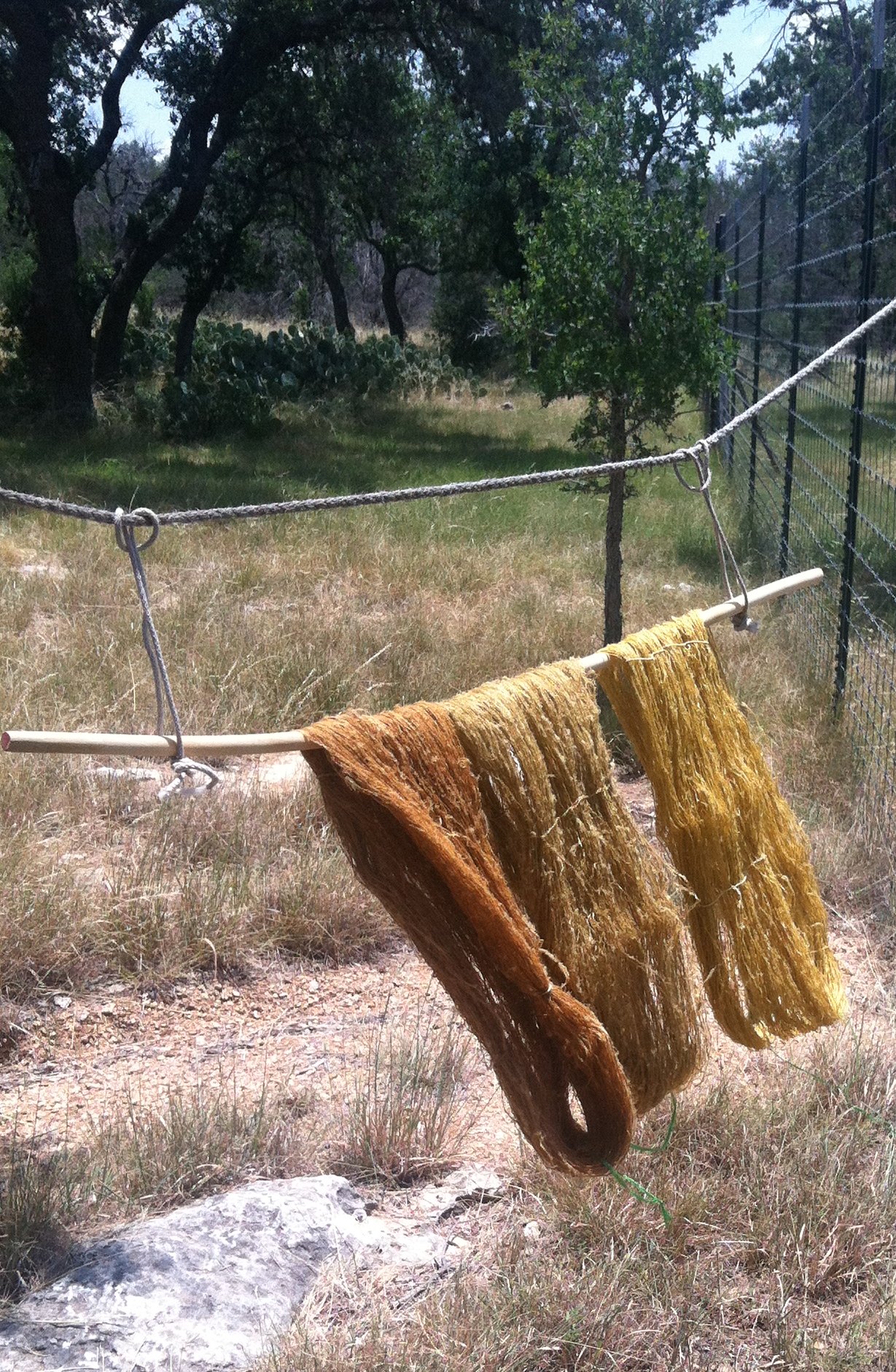
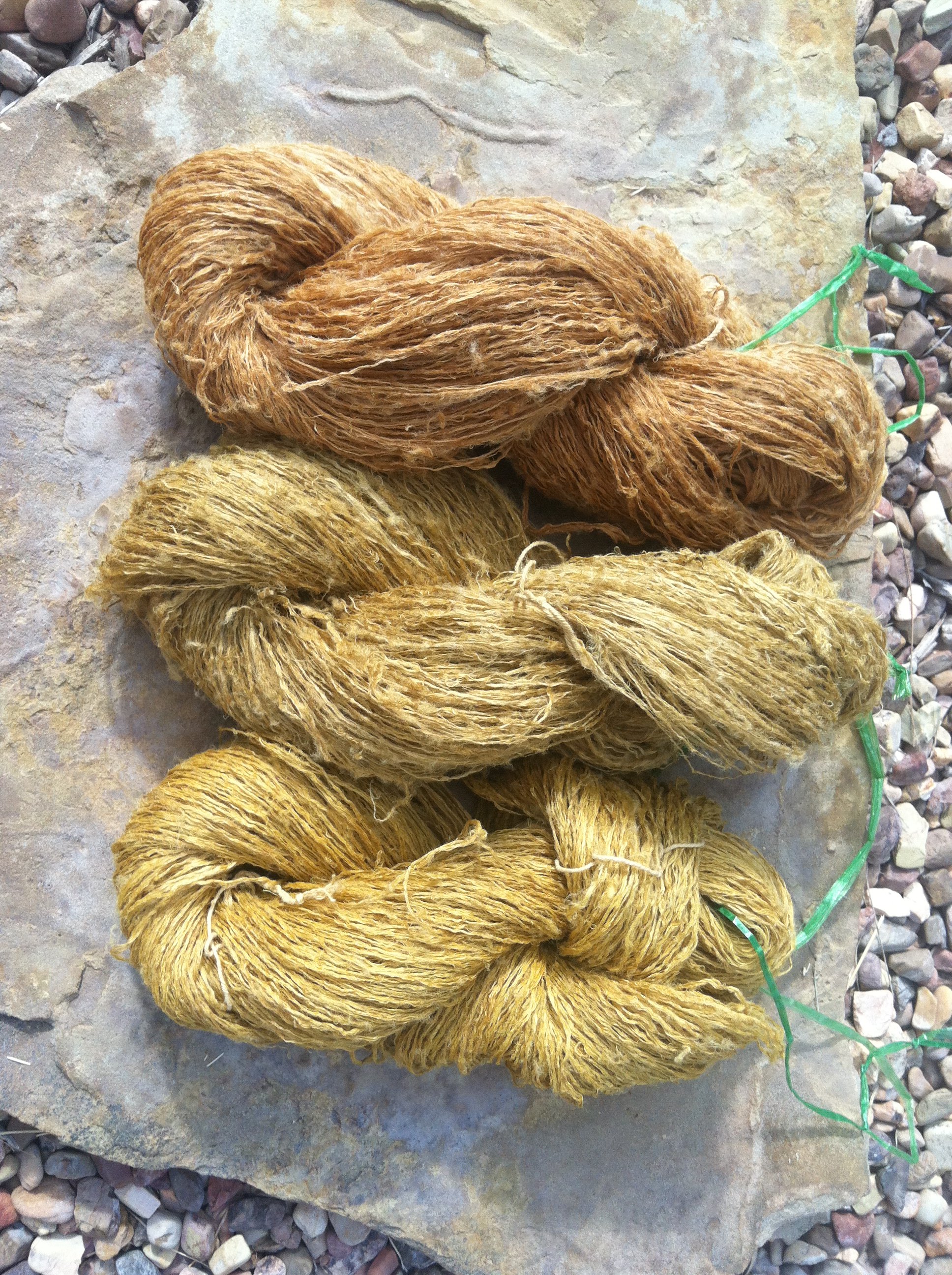
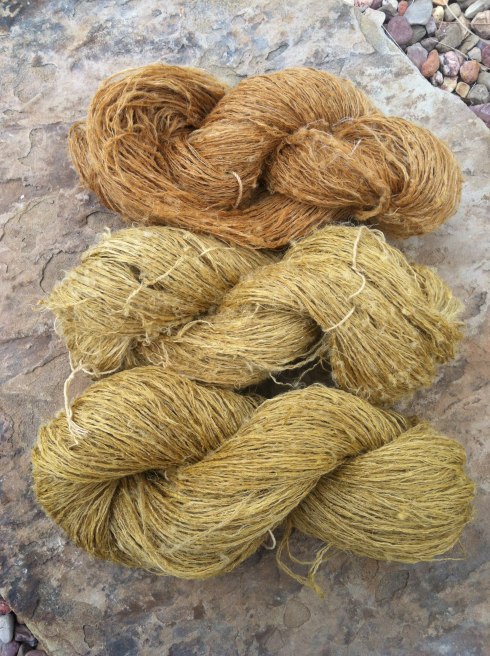
Cold Persimmon Dips with some Vintage varieties!

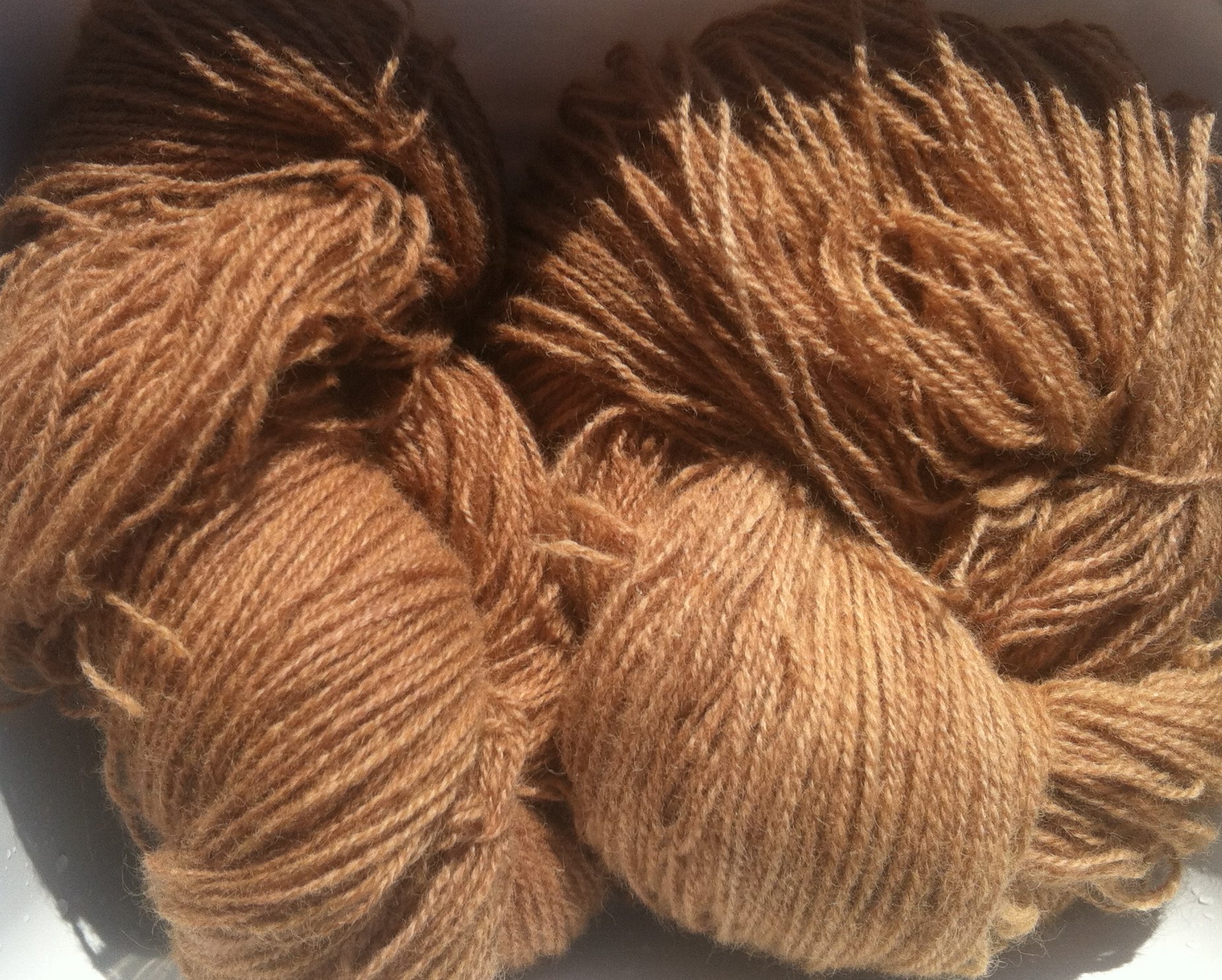
Next I had my aged persimmon juice, 2011, 2012 and this year’s 2013.  In my search for black I’ve been holding back some of the persimmon as I harvest it and set it aside to age and see if I can come up with a nice black.  I am very happy with the 2011 color.  There was not too much difference between 2012 and 2013 so I think a two year age is best.   It has deepened considerably and I still have set aside to see what another year does to the color.  The other colors I’ll probably over dye with the upcoming indigo harvest!

IMG_1374

Top 2011 vintage
Middle 2012 vintage
Bottom 2013 fresh dip

IMG_1378

Did 3 dips of 10 minutes with an hour of sun time in between each dip

IMG_1388

Before Orvus wash

IMG_1396

After Orvus wash


Degumming silk

3 Jul

This morning is dedicated to degumming silk. It is a pleasant morning to listen to the kettle sing and watch the cat in his dream of catching hummingbirds.

I did a cold test of Habu’s Kinari N-63B, explained here:
http://www.habutextiles.com/N-64-KINARI

in oak gall, persimmon and two lichens before I degummed or mordanted the silk. The silk literally sucked in the dye without any treatment. Hmmmmm, something to consider in the future.

20130703-095742.jpg

After degumming the silk will make its way thru the mordant prep and finally the dye pot! Two skeins will make their way thru the cold process of persimmon dips and sun darkening. The second two will go thru the high alkaline lichen pot. We’ll see how it holds up. I have confidence it will!

20130703-100153.jpg
Later this afternoon my weld flowers have simmered and are waiting for a wool dip. We’ll see if I simmered enough for 8 ounces of wool!

20130703-100451.jpg

Picking & Straining

29 Jun

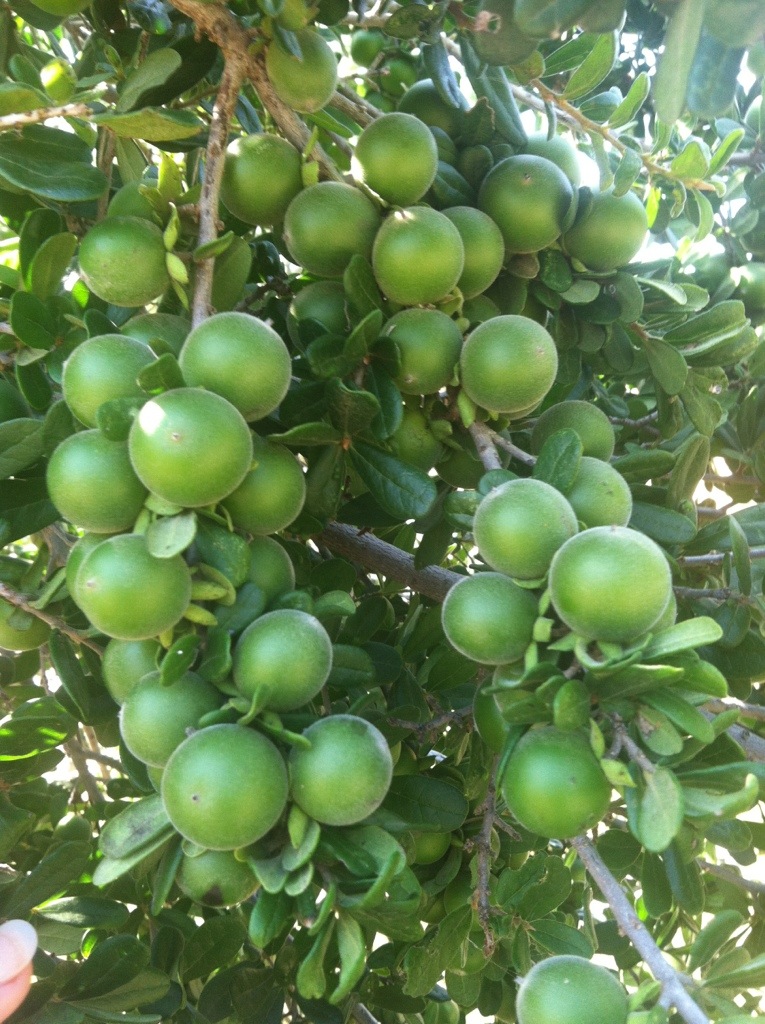
So before temps soar above 100 today I picked & prepped some more dyestuff. The Diospyros Texana Persimmon branches are heavy with the green fruit and is ready to pick.

An item of interest, in the four years I’ve been watching the persimmon bushes I’ve never seen a heavier or thicker crop on the branches. I don’t know if this is the effect of more rain earlier this year compared to the 2009 & 2011 drought years. We’ll see soon how the color comes in on the silk.

20130629-112712.jpg
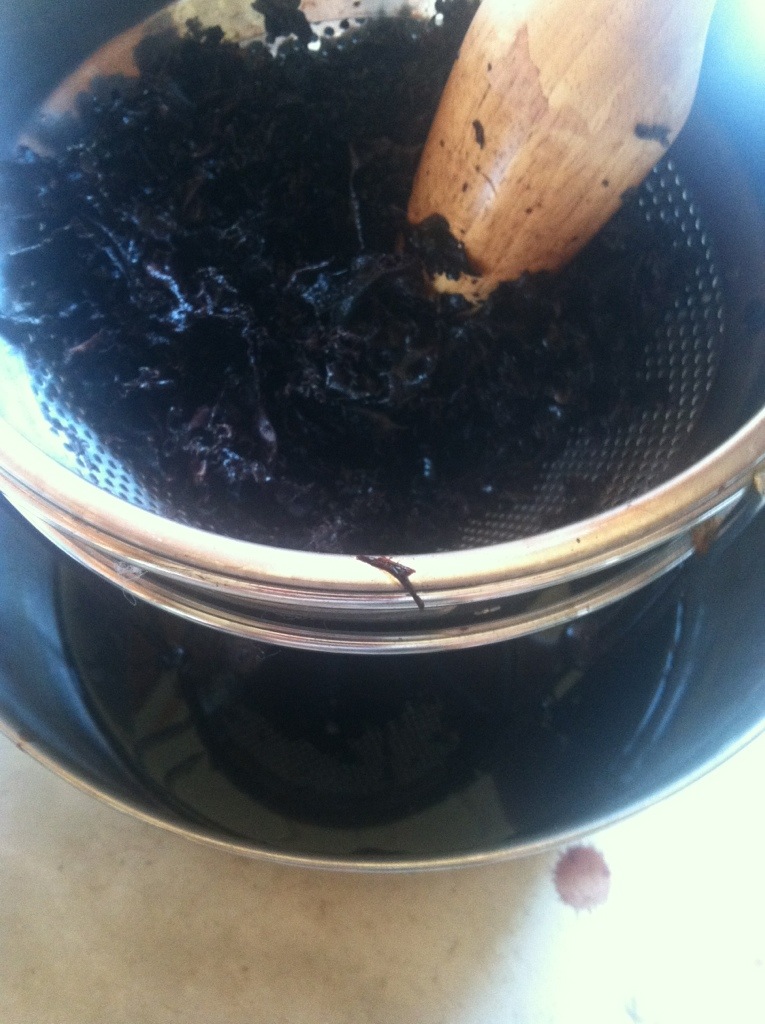
In addition I strained some of my Parmotrema Austrosinense Lichen which has been soaking in a high ph bath of ammonia and water.

20130629-113215.jpg

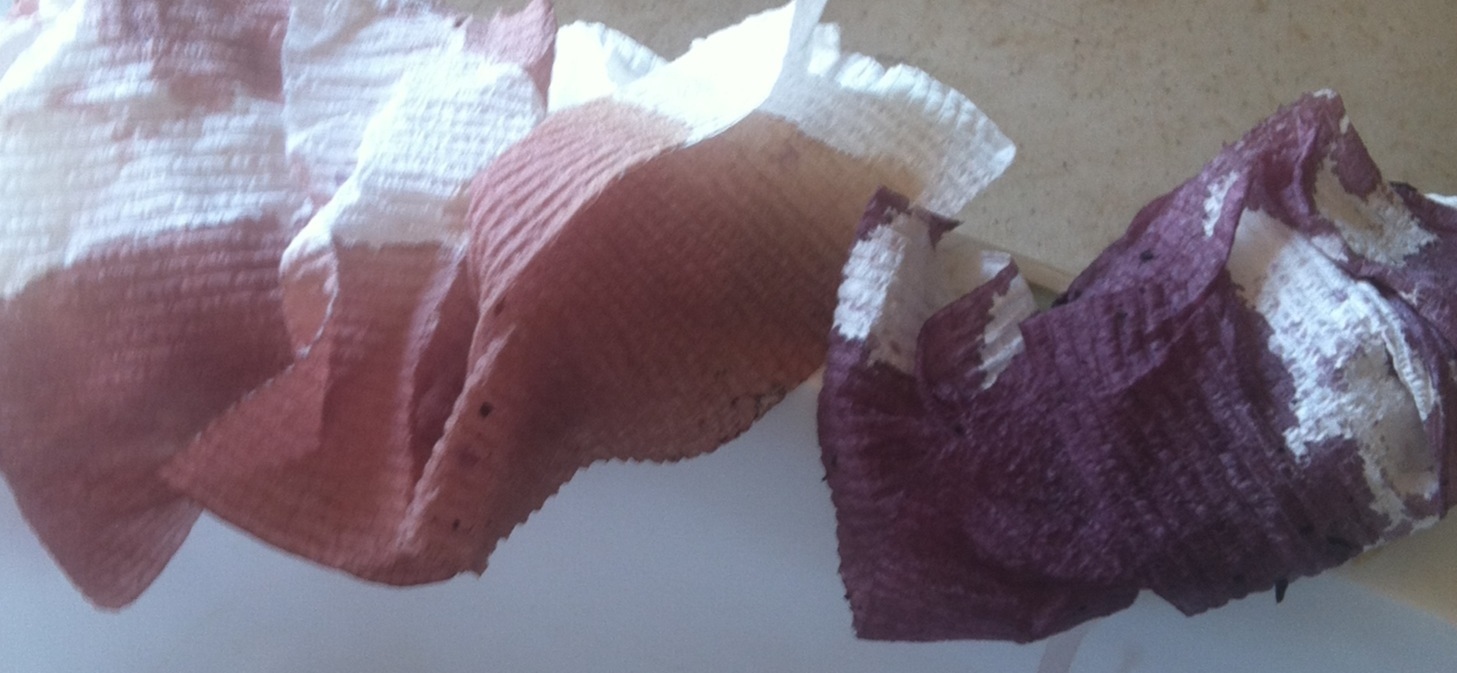
The lichens gathered in Dec 12 are on the left and the lichens gathered in early fall 2012 are on the right. My paper towel test gives me a decent indication as to what color to expect a dye bath to yield. Do you think it is the 3 month soak difference or the time of year gathered?

20130629-113440.jpg

Time to wash the dishes & head inside to cool off!