Archive | Dye RSS feed for this section

Lichen Dye Digital Resource

7 Jun

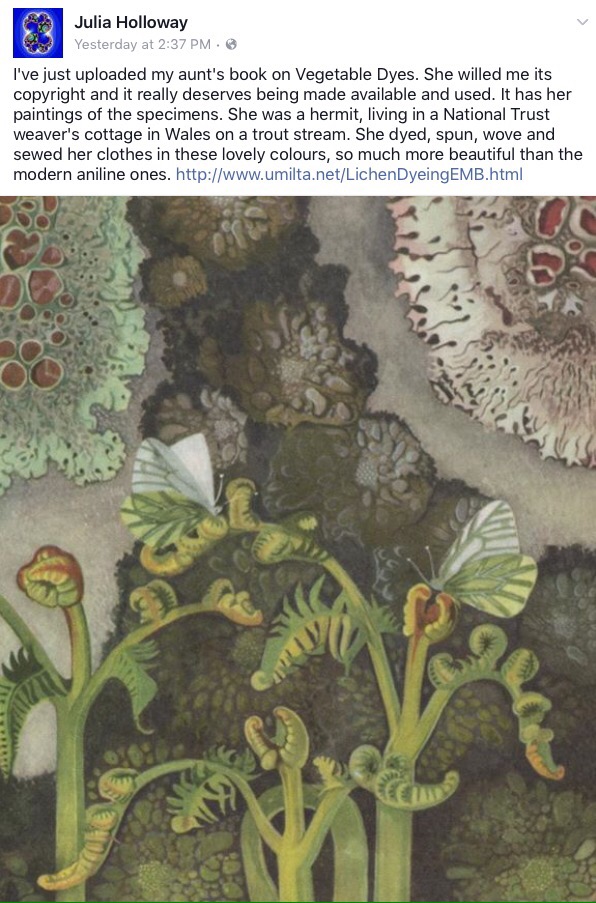
Since one is always looking for resources on lichen dyeing I felt obligated to share this link. http://www.umilta.net/LichenDyeingEMB.html

It came from this Facebook post….enjoy, if you don’t use natural dyes you will at least enjoy the illustrations.

3 days makes a difference!

28 May

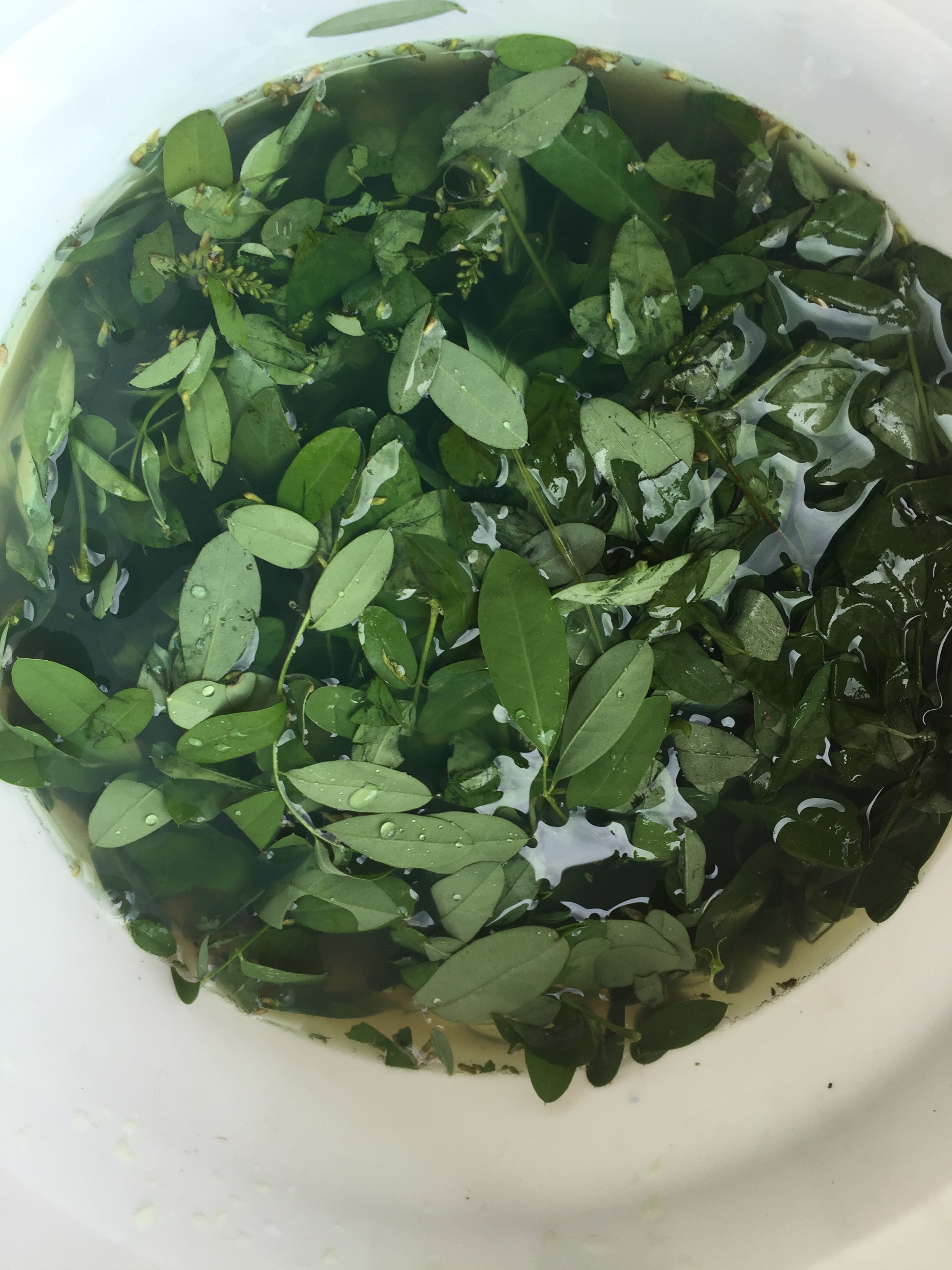
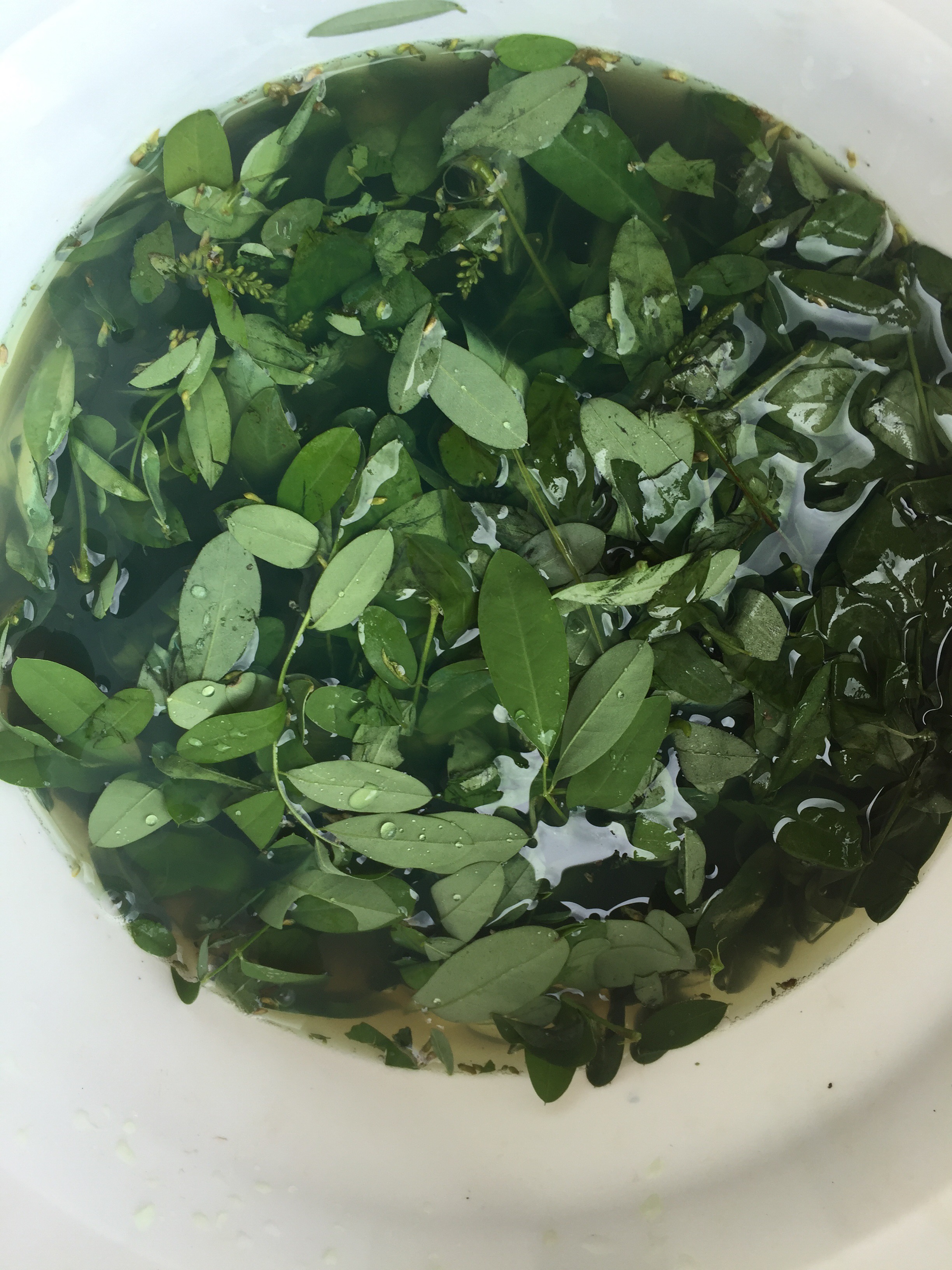
Here is a comparison shot of my suffruticosa indigo Tuesday evening and 3 days later after sitting with a shot of fructose added. There be indigo! I am going to feed it again on Sunday, stir it up and add some pickling lime to see if I can get my indigo to strike some silk. 

After 3 days…

Where we started…I am happy to take suggestions from any indigo grandmother out there for alternative paths! Trying to avoid thio…

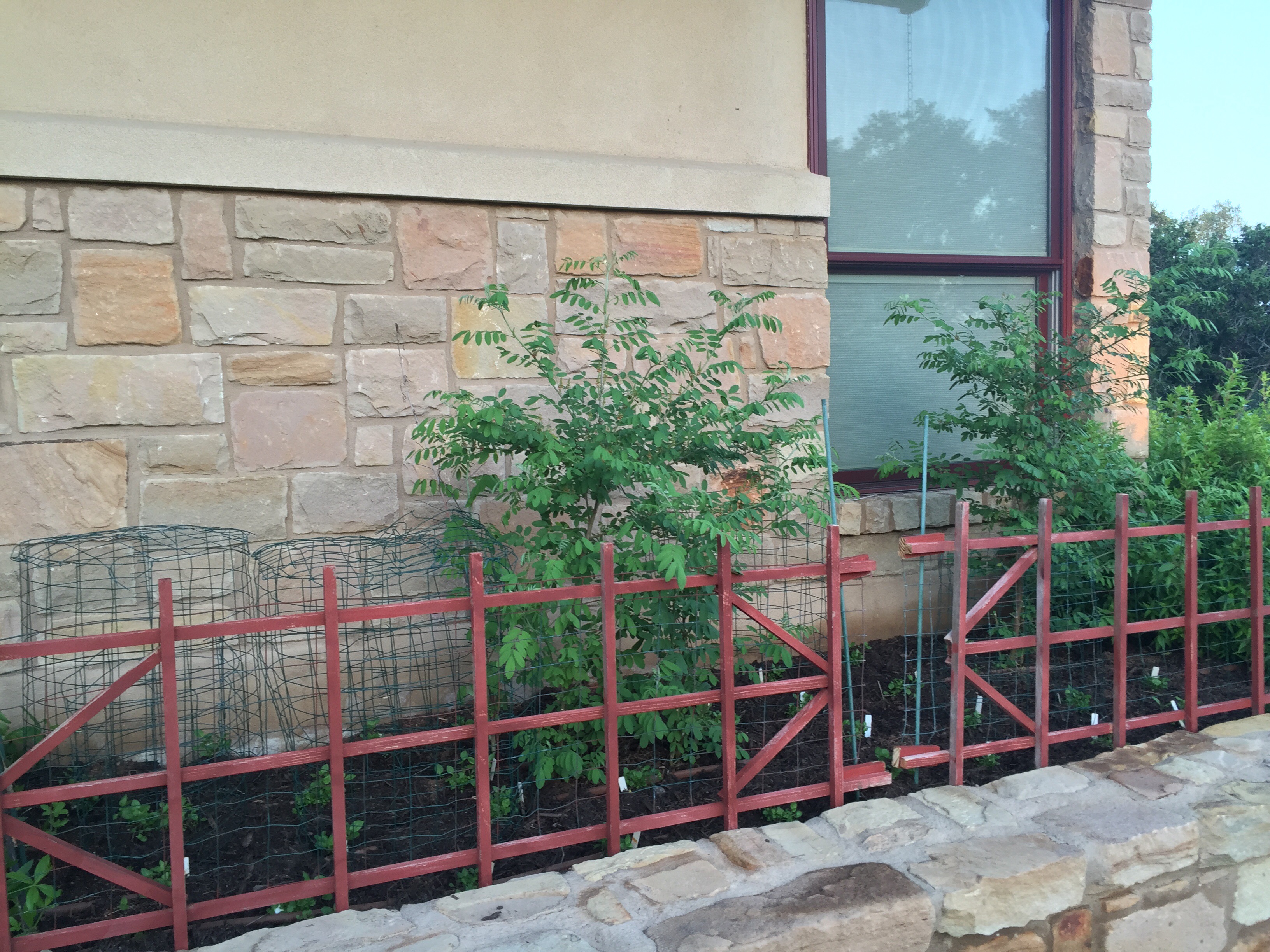
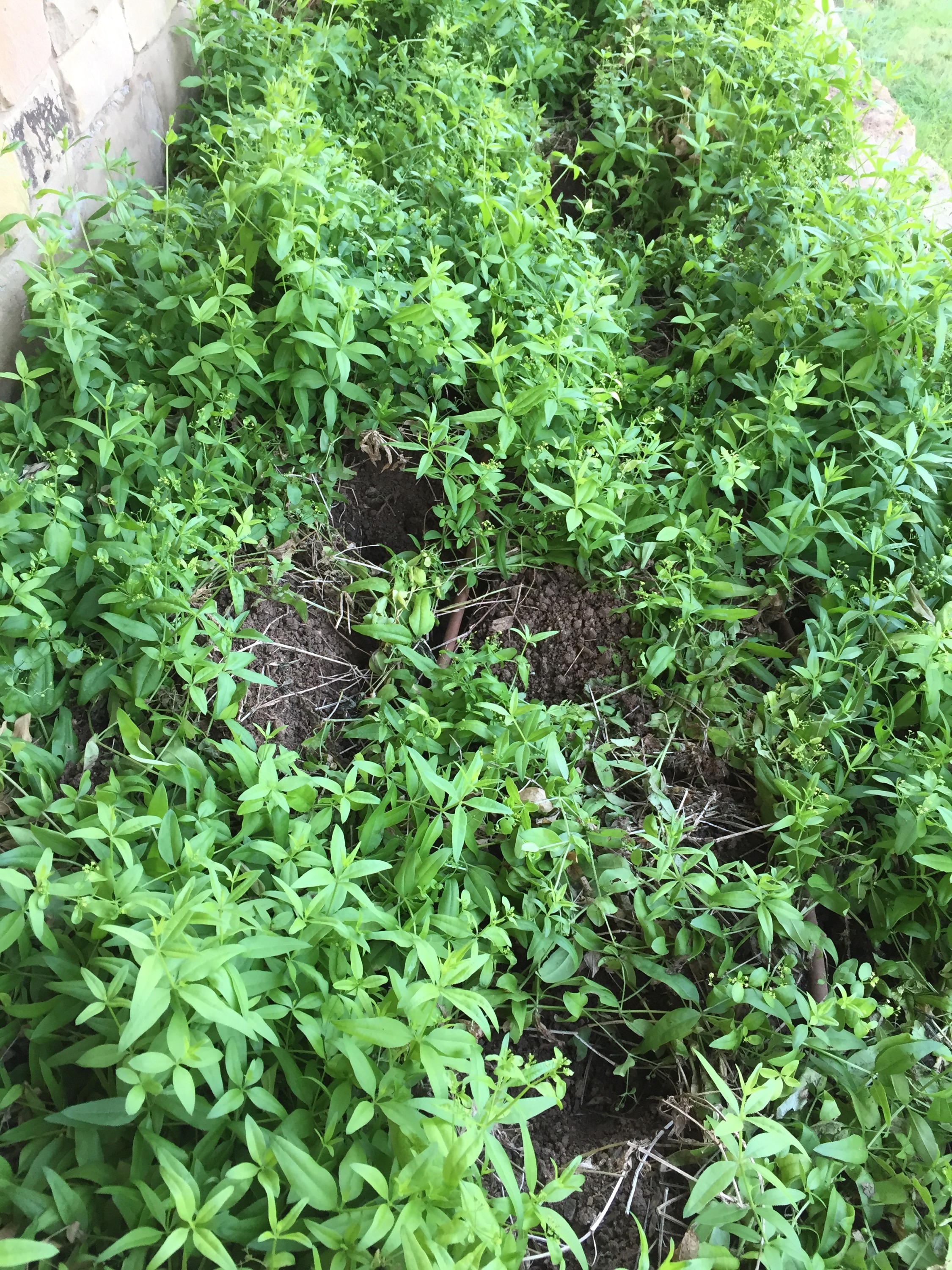
And here is my rigged anti skunk/raccoon or armadillo cage device to keep the critters from digging for grubs between my Japanese indigo & indigo suffruticosa! Evil creatures!

In the dye garden

25 May

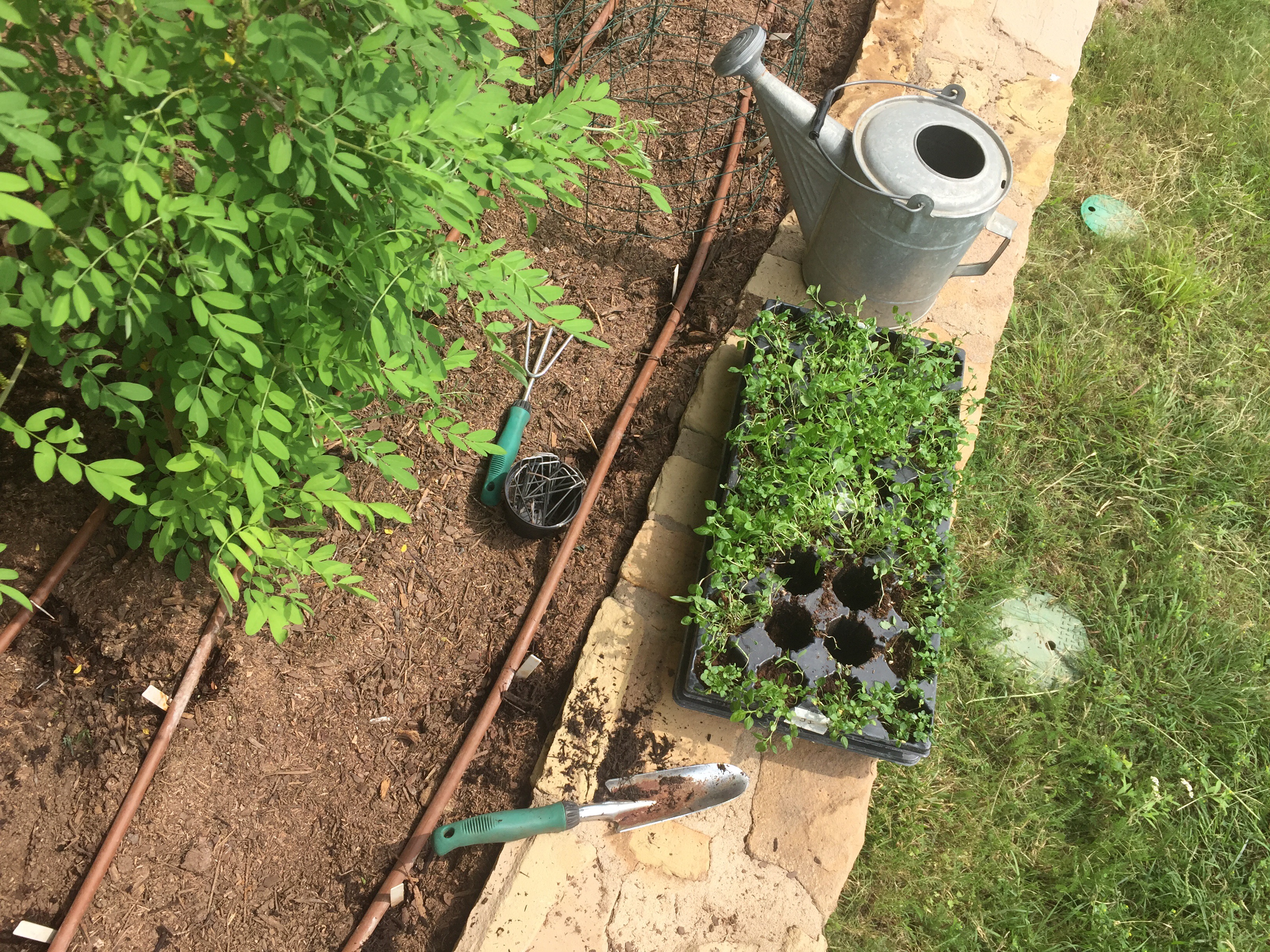
Today was spent trimming and planting…

Trimmed back the indigo suffruticosa and put it in a fructose bath to sun soak, more to come on that…I already see blue, just need the sun to kick in.


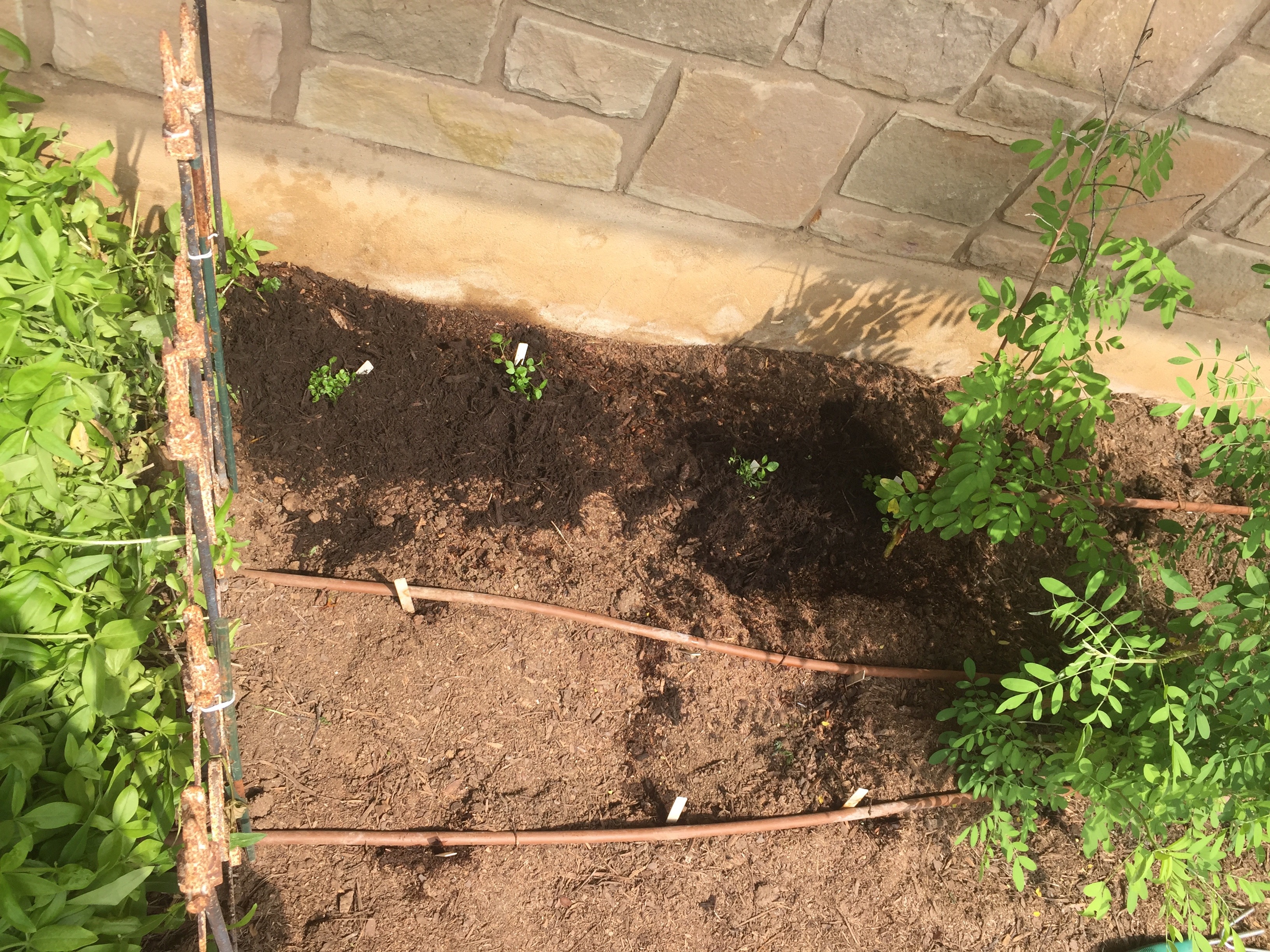
Planted my Japanese indigo


We’ll see how the madder root & the indigo suffruticosa share space! 

Looking elsewhere in the garden my cota or Navajo Tea is struggling back after an irrigation line failure…

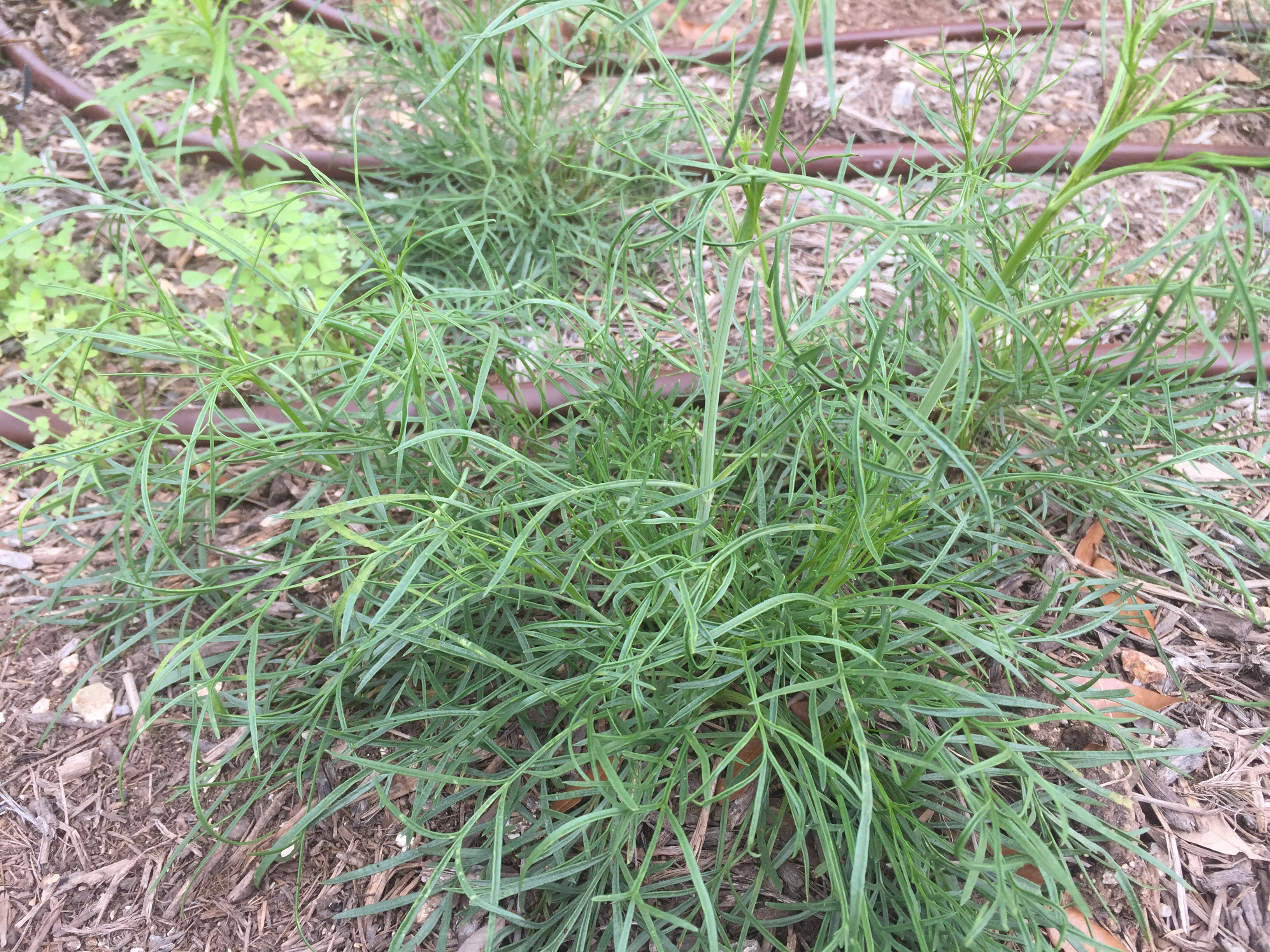
And my weld is almost ready to cut for yellow dyeing, it too suffered from irrigation line failure.

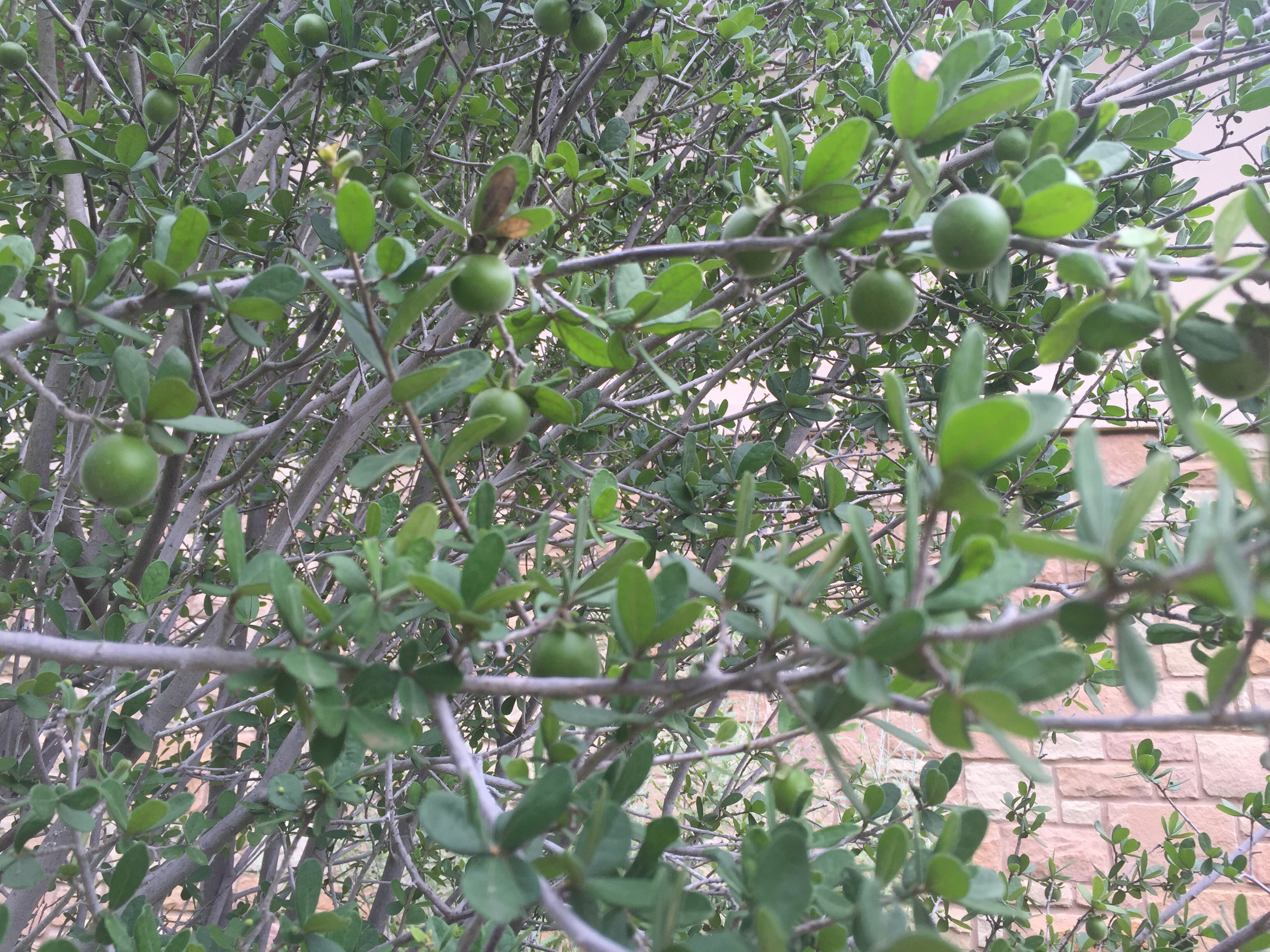
And finally the Texas Persimmons are coming on line! 

So with red (madder root), gold (persimmon), bright yellow (weld), orange (cota) and blue (indigos) how can I be bored at the dye pot this summer? I will be on the elusive search for a black by overdyeing some of these colors. Always a lesson in acceptance! 

Lecture for Master Gardeners – Roots, Wood, Bugs and Berries

17 May

Sample plants from my garden & acreage for this afternoon’s lecture 


Master Gardener Association

Marble Falls Church of Christ 

3:00 on the 3rd Tuesday: May 17th 

Natural dyestuffs fall mainly into the following broad categories: Leaves and stems, twigs and tree prunings, flower heads, barks, roots, insect dyes, outer skins , hulls and husks, heartwoods and wood-shaving, berries and seeds and lichens. This is one of the breakdowns provided by Jenny Dean, a noted colorist in Craft of Natural Dyeing.
I will talk about how we get those colors to “bite” with mordants. We’ll consider how you use different “assists” to push the colors different directions such as vinegar, iron and even the impact the type of water used, rainwater versus well water, has on your colors. We’ll look back in time at what was used historically and talk about safety today. I’ll have some examples of the colors produced by cactus tuna, cochineal and Texas ball moss plus more. I won’t make a natural dye expert of you in one day but you will start looking at your garden plants in a new light. What color will your valley provide?

Madder root bed cleanup

28 Apr

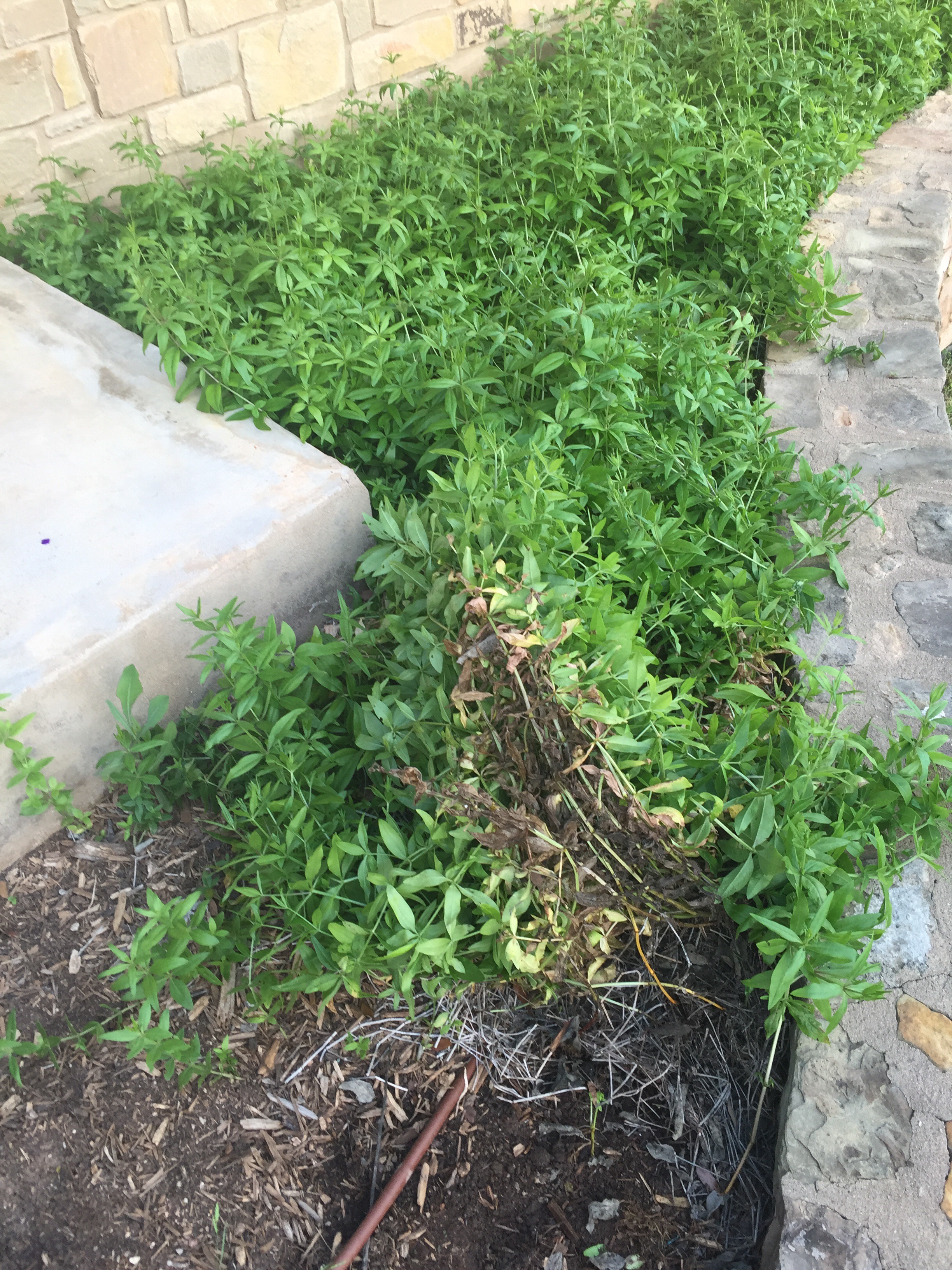
The first qtr of 2016 has been an amazing wet season. Plants & weeds have been very happy. The madder root bed took an unauthorized leap into adjoining garden beds.

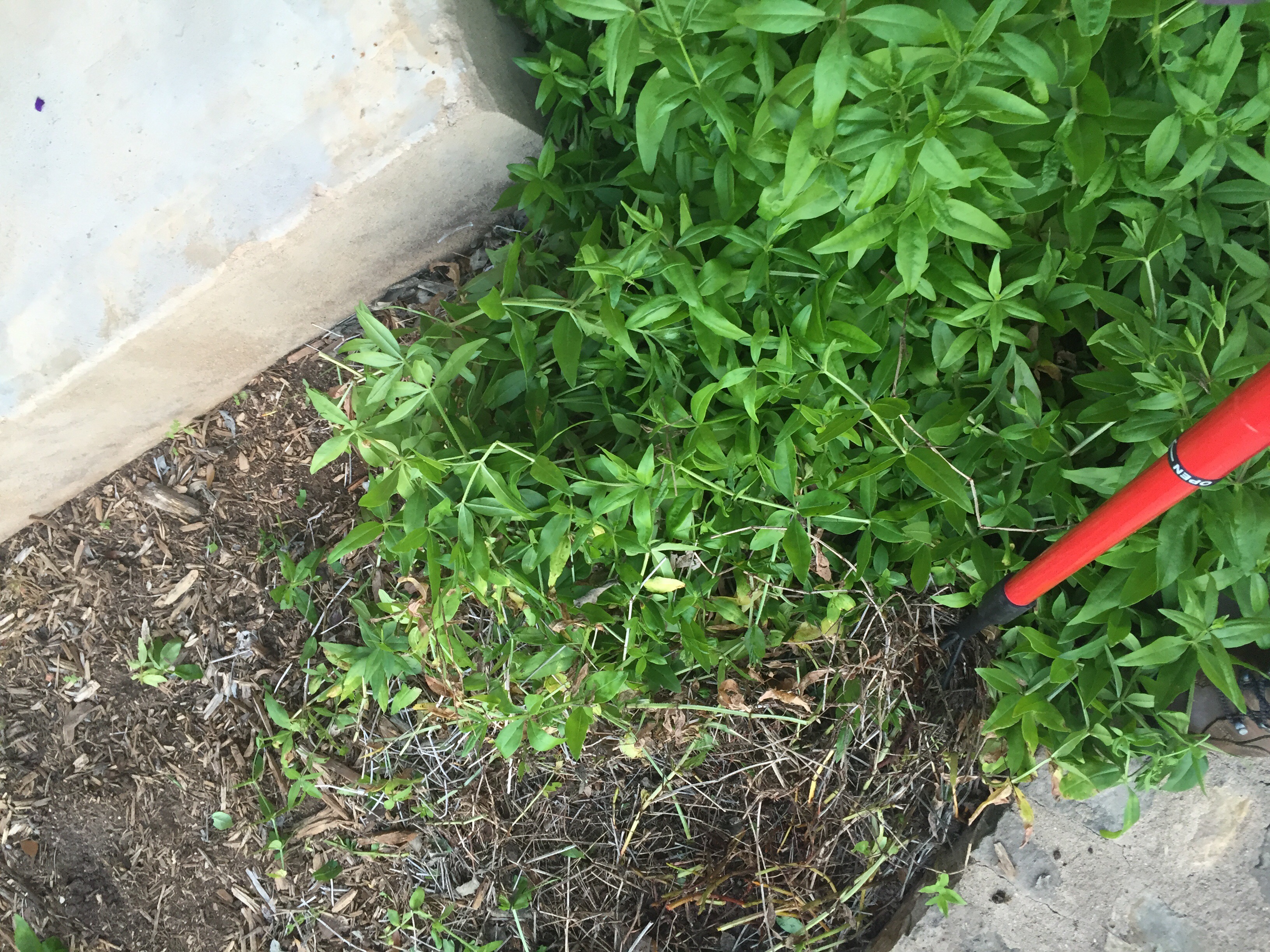
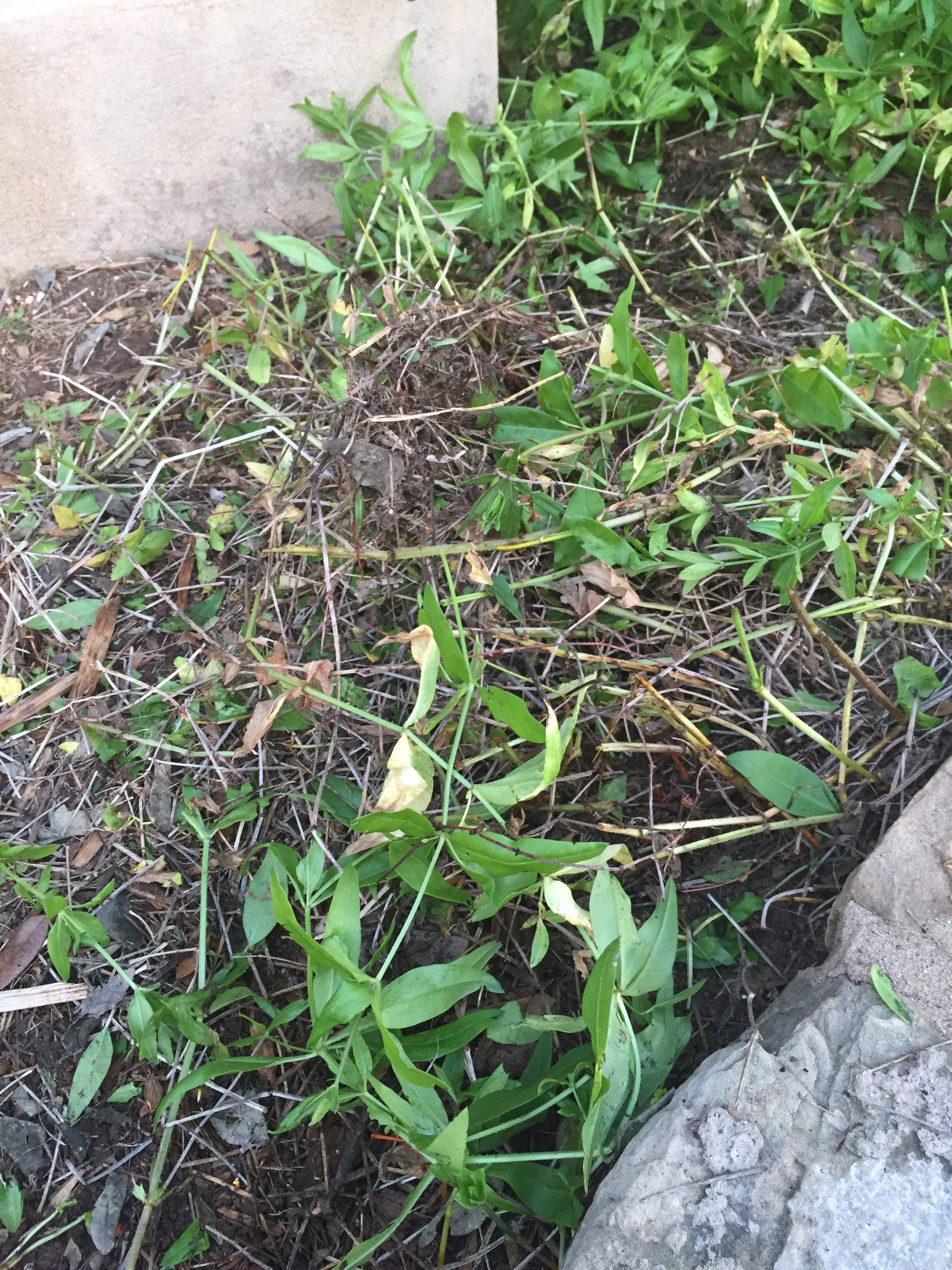
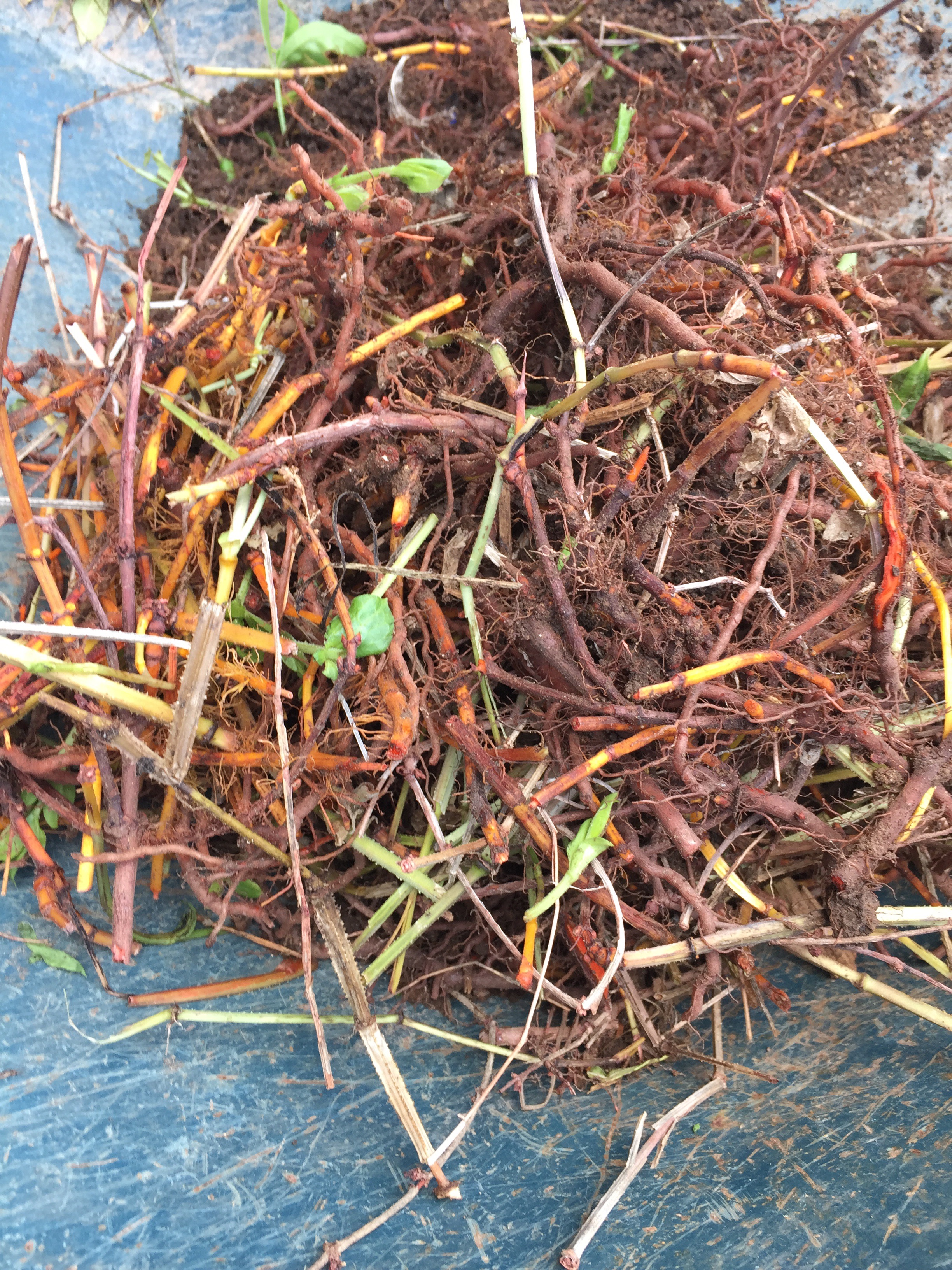
 I tore out the top green foliage and did some pitchfork work to move pesky roots that ran along the irrigation line.


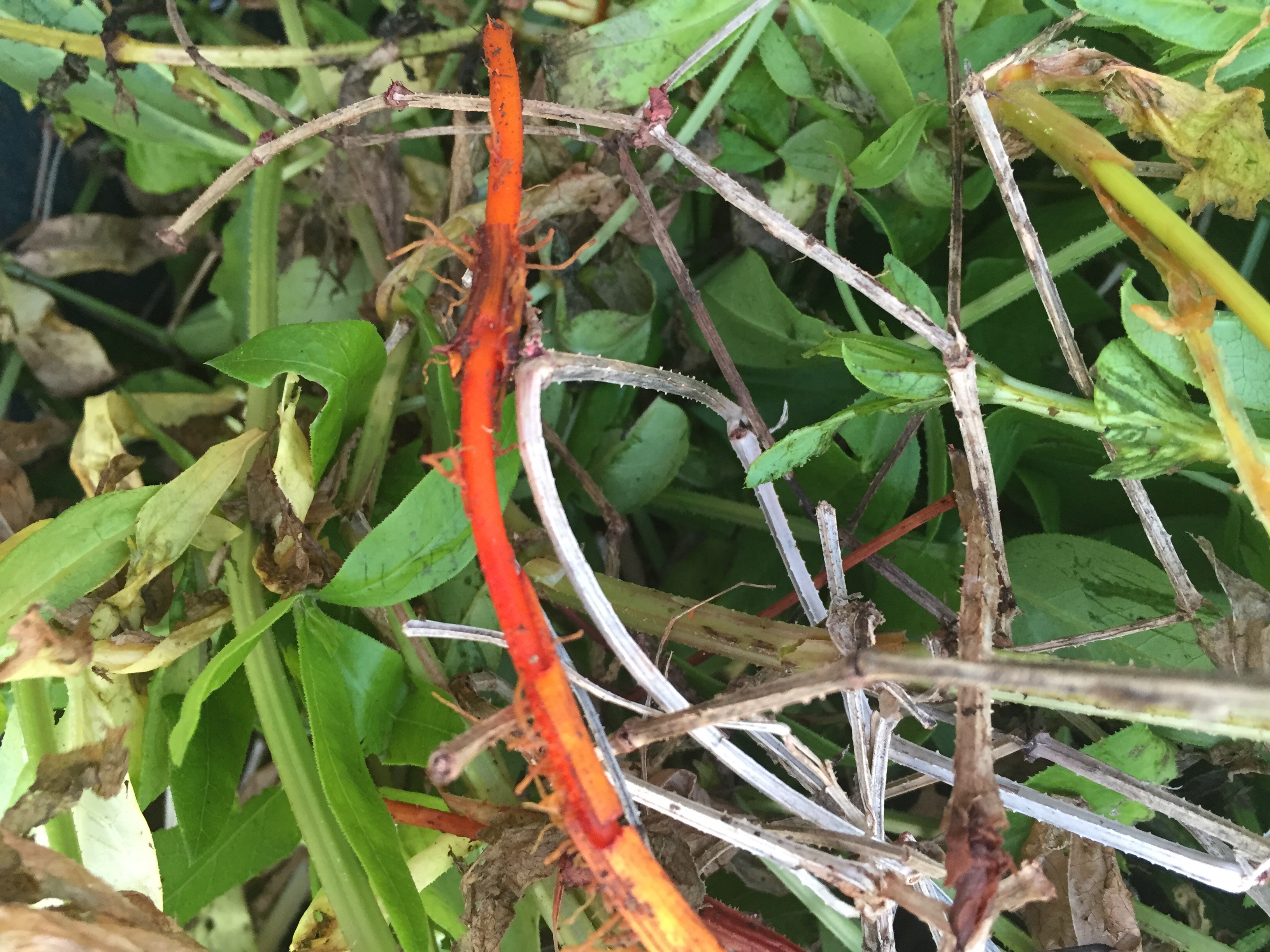
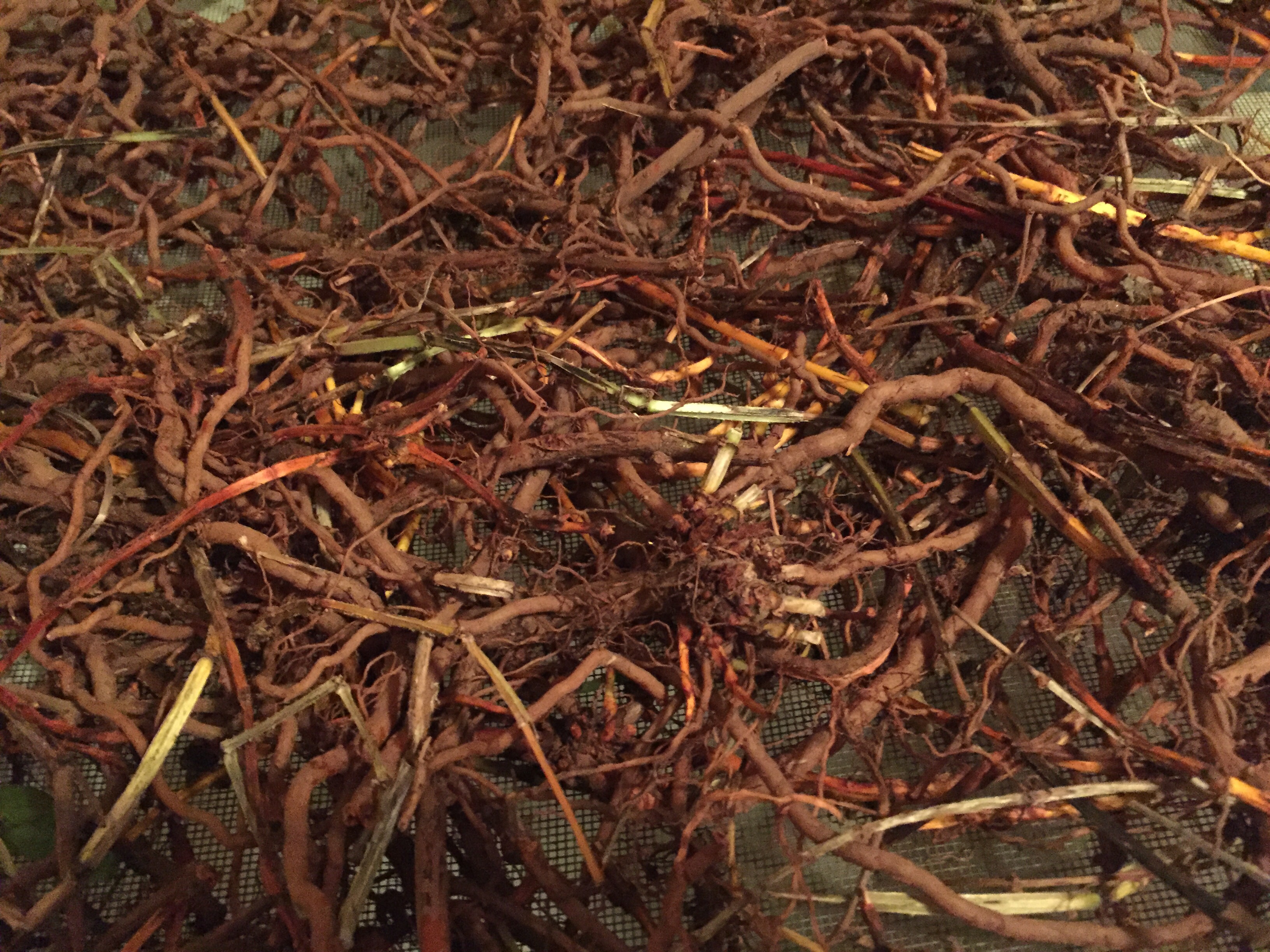
I was doing my best to ignore the red root glimmers but I succumbed and took time to separate out the roots that showed dye potential.

I pulled out the pitchfork and dug deeper. Even though they are not 3 year roots, I suspect I’ll get a decent salmon out of the root yield.


Roots are drying now and the bed is now clear for my indigo seedlings. I will report on the color obtained on silk using the “young”  madder root.

Prepping tannins for cotton

5 Nov

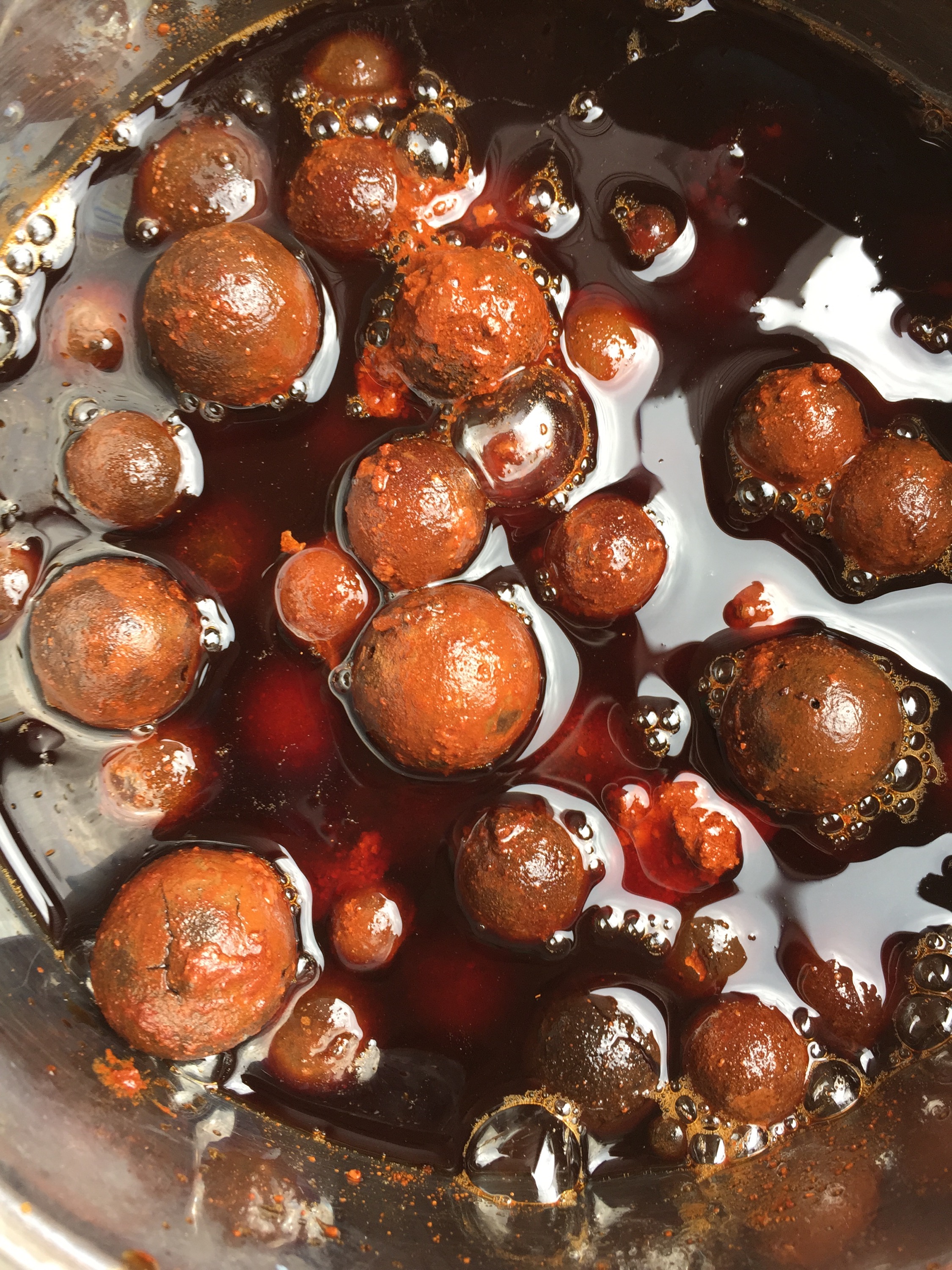
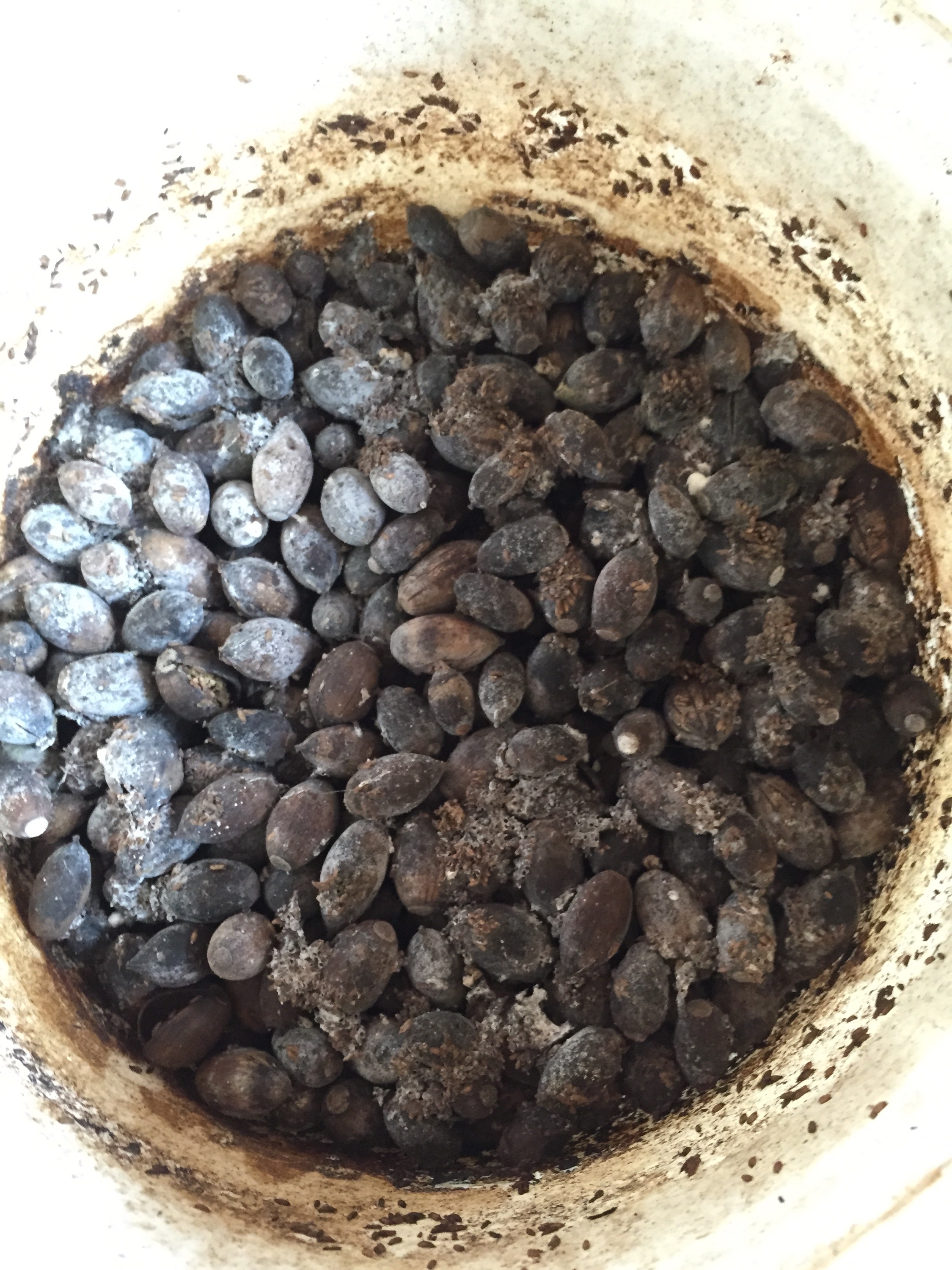
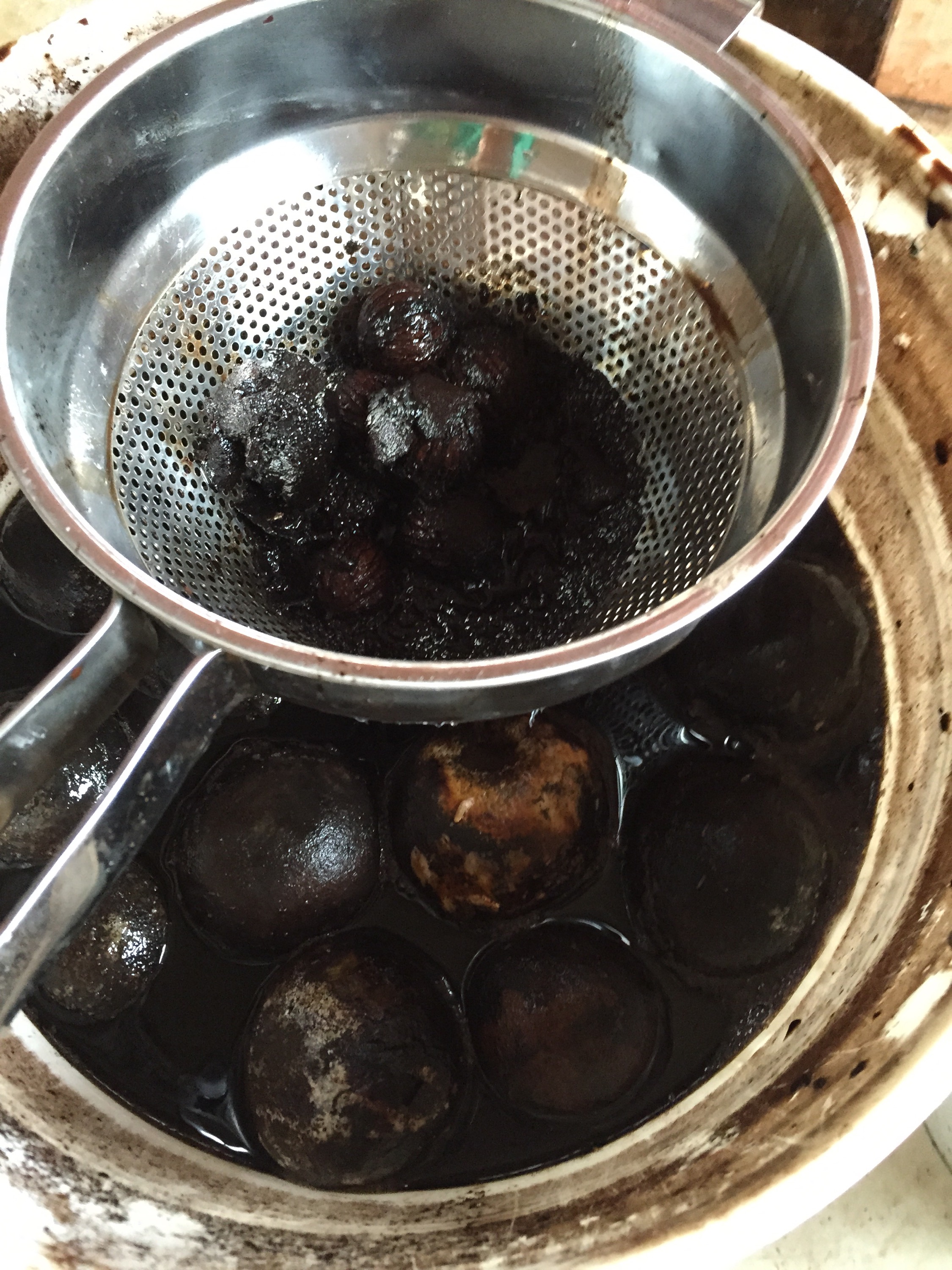
Because I can…I have local oak galls, acorns and walnuts (imported from the wilds of West Chester, PA) to choose from to use for tannins for cotton dye prep.  Here they are in their form of waiting in the wings till needed.

Oak Galls collected here in Blanco county   

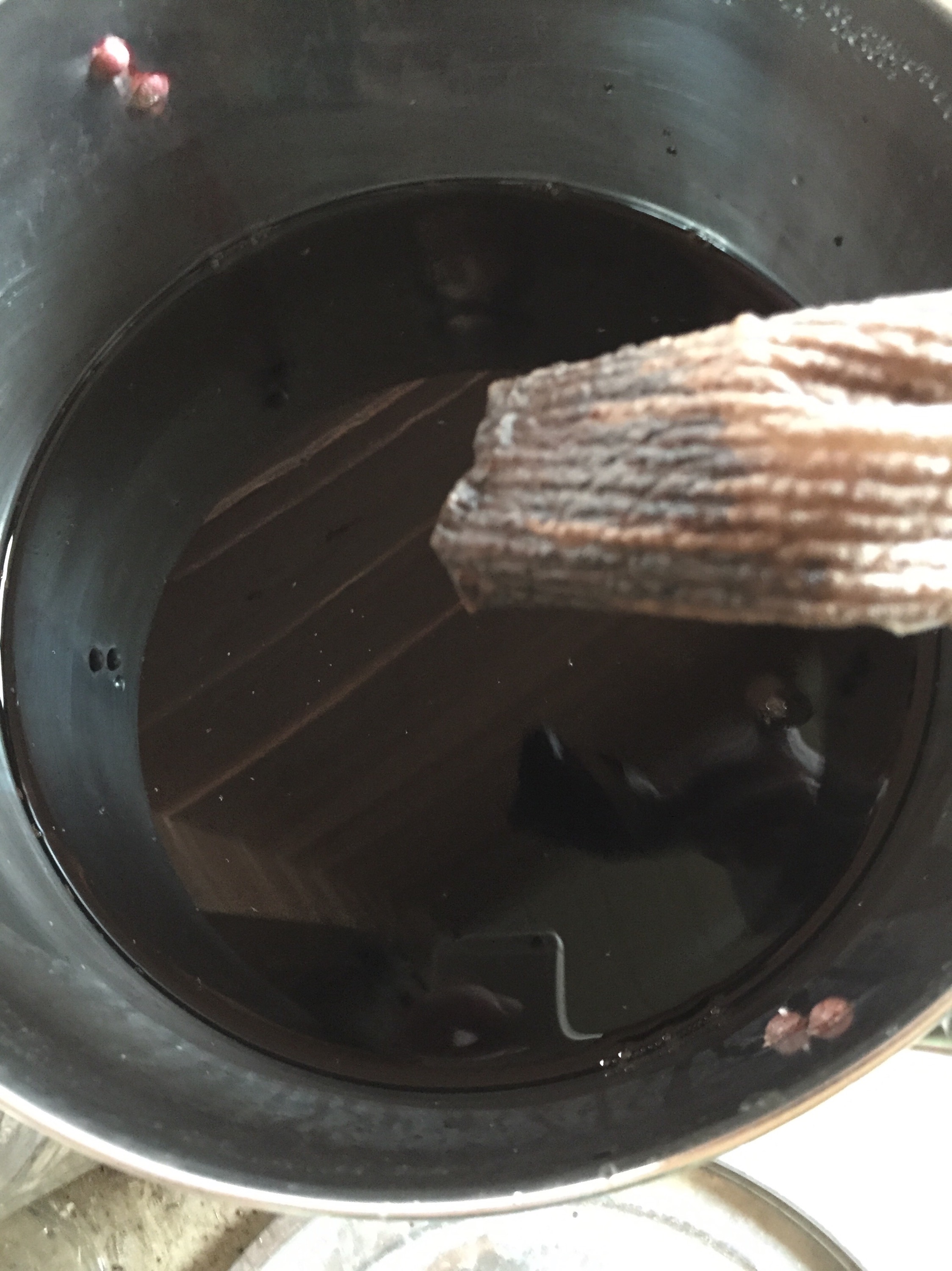
Walnuts in their slimy & stinky form after a year soaking with the newer walnuts carried here by Marge from West Chester, Pa.

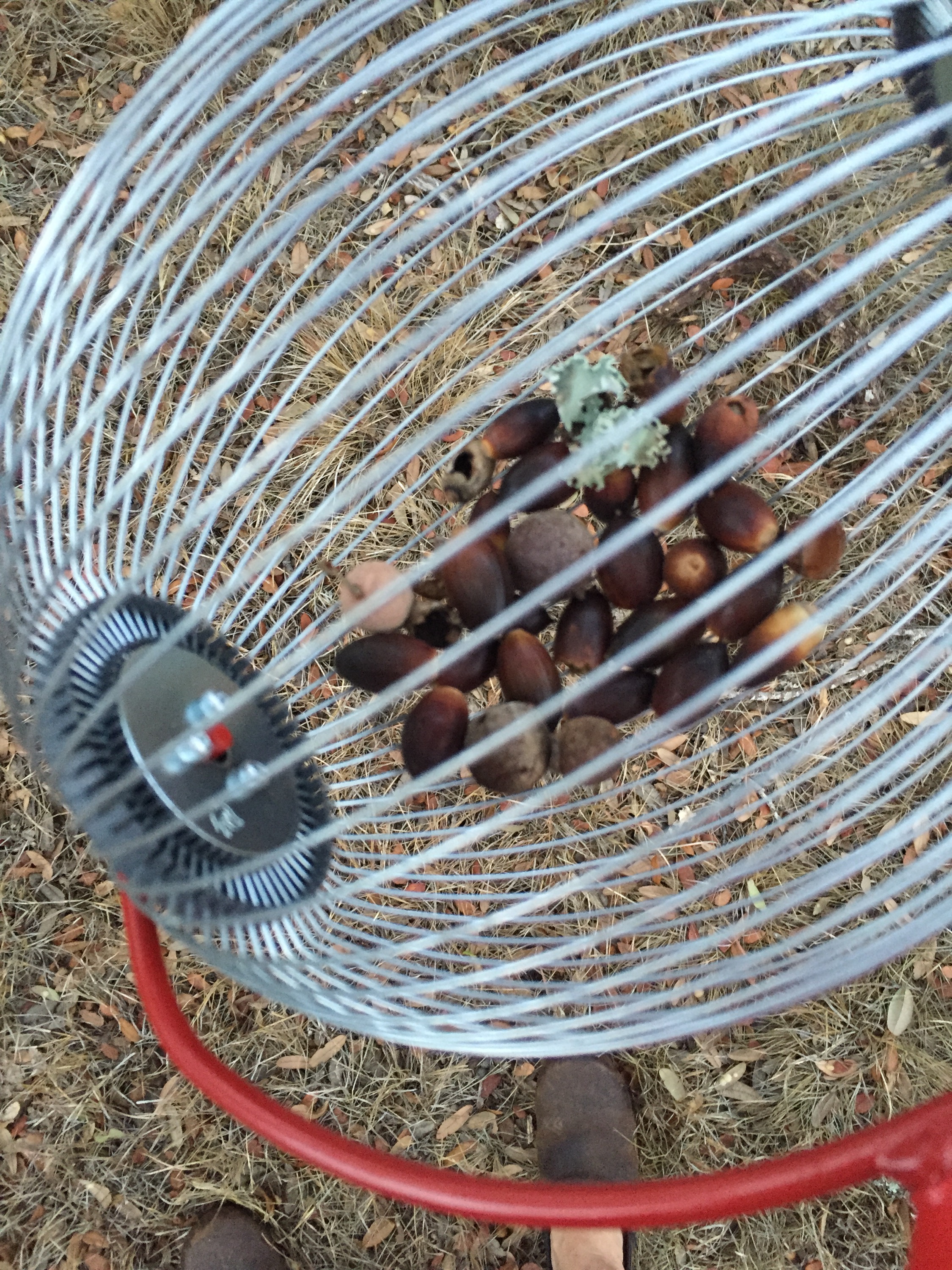
 And the ancient acorns from about two years ago…..whose mold I will not inflict upon anyone but myself!

 
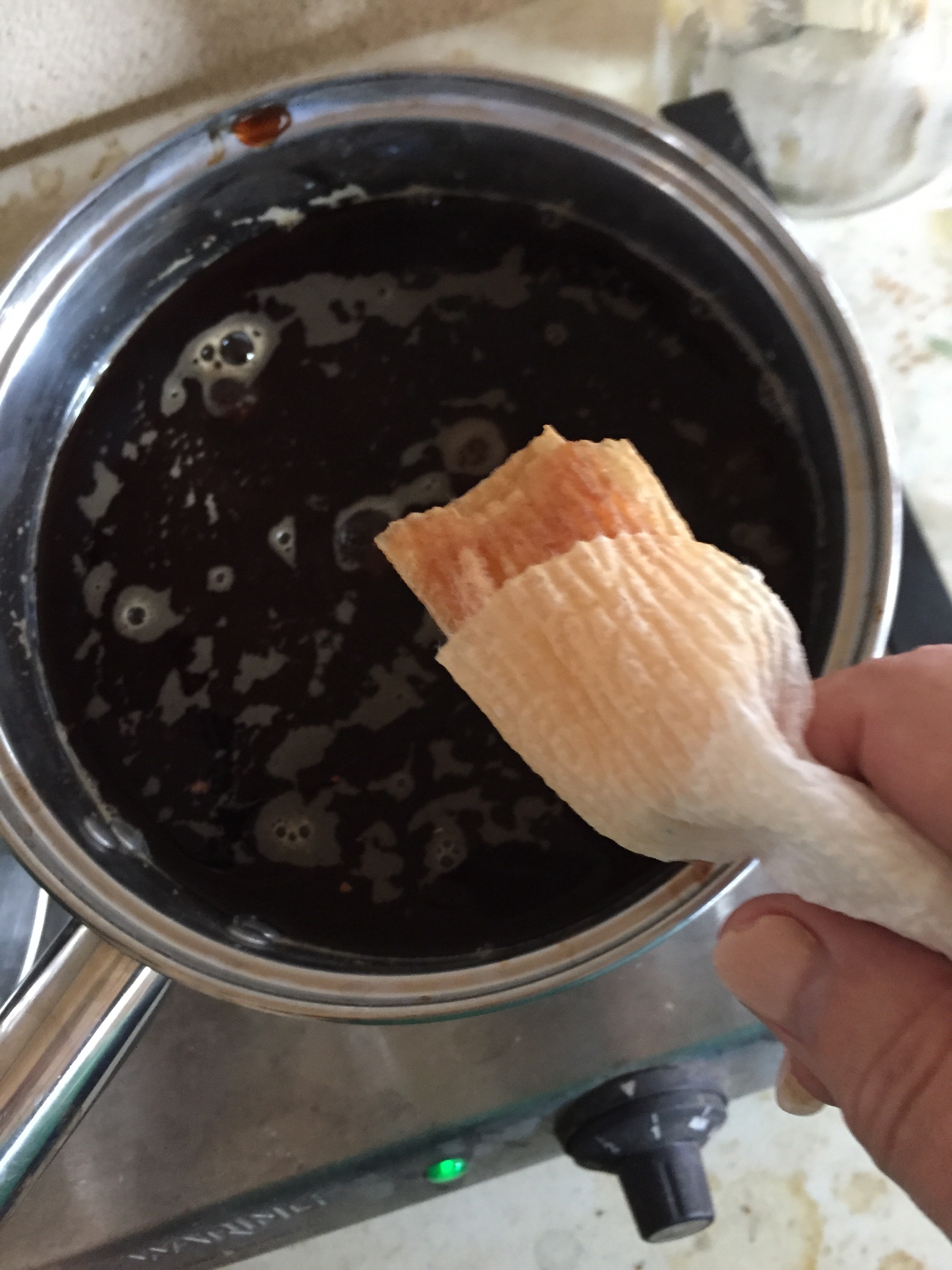
Testing between the walnut and the oak galls I get a dark tone & a yellow tone.

The walnut pushes brown…duh   

And the oak galls push yellow red.

Oak galls are the recommendation by several authors. I will use them in conjuction with alum acetate and a chalk dunging. I believe with dilution the cotton will shift to a beige color. 

Since different skeins will be overdyed with madder, persimmon and indigo I am not concerned about the mordant undertone. The tannin’s impact will be minimal on the final colors. The goal is to get the tannin in play on the fibers so they play nice with the alum acetate, the dunging and the final dye baths.


Dyers’ Fall Chores

24 Oct

In Texas we have finally gotten back to sane fall temps of 80 degrees. The garden is settling down and going to seed. We have some heavy rains forecasted so I harvested some indigo seed, gathered oak galls & acorns and took advantage of delayed rains to scour some wool for a November natural dye class.

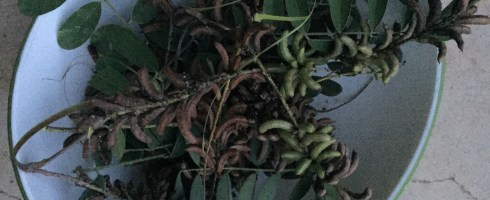
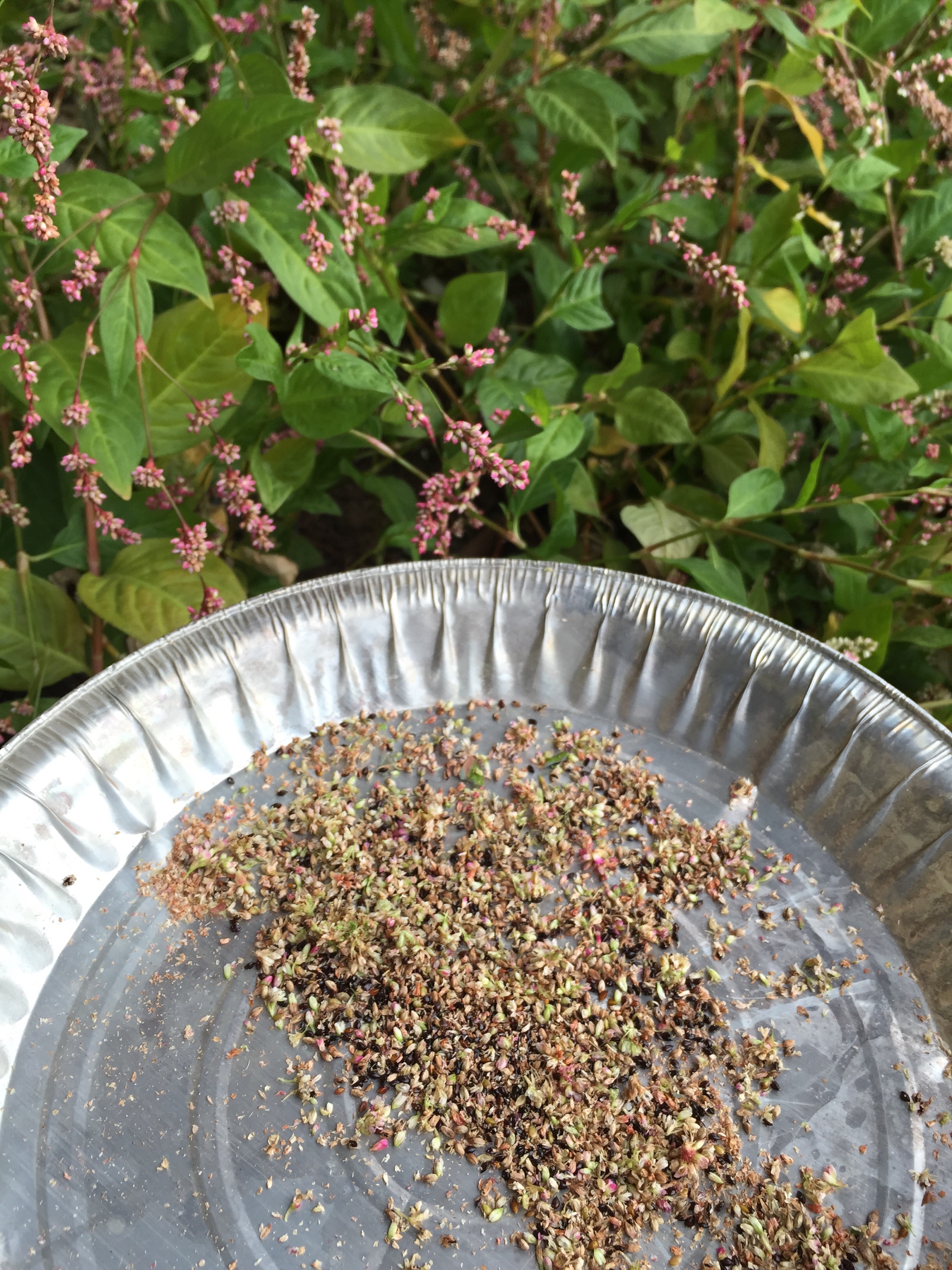
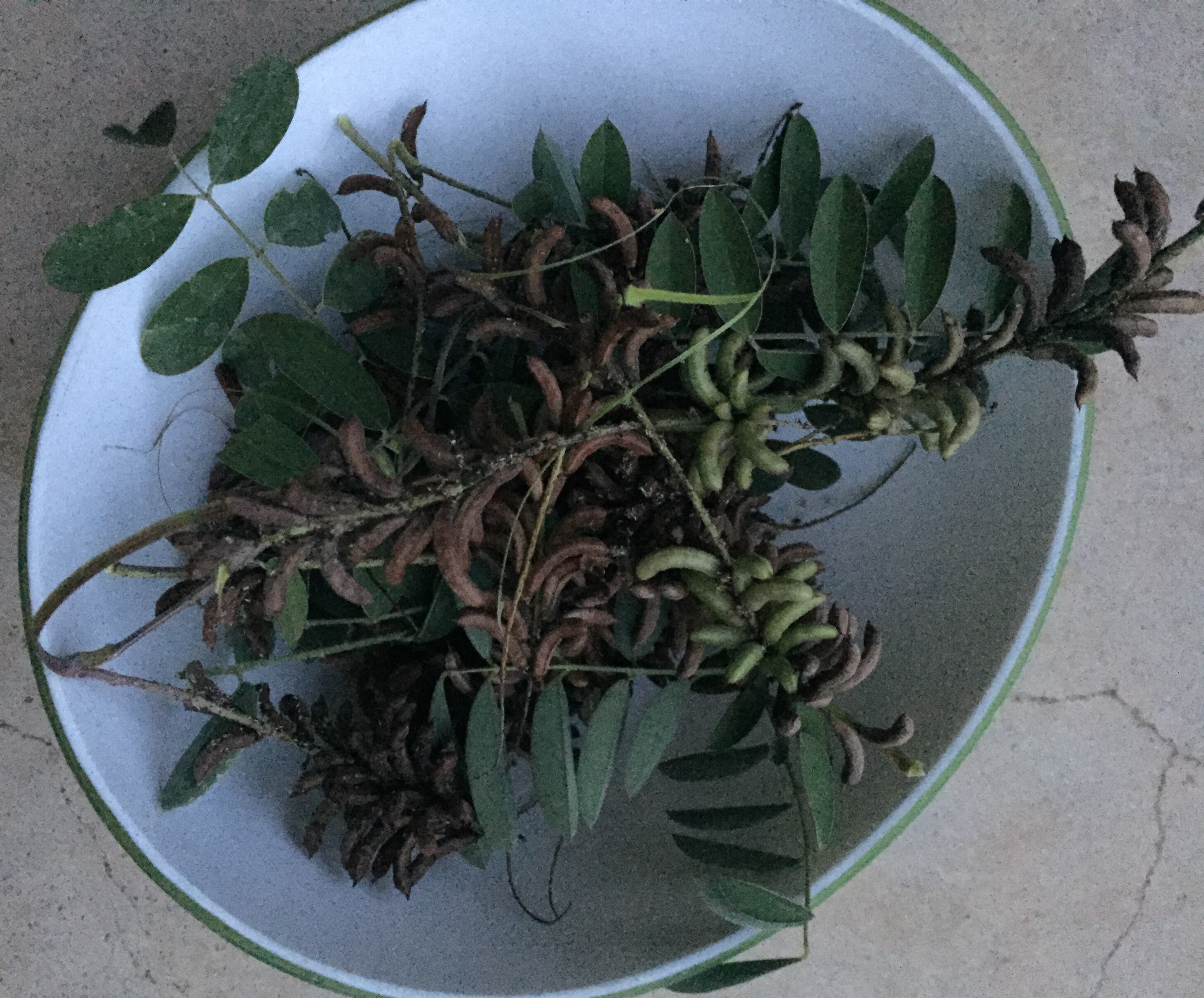
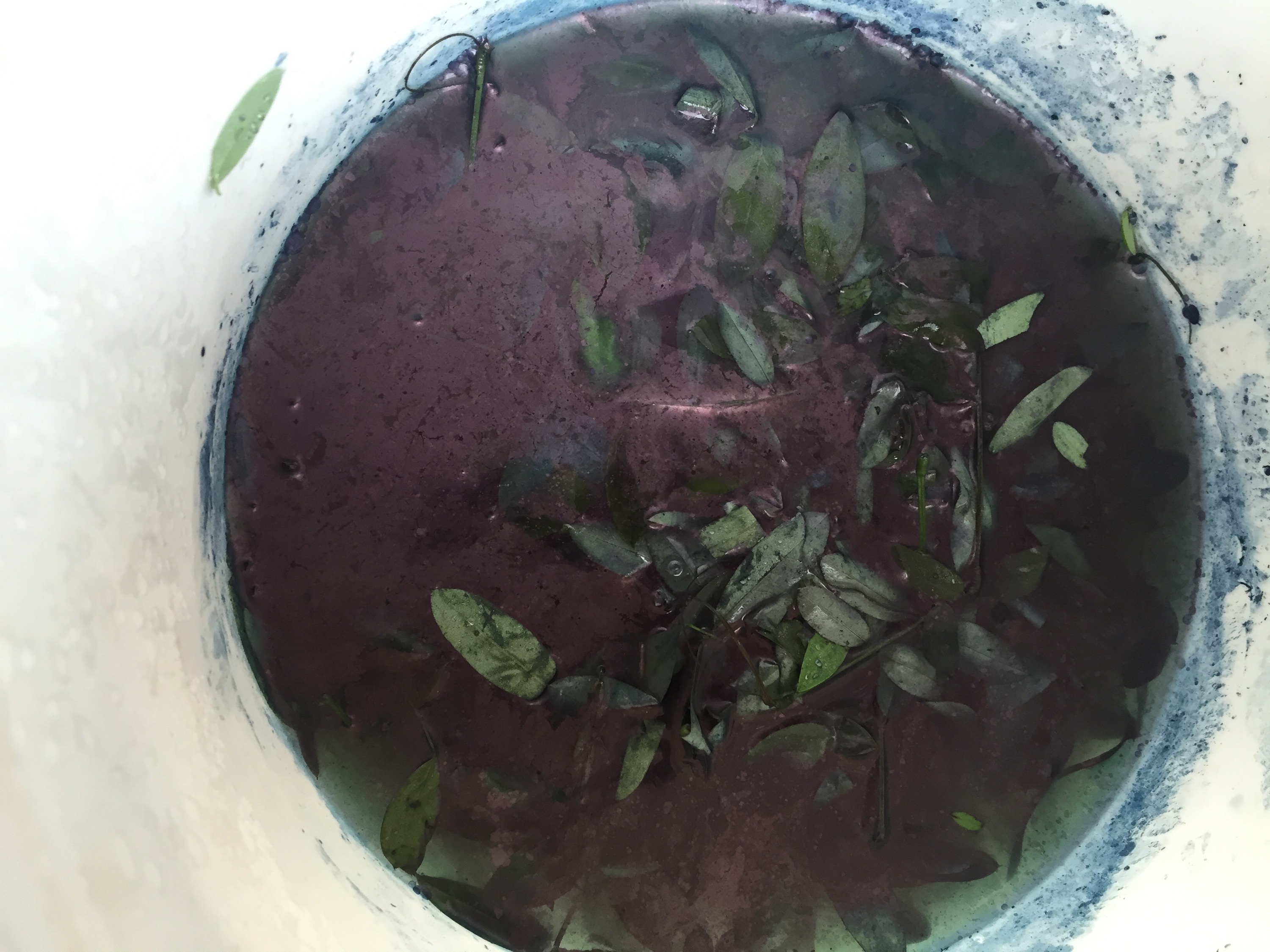
The Japanese Indigo yielded its small flea like seeds. When the winter winds blow in I’ll winnow the chaff out.  The Indigo Suffruticosa is still teaching me how to harvest it. The bean like seeds ripen to brown black and split open.   When you pull a seed bunch a branchlet usually comes with it. Determined not to waste an opportunity I’ve put these branchlets plus some wind trimming into a white bucket and put it aside to see if my indigo makes a natural appearance. Look at this after just one day!So I plan to use the yeast recipe for woad in Jenny Dean’s newest book, A Heritage of Colour. Stay tuned for those results.

And the acorns and oak galls are making an appearance so I gathered some up to put aside to pull for tannin.  “Some” is the key word as the squirrels and deer have been very busy dining on fallen acorns.  And finally I am prepping some beautiful wool, silk and cotton for a November workshop I am giving. Scouring the Australian wool was today and winds permitting I will mordant tomorrow. Here’s my source link.


Image

Dried Leaf Japanese Indigo Process – Take 1

14 Sep

Please note that this blog post is not to be used with any commercial ventures. If you sell dried indigo, please experiment and write your own instructions. Venders referring to this post have not asked permission to link to this post. This blog is not for their commercial use except for John Marshall’s great book, details below.

July 2018 Newsflash! JOHN Marshall has come out with a new release covering a variety of ways to use your Japanese Indigo. The process described below in my blog is covered in his book, here is a link to my review & where you order his book. Enjoy!

Original post…One of the frustrations of a small producer of indigo is the limited amount available to dye things blue at one time. Of course, one can buy dried indigo powder from India or South America, but when one has stepped firmly over the edge into growing your own Japanese Indigo you look beyond the obvious and want to work within your own garden boundaries.  

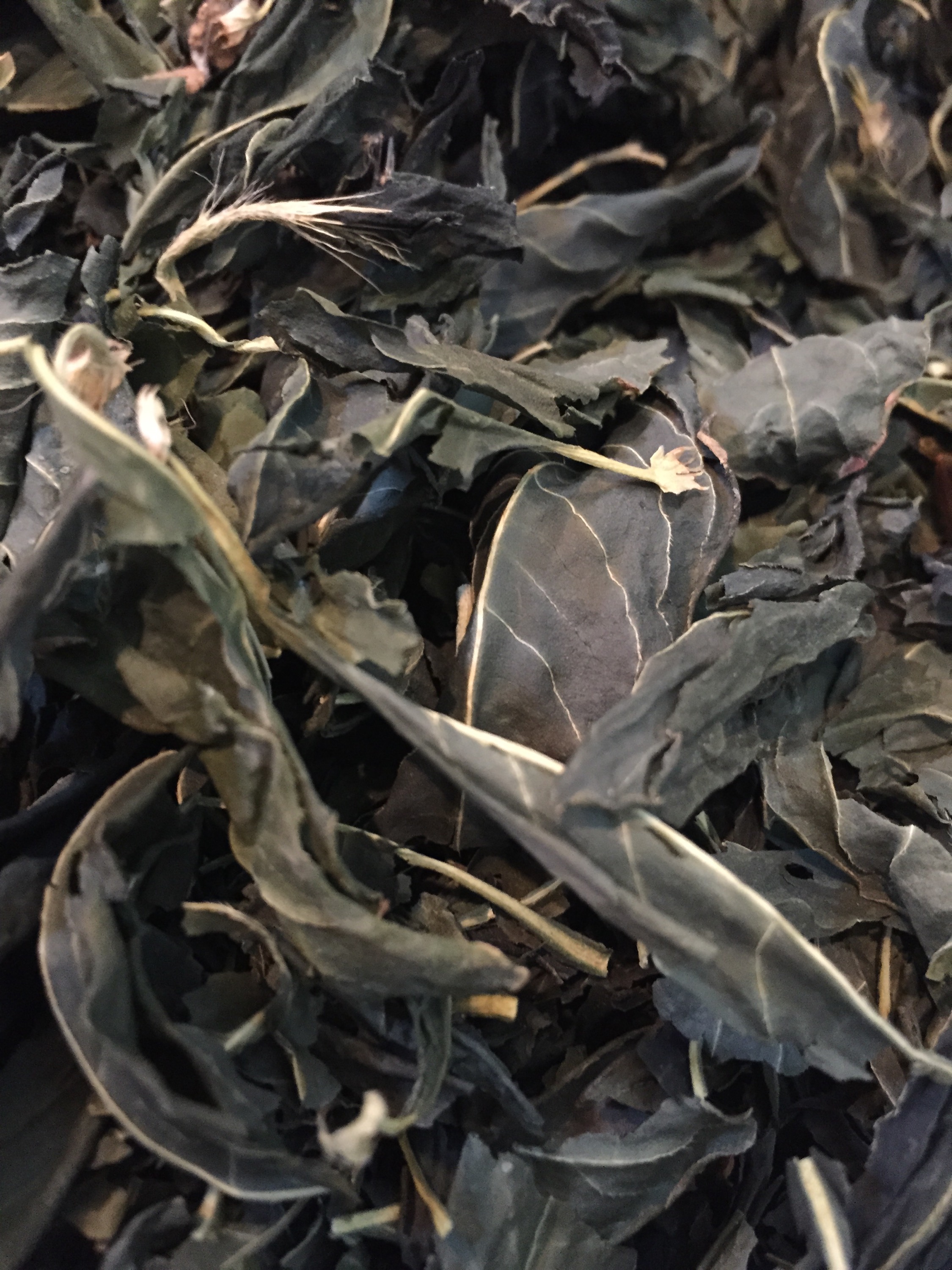
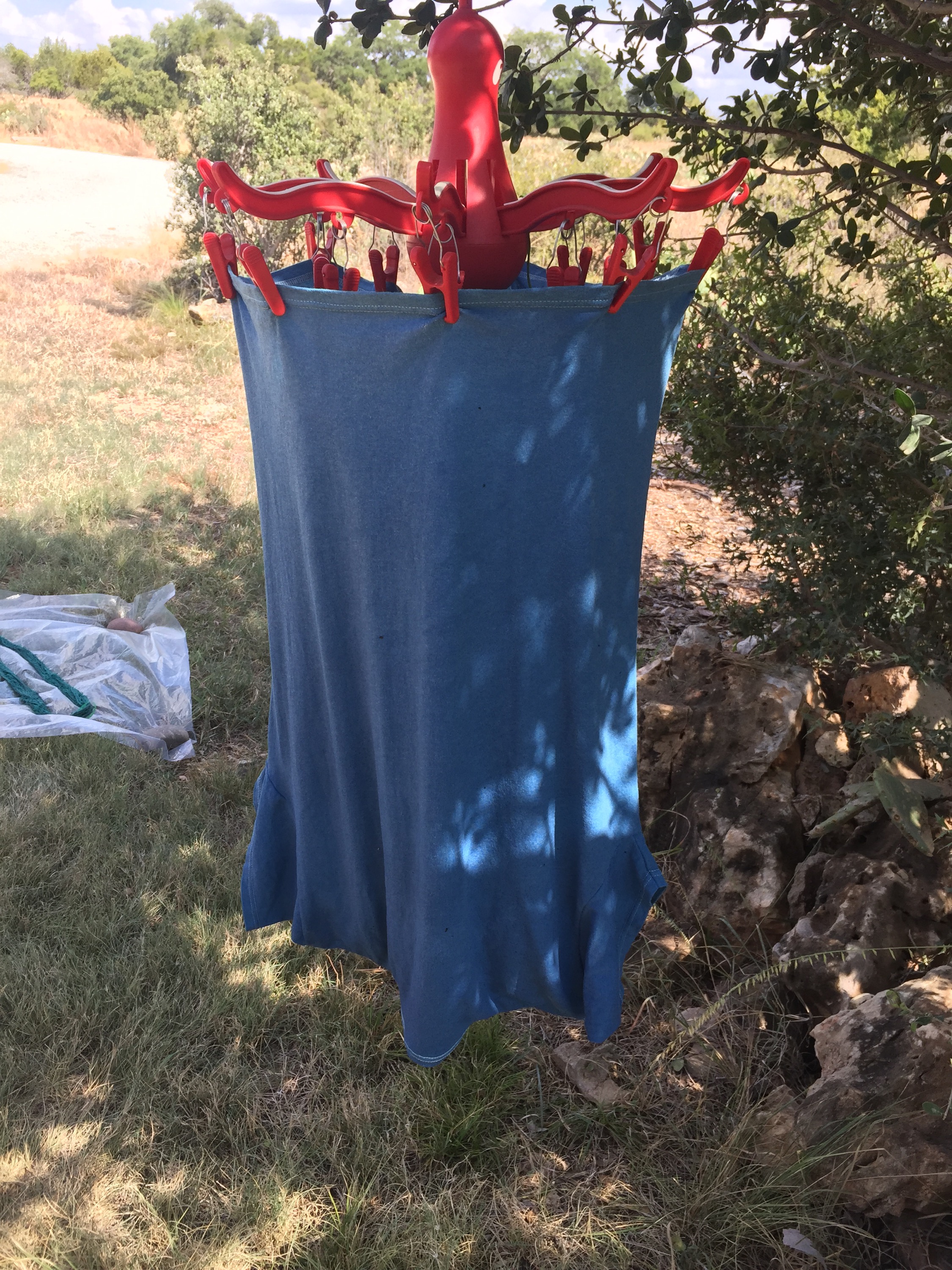
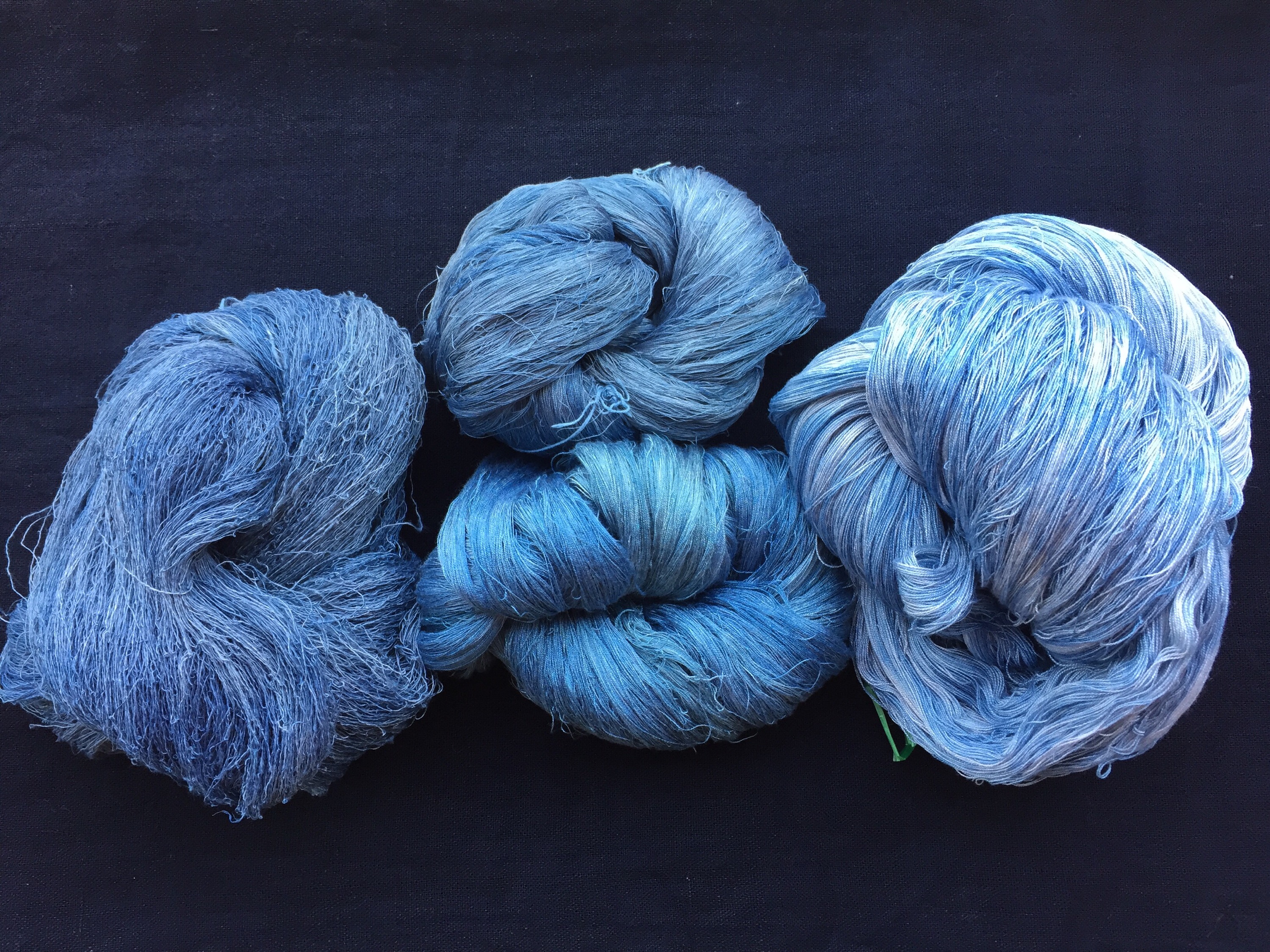
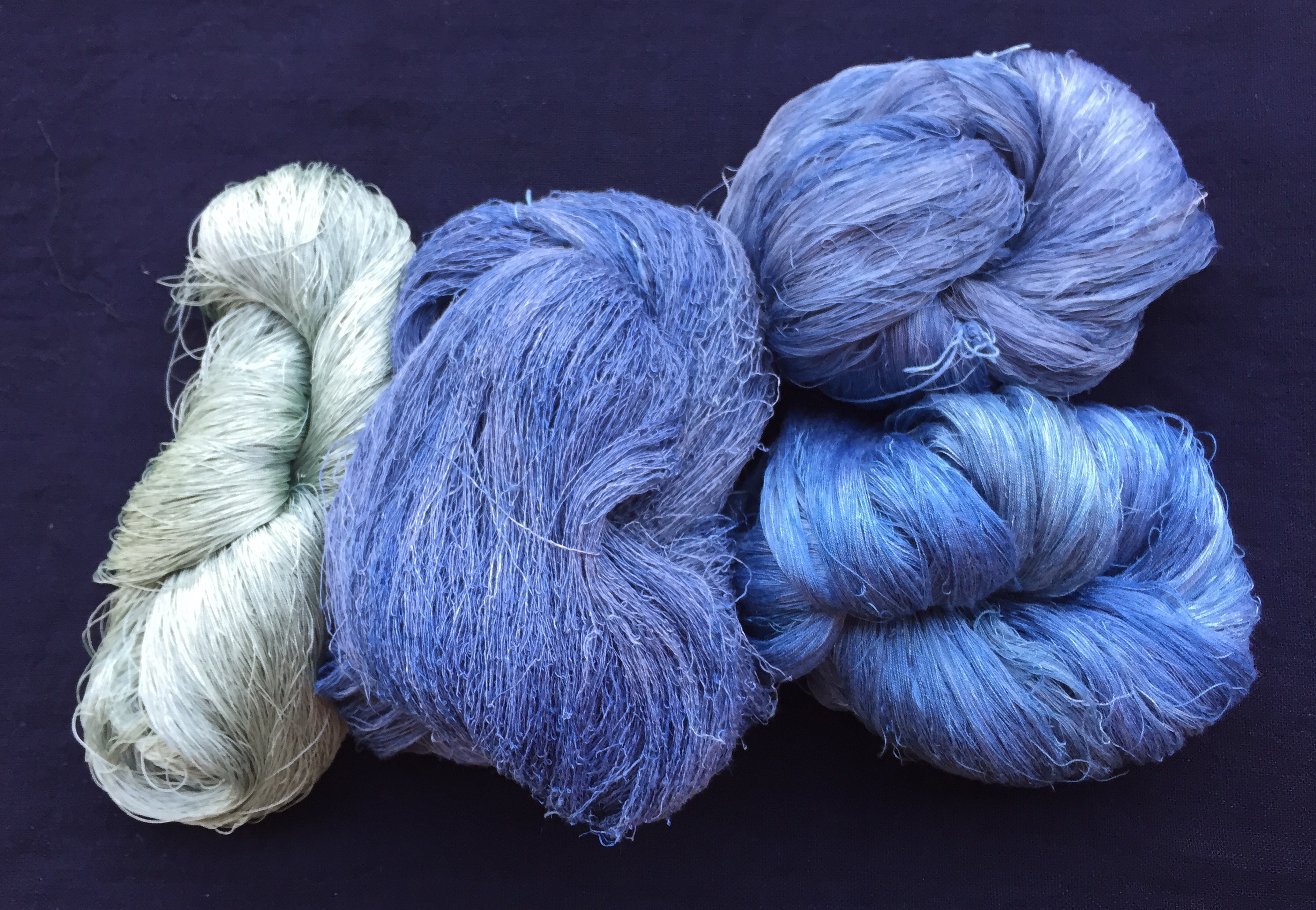
Drying my Japanese Indigo appears to be the solution for me. Below is a photo of my first experiment with 100 grams of dried indigo leaves after neutralizing with vinegar and washing with Orvis. Three articles (1 cotton and 2 silk)  were dipped twice each for 5 minutes. The extra skein on the lower left is a blender fresh Japanese Indigo skein left overnight in a fresh batch and is provided just as an example of the different color way you get with another method using your Japanese Indigo.  Consider the fact that I can and will run another batch of dried indigo and continue to dip these items to continue to darken their color. This first test batch I stuck close to John Marshall’s recipe (c-Background below) and kept track of measurements. For those who like #’s, here you go:
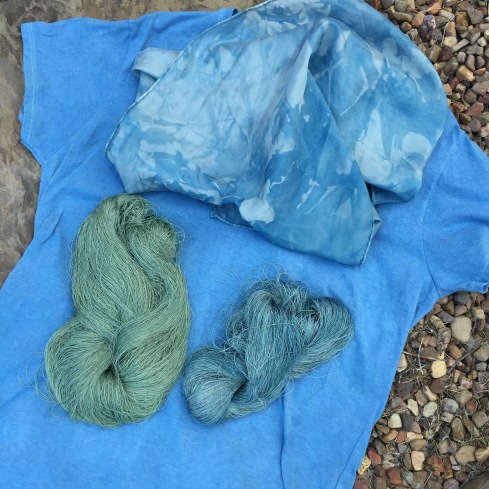
  •    The cotton t-shirt weighed 150 grams
  •    The scarf weighed 25 grams
  •    The silk skein weighed in at 48 grams
  •    Total of 223 grams for total substrate dyed

So the ratio is 100:223 or 1 part dried indigo to about 2 parts substrate. Impressed with the color obtain at that ratio? I am.
This means I can harvest and dry my indigo over the growing season and have my indigo on hand when I have time to enjoy the dye pot process. With the violent weather and winds that we can have in the Texas Hill country it is very attractive to be able to harvest and dry part of your harvest and protect it from unpredictable climate.

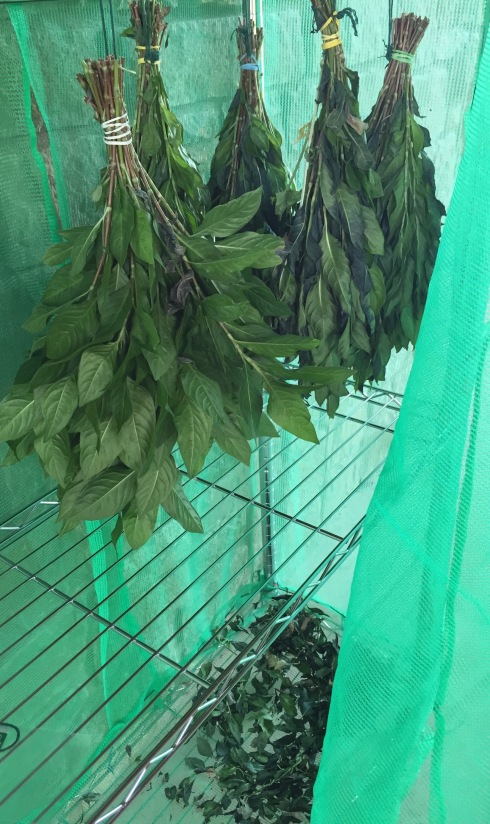
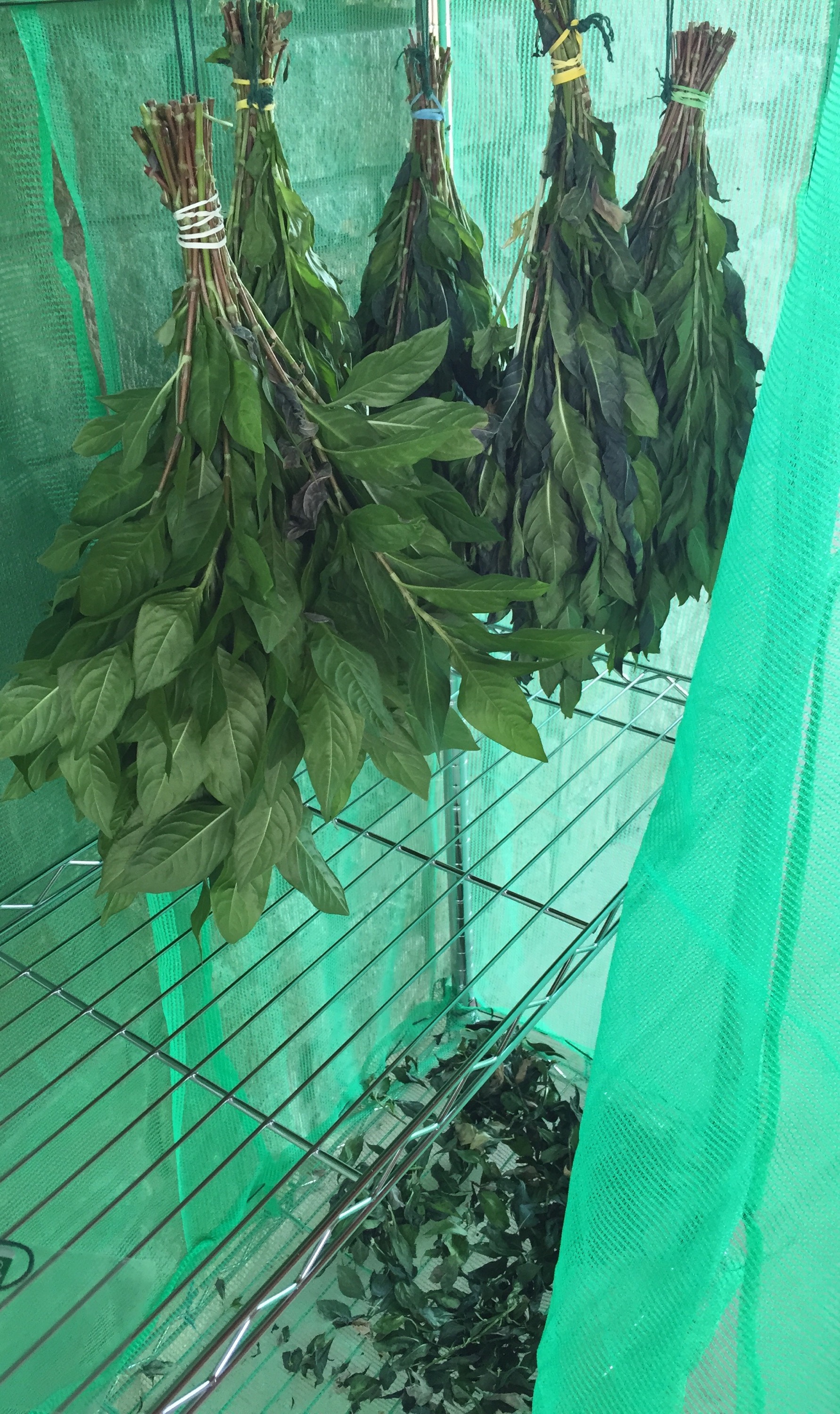
Some additional #’s for you, each of my indigo plants have at the beginning of their peak and thru their main growing season 10-12 stalks ready for cutting with an undergrowth of new plants coming up. Remember I am located in Central Texas and irrigate my plants with well water heavy in calcium. Other geographical locations will have different growing conditions. Go ahead, run out and count your plant stalks. I’ll wait! Put in the comments where you are located and what # of stalks your plant is putting out.  I go thru my Japanese Indigo bed and pick the plant stalks without blossoms for my drying bundles. My bundles usually hold 20-24 stalks for drying. Below are photos of my drying method. I secure my bundles to protect them from the birds and bugs AND the wind. I don’t want an unexpected gust to send my leaves somewhere I cannot retrieve them. 
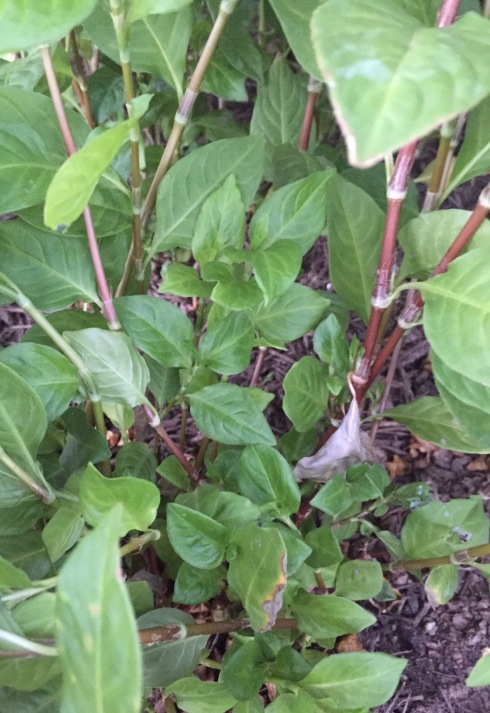
 After about three days in my Texas heat the stalks have dried down enough for me to strip them off the stalks and let them continue to dry.

In the interest of providing more #’s for those who want some guidelines here is more data:

  • 6 bunches yielded 129 grams dried Japanese Indigo
  • 4 bunches yielded 70 grams dried Japanese Indigo
  • 2 bunches yielded 37 grams dried Japanese Indigo

As I type 5 more bunches are drying and now that our humidity has dropped after some much needed rain I will go out and continue to create more bunches for drying. 

 I know if you have read this far you are looking for the dried leaf recipe. My source is John Marshall’s limited edition Dyeing with Fresh-Leaf Japanese Indigo (link below in Background). Below is John’s recipe that I modified to use Soda Ash I had on hand rather than the Washing Soda called for in John’s recipe on page 16 of his book. I used the basic assumption that it takes 3 parts washing soda to equal 1 part Soda Ash. I am very grateful that John took the time to put his experience and the translation of different masters into a usable document for indigo dyers.

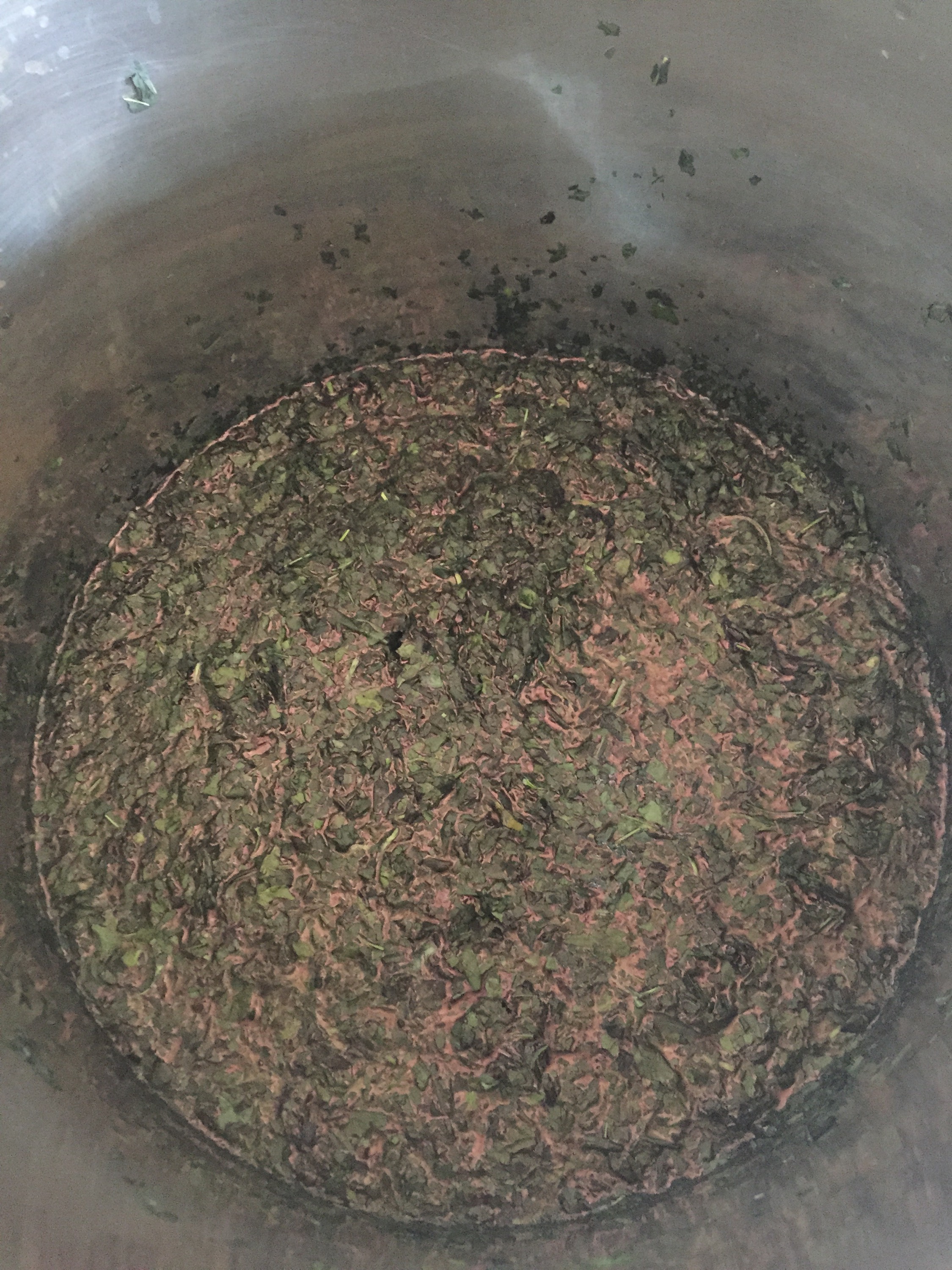
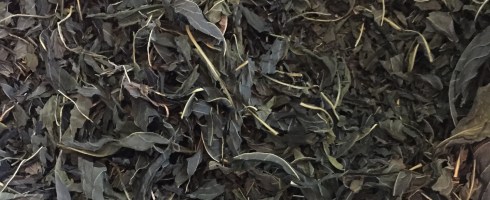
• You simmer the dried leaves for 20 minutes at a slow boil (honestly, I used an active simmer) and pour off the water. The water has a yellow tinge to it. That is the wash of components that will throw off your blue indigo. If you have ever used leftover blender JI leaves for a yellow dye, the water color is similar to that color. Discard the water. 

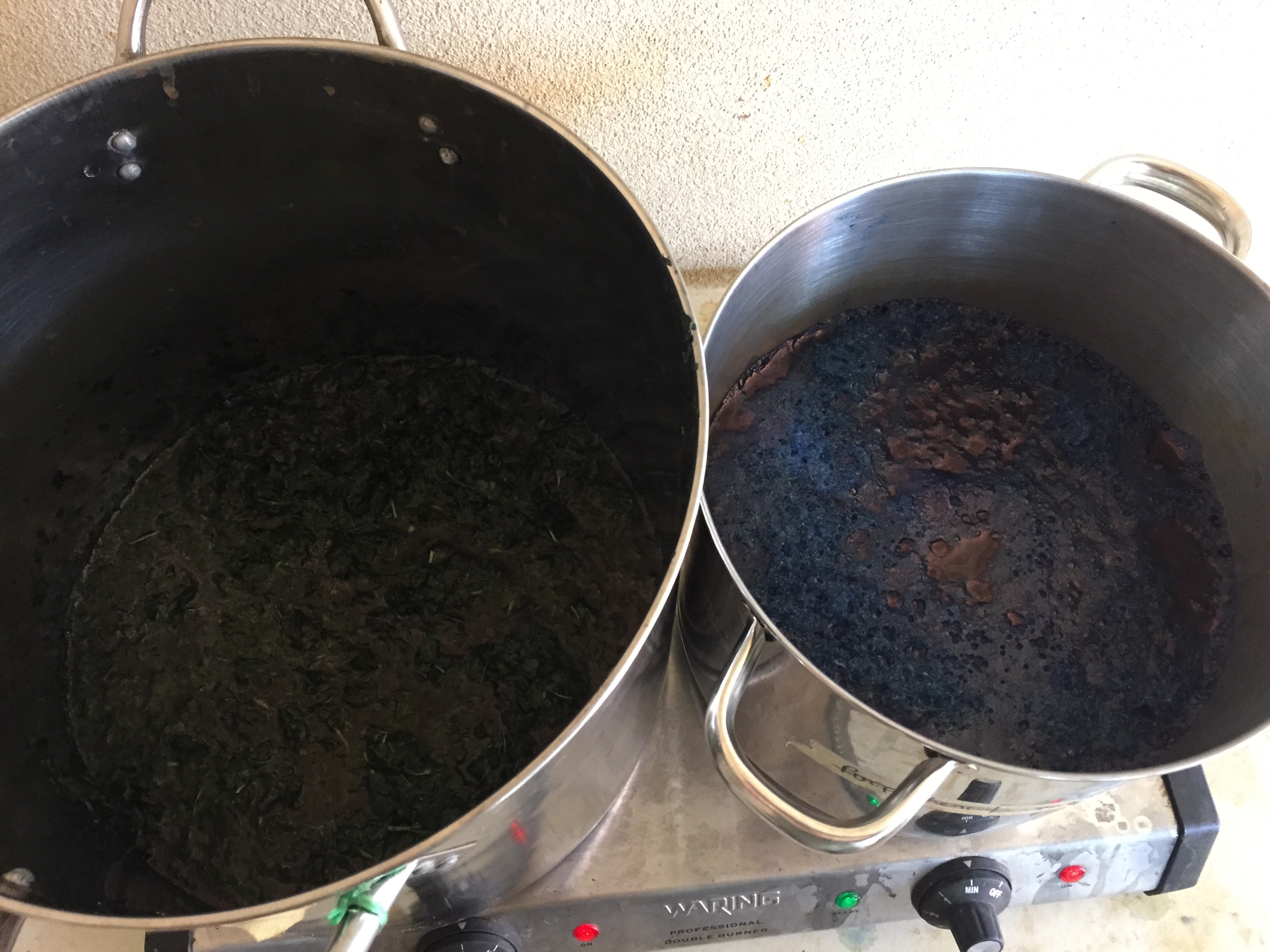
• After washing the leaves, I added 4 grams of soda ash and 6 grams of thiorea dioxide to 100 grams of dried indigo leaves in about 2 liters of water. I simmer almost to a boil and stirred as it heated. I did not boil. John says to boil. I could not bring myself to do so. I did not have my thermometer handy, the pot sang but I did not allow it to boil. It took about 20 minutes for first indigo glow to show on leaf and water surface.

• Strained the leaves and put the indigo solution into a separate pot.


  • Went thru the process again but only added 2 grams of Soda Ash and 3 grams of thiorea dioxide to 2 liters of water and added my leaves back in, 20 minutes again.
  • Stained the leaves and add the indigo solution into my holding pot.
  •  And repeated the 2 gram/3 gram step again, 20 minutes again. The indigo released was noticably less in the third extraction. The resulting strained liquid is your indigo dye bath.
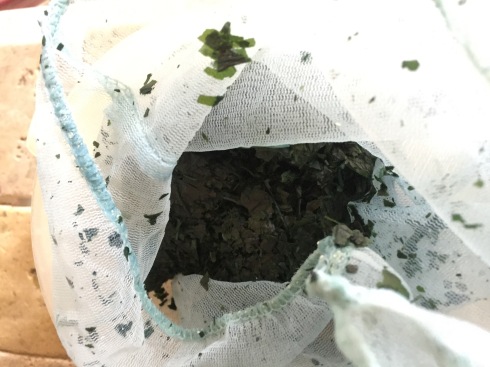

I tested the PH of this mixture before adding my substrate and was found it registered at only 9. I was using the paper strips, not a meter. I did expect the PH to be much higher due to the Soda Ash and was not expecting the cotton t-shirt to take the indigo due to the low PH. I was surprised.

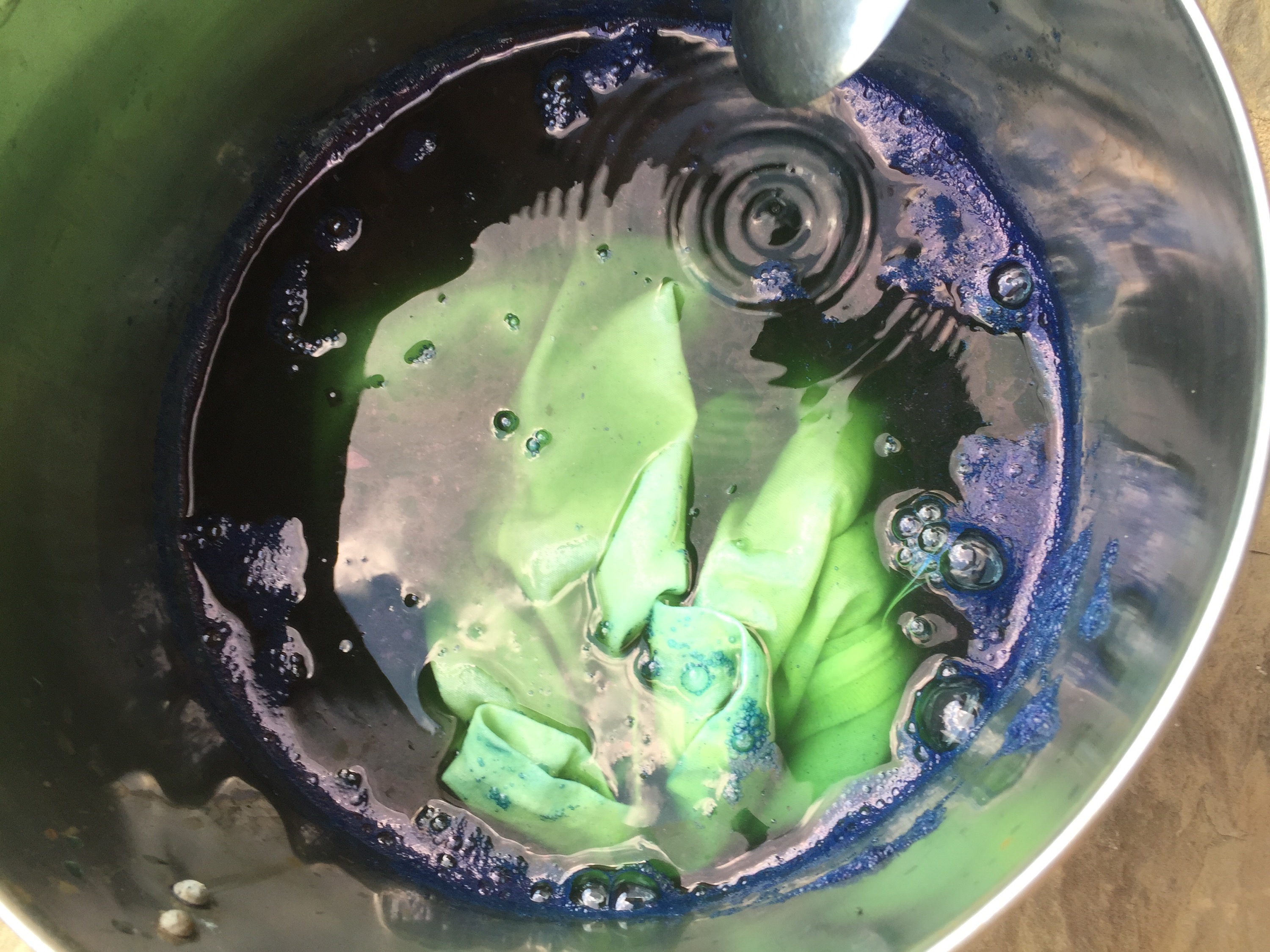
My items were submerged at 5 minutes each and allowed to oxidize twice. I kept the pot in the sun and the temp ranged from 100 to 120 degrees as I did my dipping and oxidizing.


The magic of indigo oxidizing:


About the only negative about this process is I am still using Thiourea Dioxide for the oxygen reducer. I just do not like the smell of Thiourea. I plan to try the fructose/slaked lime method once I am more comfortable with the Thiourea Dioxide results.

Background:  I have seen mention of dried indigo in books but no recipes to get me started. Of course I am familiar with the fermented indigo, sukumo, made from dried leaves. Being a small grower I was nowhere near producing the amount needed to get a decent blue. Nor do I have the facilities to ferment over a long period of time with winds and violent temperature swings beyond my control. So either fresh leaf indigo extaction, dried leaves or the traditional purchased indigo powder was the path for me.

When attending an indigo class at John Marshall’s studio he allowed us to look thru his Japanese dye book collection. I do not speak Japanese but I could see tantalizing photos of dried Japanese Indigo. John has been a master working with dyes in surface design over the years with his soymilk mordant and artistic mastery of stencil resist. (Yes, I am a serious fan girl) I asked if he could look thru the recipes and help me figure out a dried leaf path.
His side study along with his stencils has been with Japanese Indigo. He recently took the time to put his thoughts and mastery into a reference book based on his experience and the Japanese dye masters. The dried indigo recipe that I used is sourced from John’ book Dyeing with Fresh Leaf Indigo.  His blog has blown up on him.  When he reposts a new link I will put it here for you. The book is pricey but has many approaches and recipes and should be considered as a guild resource and brought into a library where folks can benefit.

John has also written about his dried indigo recipe for Turkey Red. It is at the end of his Turkey Red article.

Finally as of July 2018, JOHN has a new book release, click here for more info…

Enjoy, Deb Mc

August Indigo in the Texas Hill Country

29 Aug

Walking a 3 legged cat gives one plenty of garden inspection time.
1.  The raccoons have been digging in the madder & japanese indigo beds. Where’s my live trap?! But who can blame them digging up the irrigation lines for water.
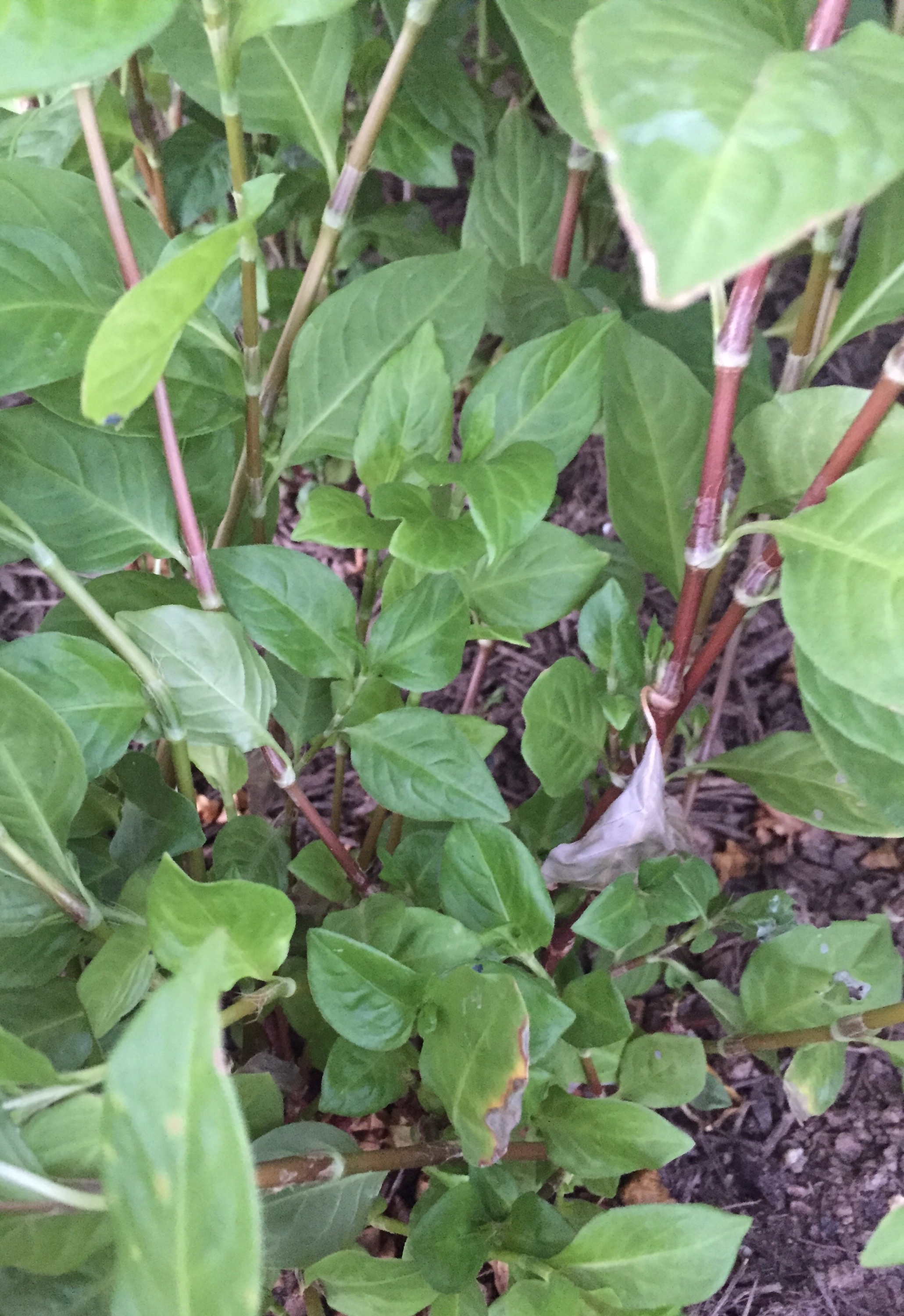
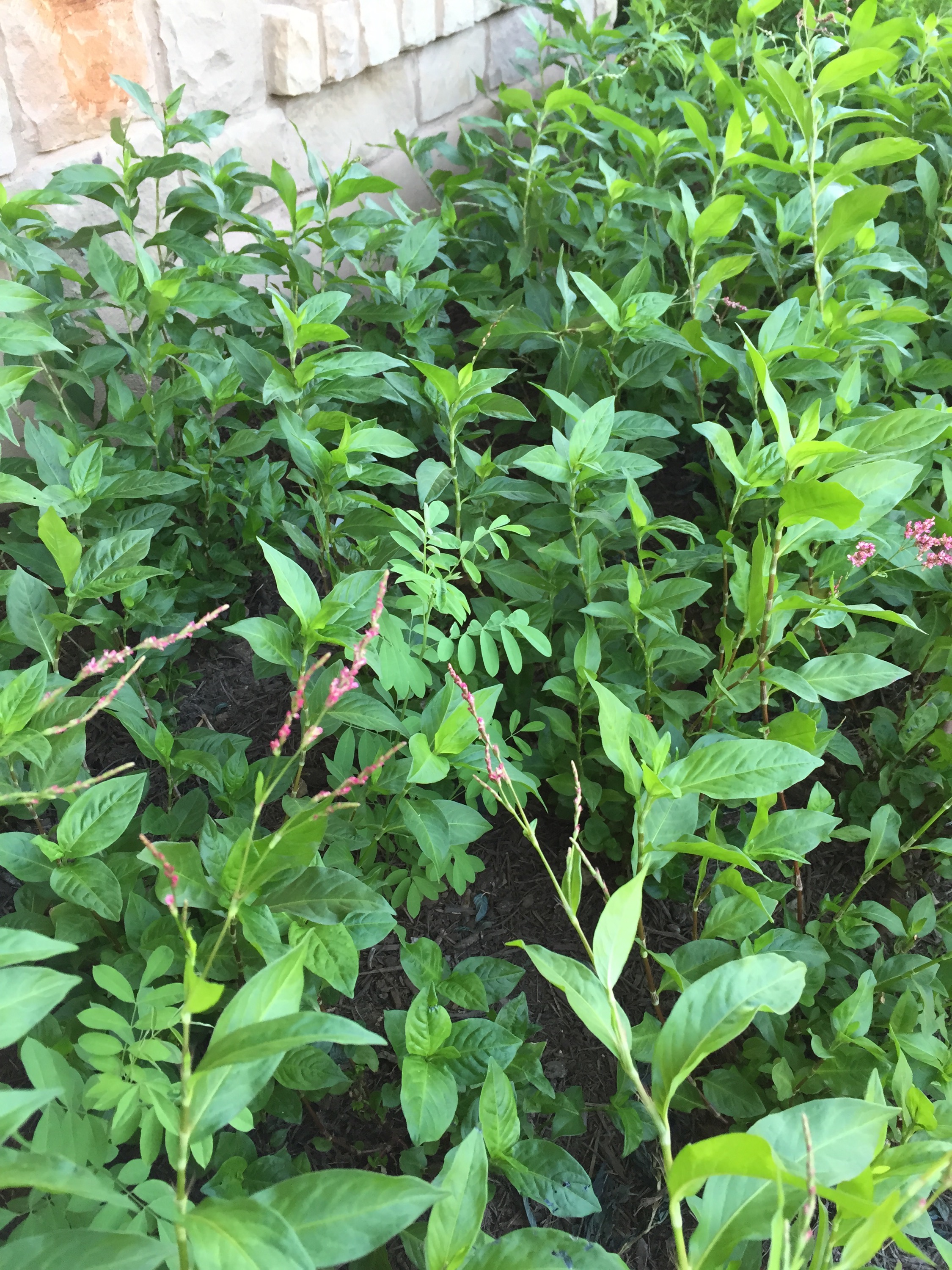
2. The Japanese Indigo is coming into bloom and the Indigo Suffricotosa planted among the JI is coming along. Will be interesting next year to see if they can coexist in the summer heat.

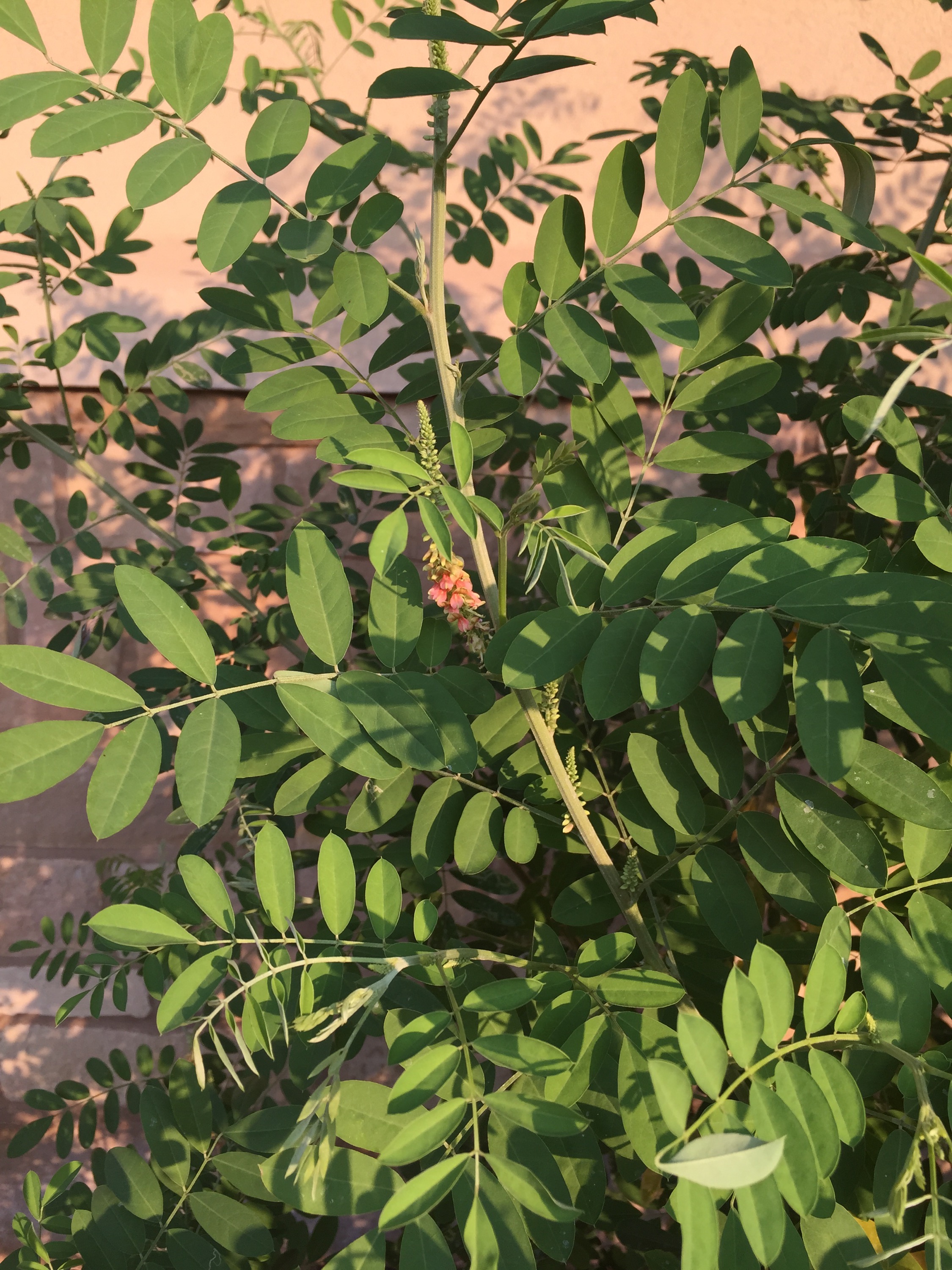
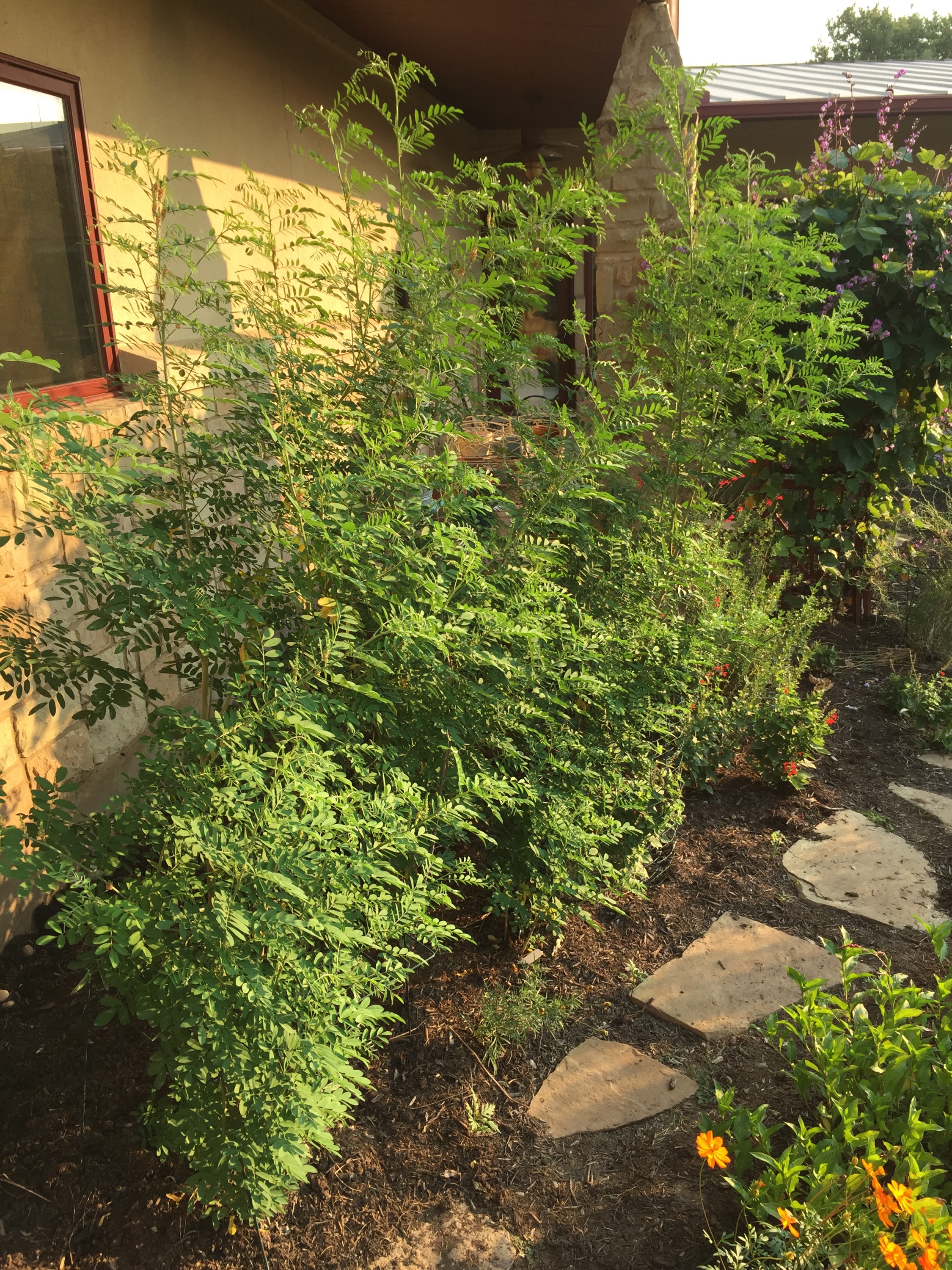
3. The indigo suffruticosais also coming into bloom and seed.  Last year’s plants yield great color and this year’s small plants yielded color also.  I will say these plants got way bigger than expected but my husband has given them a pass because the hummingbirds use them as a frequent garden perch.
  

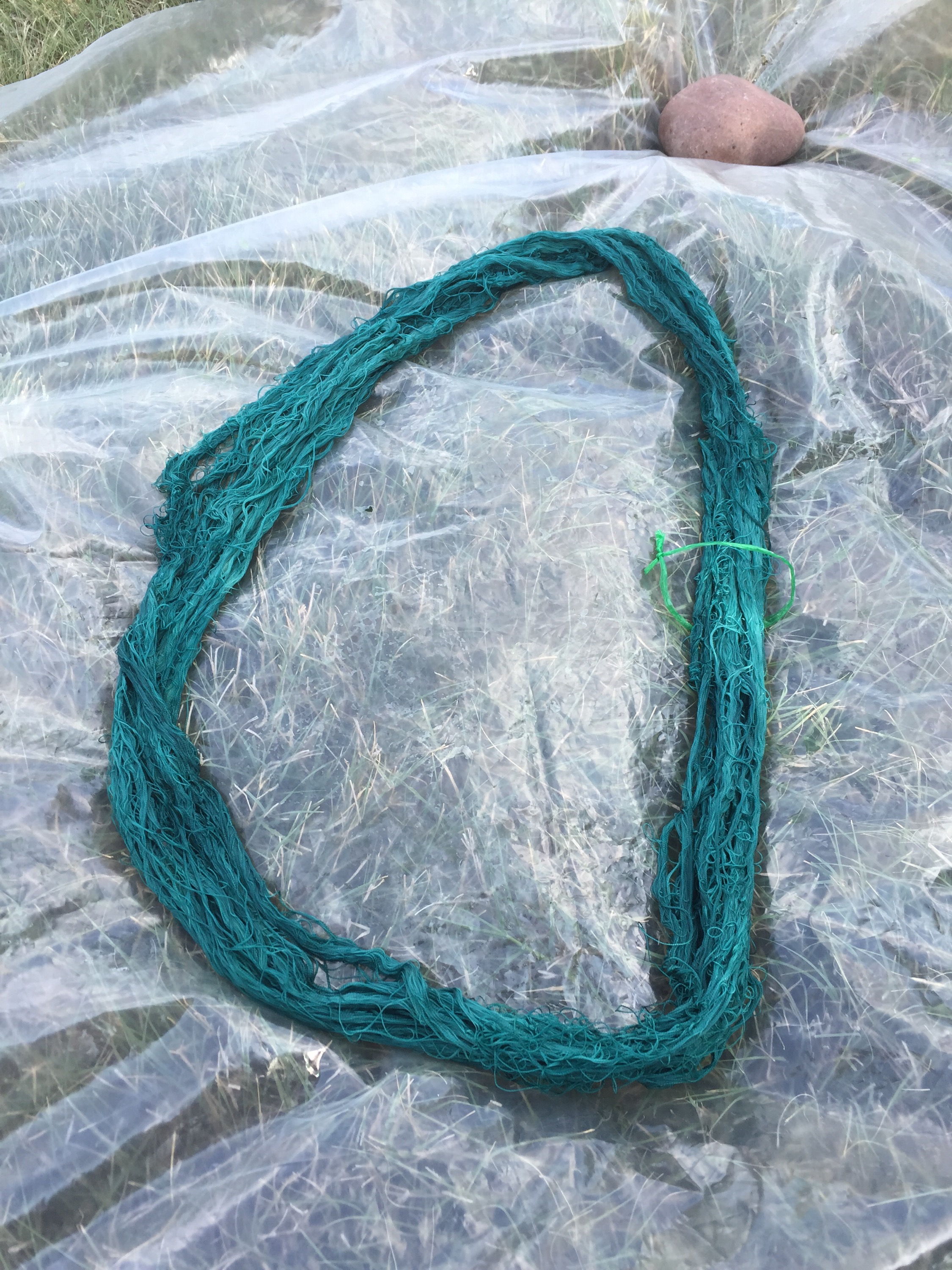
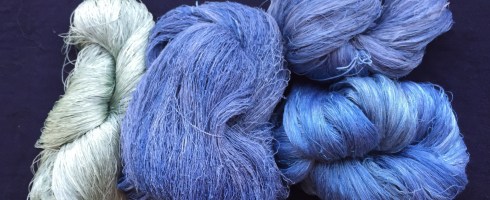
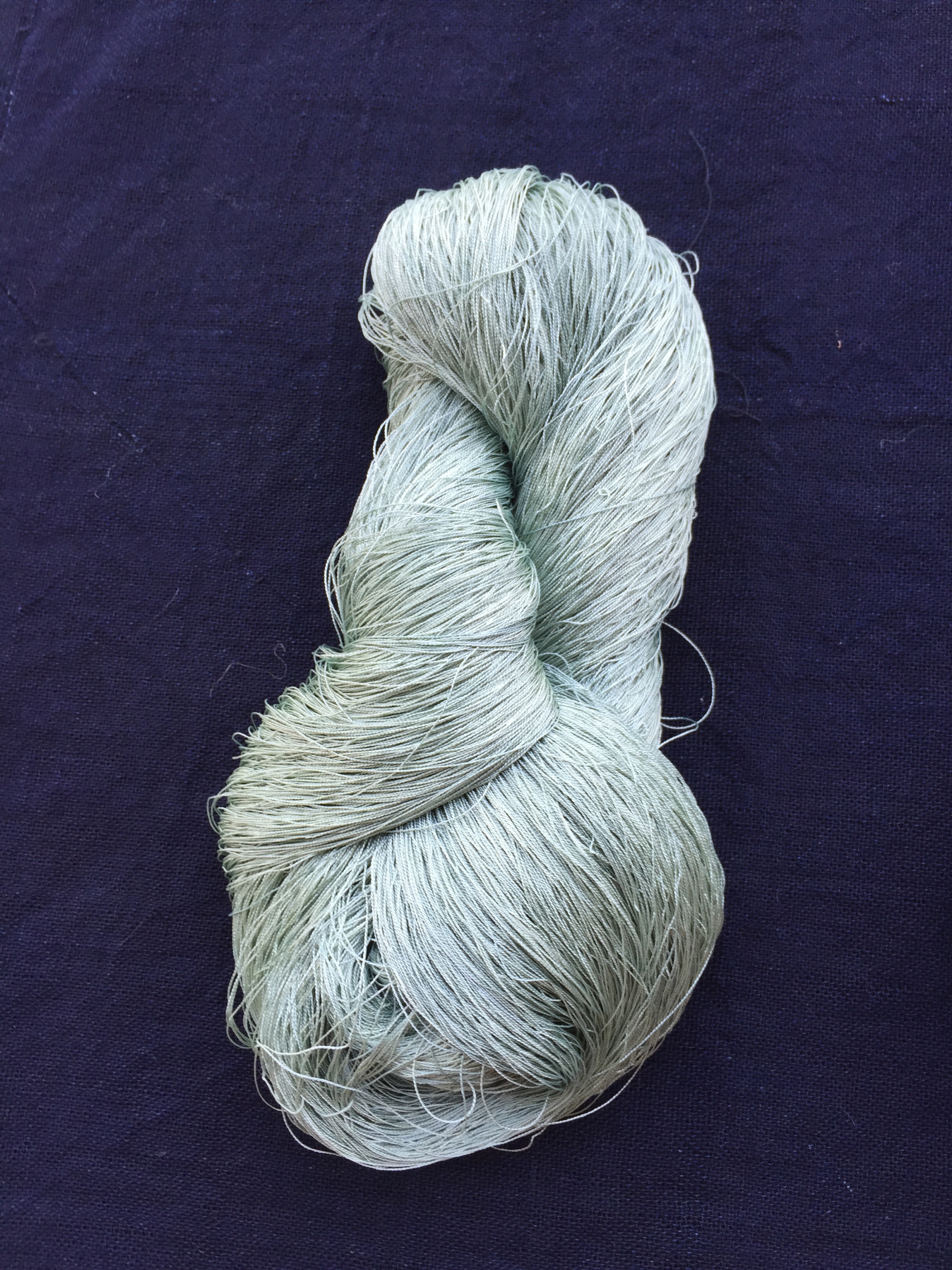
4. Finally the color, I had friends over to do Japanese Indigo blender dye scarves and had plenty dyebath left over. I had a mordanted silk skein on hand and left it in the dye bath. A beautiful mint green resulted, not sure my camera registers the color well. It is deep mint green.

And the indigo suffruticosa yield this color in 2 dips after a thio extraction. The skein on the right was a leftover larger skein which I put in to exhaust the extracted bath. It will go back into the next indigo bath to darken it. I did many other skeins. I’ll update my leaf to substrate ratio for this bath when I am near my notes. One of the things to remember when you are leaf dyeing over the growing seasons is that your skein might revisit baths over the growing sesson in order to build color layers.
Dye Thrums from CHT 2015

6 Jul

I had the privilege to speak about natural dyeing at the Contemporary Handweavers of Texas 2015 Conference in Austin, Tx in late June. As most teachers know, one touches on subjects to make students aware of potential paths but class time constraints prevent one from delving into the details. I needed to stay on the subject of natural dye basics but couldn’t resist mentioning some of these items. One of my students, Fern, was gracious enough to capture a bucket list of those interesting “time sinks” for me.  Thank you Fern!

Below are random references for folks that attended my lecture to wander at will. Take your time, enjoy and thank you for letting me share the joy of creating color with you. What color is in your valley?

My apologies, this blog entry covers a lot of ground and no pictures are within this blog post BUT by popping over to some of the links there is plenty of color photos and information created by some of the most talented teachers I have had the privilege to train with.  Regards Deb Mc

  1. I spoke of symplocos, a natural mordant sourced from leaves. When used it gives a slight yellow cast to your fibers BUT that disappears when you put your base color over it. There is a lot of information in the links below. Consider running some dye pots comparing your mordant choices, alum acetate, alum sulfate and symplocos. Consider the higher cost paid for the mordant as a source of support to the folks who gather the leaves. Also consider the limited nature of such a resource.

Natural mordant from leaves, sourced from Indonesia   http://plantmordant.org/symplocos/

History of use http://plantmordant.org/symplocos/history-of-symplocos-use/

Consider running some dye pots comparing your mordant choices, alum acetate (cellulose) or alum sulfate (protein) and symplocos. The website above has ample instructions on the different ways you can use the mordant for different fibers.

  1. As opposed to gathering natural dye bulk material, natural dye extracts are a good way for those who cannot gather to experiment with natural dyes. Upon occasion folks remark to me that extracts are expensive. Experiment with it and learn the recipes. Focus on one type of substrate (type yarn) and learn the percent that you need to get to the color you want. Learn how to fully exhaust your pot to pull all the color. I’ll give you a couple of sources that have outstanding instructions for extracts on line or available for sale. Not only do they offer extracts but most carry some of the bulk natural dye material. Please understand there are many other retailers out there at your local festivals that sell natural dye extracts. Try to support local merchants but don’t hesitate to use our global economy. You are helping someone support themselves in their village and you can stay in your village and enjoy their colors. The links provided gets you to their site. Take time to look thru these websites to see their extracts for sale, the mordents AND the awesome online instructions.

Natural Dye Extract Suppliers in alphabetical order:

  1. Online groups enable us to share information and learn. Technology keeps changing but for today Yahoo and Ravelry have solid groups that share information. You can join these Yahoo & Ravelry groups and search their achieves. Both groups are fairly gentle with beginners but it is always good to ask specific process questions and cite what research you have done beforehand. Both Yahoo and Ravelry require you to join. Facebook has some natural dye groups but I’ve found them difficult to research and find/mark information for retrieval. Hopefully technology will advance.

Yahoo Groups, search for NaturalDyes (active) and sustainablenaturaldyepractice (low activity)

Ravelry, search for Natural Dyeing (process) and Plants to Dye For (growing and dyeing)

  1. I spoke about pulling color from wood chips. Sandra Rude of 3 Springs Handworks has written an excellent paper on using woodchips for color.

I will repeat a safety warning. Using alcohol is a good way to pull color from your wood chips or sawdust BUT do not use open flame for your dye bath. Use electric heat for safety.   You do not want to flambé yourself or your skeins. Safety FIRST!

The link is below. Look for “Instructions for Extracting Color from Wood Chips”.

http://www.3springshandworks.com/Extras.htm

  1. I showed some examples of using pigment I pulled from my dye baths to paint and screen print with mordants. That is an advanced subject that I won’t address in this entry. Know that a way exists to precipitate out color from your dye bath and merits research if you pursue natural dyeing. Both John Marshall and Michel Garcia address this from different points of view. I’ll give links to these gentlemen below. Probably the best book I’ve had recommended to me is Natural Colorants for Dyeing and Lake Pigments, Kirby, et al. Search on line, it is pricy and would be a good guild book. An individual could probably find it via library loan or a university library to see if you want invest in the book or explore the process further. Others might exist but this book give historical context and experiments.

Another resource is this paper by Kirby online, this was the precursor to the book above, give it a moment to load. http://www.doernerinstitut.de/downloads/Back_to_the_Roots/Back_to_the_roots_Kirby_I.pdf

  1. Michel Garcia was known for his natural dye plant garden in France, and he is now teaching about natural dyes and the historical indigo fructose method. He also addresses printing and precipitation of dyes. His lectures are worth attending for their botanical and historical content. His dvd’s should be in a guild library for member reference. They provide a wide scope of information and provide a chemist’s point of view. Take some time to read his background and look up his botanical garden. http://shop.slowfiberstudios.com/collections/dvds
  1. John Marshall is a fiber artist and most excellent teacher. He lives his art through the Japanese tradition and uses soy milk as a mordant to create his artwork. He does use Japanese pigments in conjunction with the soy milk and has written a booklet and provides instructions on his website. His booklet should also be in guild libraries.
  1. The University of Nebraska offers space via Digital Commons to organizations like the Textile Society of America (TSA). Digital Commons are Institutional Repositories (IRs) which bring together all of a University’s research under one umbrella, with an aim to preserve and provide access to that research. IRs are an excellent vehicle for working papers or copies of published articles and conference papers. Presentations, senior theses, and other works not published elsewhere can also be published in the IR.

The 2010 proceedings are probably the richest in dye reference material as that was the conference theme. Look at some of the papers. I referred in my lecture to the South American cochineal harvesting process. Here is it, provided by the TSA organization.  Consider joining them to support textile research around the world.  We are thankful for the clear photos and comparison of methods. Without the Digital Commons, how would we access information like this without traveling? http://digitalcommons.unl.edu/tsaconf/39/

And finally, folks asked for a natural dye bibliography, this is what I recommend for beginners,  Here is my list….

Books as of 07/2015 sort by title, **first dye books recommended for beginners

A Dyer’s Garden ** Rita Buchanan

ISBN: 1-883010-07-01

Approach to natural dyes via touching the ground

Indigo, Madder & Marigold  Trudy Van Stralen

ISBN:0-934026-86-6

Good equipment chapter for beginners. Basic instructions for dyestuffs readily available.

Natural Dye Instruction Booklet** Michele Wipplinger

http://www.earthues.com/natural_dyes/books – http://www.earthues.com/natural_dyes/books

Excellent summary on use of natural dye extracts various techniques

Natural Dyes – Sources, Tradition, Technology and Science

Dominique Cardon                   ISBN-10: 1-904982-00-X

Belongs in any fiber guild library, provides cultural, botanical & practical natural dye research spanning our globe

Salvation Thru Soy John Marshall

http://www.johnmarshall.to/I-bookSOY.htm – http://www.johnmarshall.to/I-bookSOY.htm

Different cultural direction to apply natural dye to cloth

The Craft of Natural Dyeing                                                          Jenny Dean

ISBN: 0 85532 744 8

Solid beginner definitions, nice approach to mordants and modifiers

Wild Color **    Jenny Dean

ISBN: 978-0-0230-5879-2

Great index and table of contents for reference. Best mordant and modifier (assistant) table available.