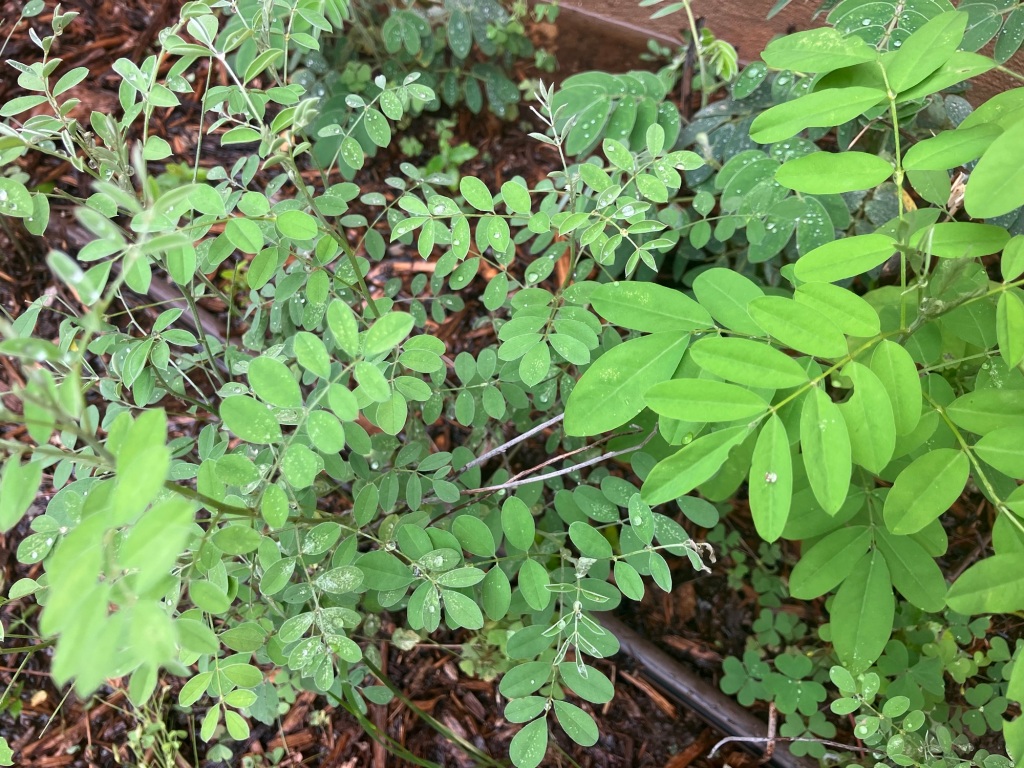
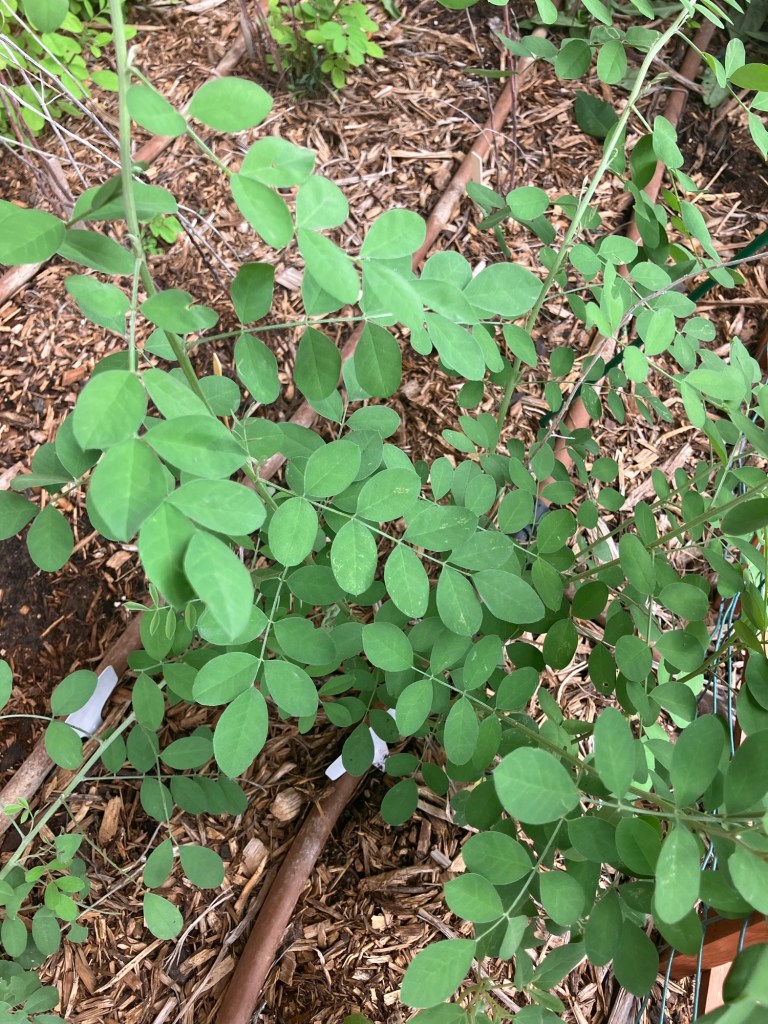
Posting for info 3 species of indigo, 2nd year plants …1st shows both Indigofera Lindheimera on the left and Indigofera Suffruticosa on the right, note leaf size difference. In 2nd photo is the Bastrop mystery indigo plant which I believe is Indigofera Caroliniana. Last year’s drought defeated bloom attempts, hoping I can get some blooms into seed so I have additional ID info this season. Happily all of these made a repeat appearance this second year. Definitely different size/shaped leaves on all 3 plants, IL Dainty, IS Long or Bastrop Roundish.
 debmcclintock
Hi Deb,
Thank you for a wonderful blog, I just signed up for your updates after spending many hours reading your posts, even printing some for reference. I grow Japanese indigo and various other culture plants for fun in Eastern Norway. I have had a particular interest in indigo-bearing plants for several decades, and would like to try growing as many varieties as possible. This year, because of moving house, I only have red-stemmed JI with small leaves. Germination rates have been unusually low, but I have about 150 JI seedlings growing. I also have some other categories of plants this year, Dutch, Greek and Turkish tobaccos (I don’t smoke), some spices, and common madder.
I particularly enjoyed your recent post about the “Bastrop mystery”, as well as another post of 5 September 2023 showing the seed pods from this. I wonder if you would do me the favor of letting me purchase a few seeds of this variety, as well as some “ordinary” Indigofera Suffruticosa seeds, next time you have some. That is, if you have a chance to gather some more of the Bastrop, or already have a surplus. I delight in trying specific, local varieties, and the Bastrop looks especially beautiful with the small, blueish-green leaves. If you are unable to help me with the Bastrop variety, perhaps you know someone else I could contact? It’s very precious to me to have seeds that were gathered in the wild.
I plant all seeds indoors in early spring, and nurse the seedlings outside once it warms up, including under glass in a miniature greenhouse. I can only grow these plants as annuals here, of course. But we are in the second warmest growing zone in this country, so summers last comparatively long, and we get enough warmth to see the plants through at least mid September, when tropical varieties may start to die back. Right now, in late May, we have sunrise at about 4.15 AM, and sunset at around 10.15 PM, so the seedlings get a lot of light once they are put outside. Japanese indigo has given a very good yield of dried pigment for me in the past, but I would like to see what the other varieties will do.
Again, thanks for posting about your activities. I’m looking forward to your next instalments, I have learned so much from you already.
André,
Oslo
LikeLiked by 1 person
Thank you for the kind words. I write my blog for people like us so we can share information and learn about our plants. If you are not already in the Indigo pigmentextraction Facebook group you should look for that group. I’ve had surgery this year. My right hand is completely out of commission so I’m not selling seeds. I will be sure and write to you when I get back to selling seeds. The Indigofera Suffruticosa does well in the second year of seeds. I will keep you in mind when I do list seeds again. in Norway where you are probably the Japanese Indigo is the best bet these Indigo species I am experimenting with work best in hot weather and survive the extreme temperatures and sun in the Texas fall. I grew Japanese Indigo for a while, but it was just too hot, and my indigo content was so small. It was not worth the effort to grow the Japanese Indigo. Good luck with your efforts and I’ll keep you in mind once I get past my surgery and physical therapy.
LikeLike
Deb,
Thank you for your answer to my post, and for keeping me in mind when you start selling seeds again. I wish you a speedy recovery after surgery. We have fairly warm summers here, so I hope to get the I. Suffruticosa to work as an annual. I am very interested in growing all species of plants that contain indigo, to see what’s possible here. My approx. 170 to 200 Persicaria Tinctoria plants have now all been transplanted outside, in a roe deer-proof enclosure. I am in a new location from last time I grew these, with very poor, sandy soil, so I’m not expecting great results this year. I am trusting my luck to some chicken manure, which has worked wonders with Japanese Indigo in the past. Next year, I will order in sufficient municipal compost to cover the entire dye garden plot with at least a four inch layer. We only managed this for a small cabbace patch this year, and it looks to have made a world of difference, growth is strong.
Have a nice summer,
André,
Oslo
LikeLiked by 1 person
Wait. Are there native Texas indigo plants that can be used for dying? I am just getting started learning about dyeing with native plants, and would love to learn more!
Also, do you have any thoughts about using pecan hulls, especially green pecan hulls? I am trying to get my head around how oxidation is functioning with green pecans, but I haven’t come across good sources yet.
Hope your recovery is smooth and swift!
LikeLike
A dye acquaintance found them growing wild along the Llano River, this company sells seed https://seedsource.com/lindheimers-indigo/
You can also use pecan hulls like one uses walnut hulls. Experiment with green versus brown hulls.
LikeLike