Tag Archives: indigo suffruticosa

SOLD OUT FOR 208 Indigofera Suffruticosa Seeds for sale

2 Mar

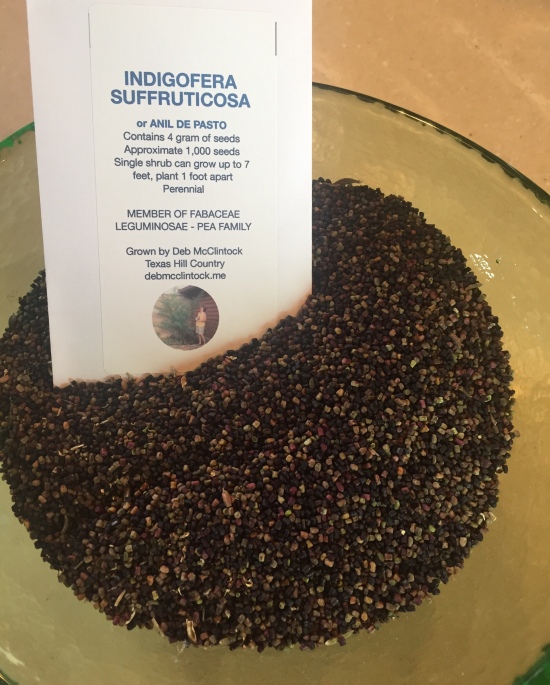
Ok folks, here you go….Indigofera Suffruticosa seeds for sale in my Etsy Shop, ColorsOfMy Valley, which is located here.  SOLD OUT FOR 2018!

Offered just in time to start your seed trays.  THIS IS NOT JAPANESE INDIGO!
img_1609

 It is Indigofera Suffruticosa or Anil De Pasto from the warmer climates.  You can give a try growing it in colder climates.  With protection it might be a perennial but I think it will turn annual on you with hard freezes and snows.  Not a hardship, if you can get it to seed stage you can replant for the next season.

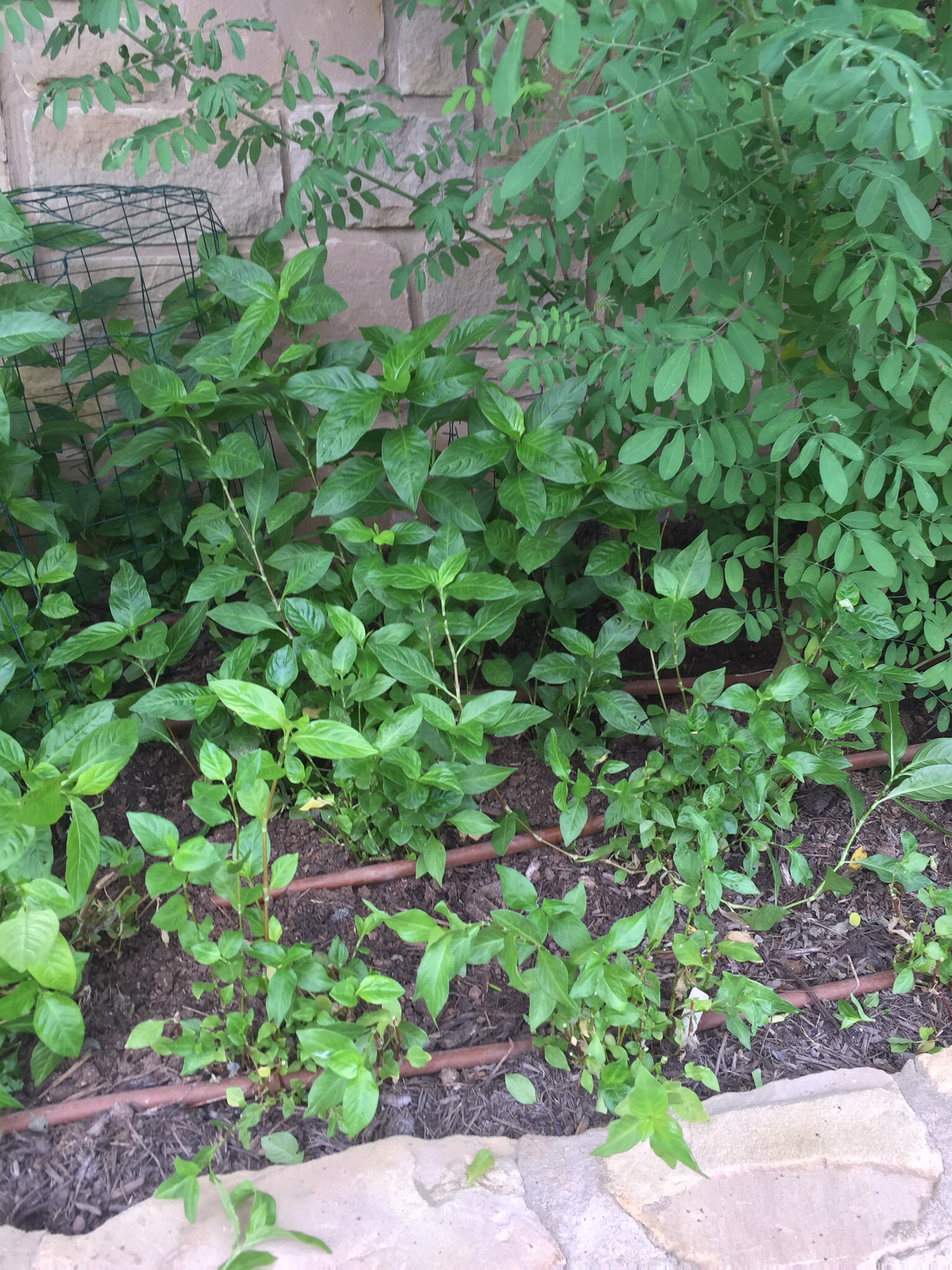
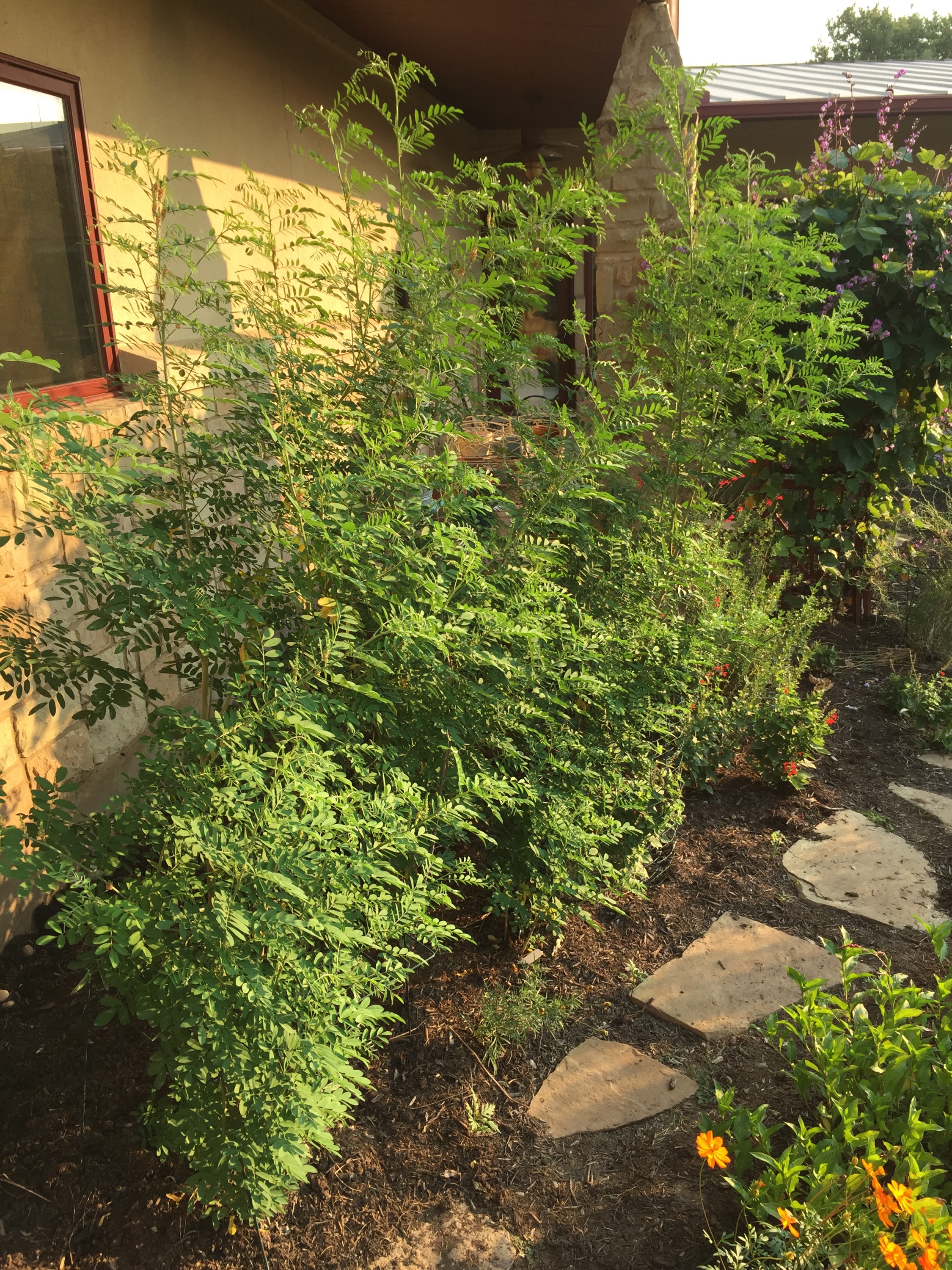
It starts out small in the seed trays, without trimming the shrub can get to 7+ feet.

I place about 4-8 seeds in each tray to start my seedlings.  Here in the Texas Hill Country my biggest enemy behind drought is the crickets.  I hold my seedlings in a protected area from frost and crickets and plant out when it is safe.  They are mulched well.   Tiny crickets can take your seedlings out early in the season, larger grasshoppers come for your leaves in the fall, be aware!  Also give the shrubs room to spread.  You can see from the photo above that untrimmed the suffruticosa will go for the sky.  The hummingbirds love to hang out in the branches and visit the flowers.

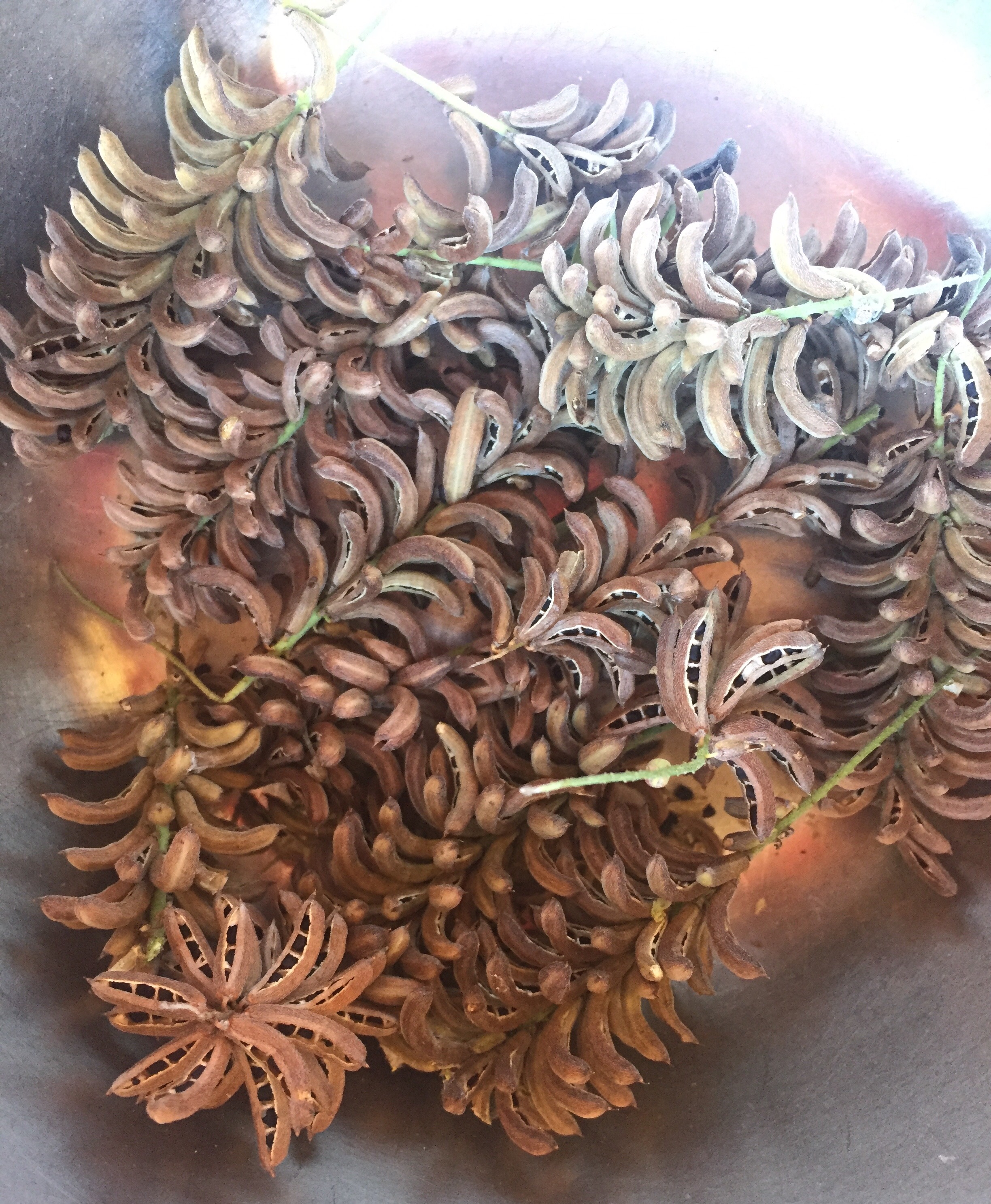
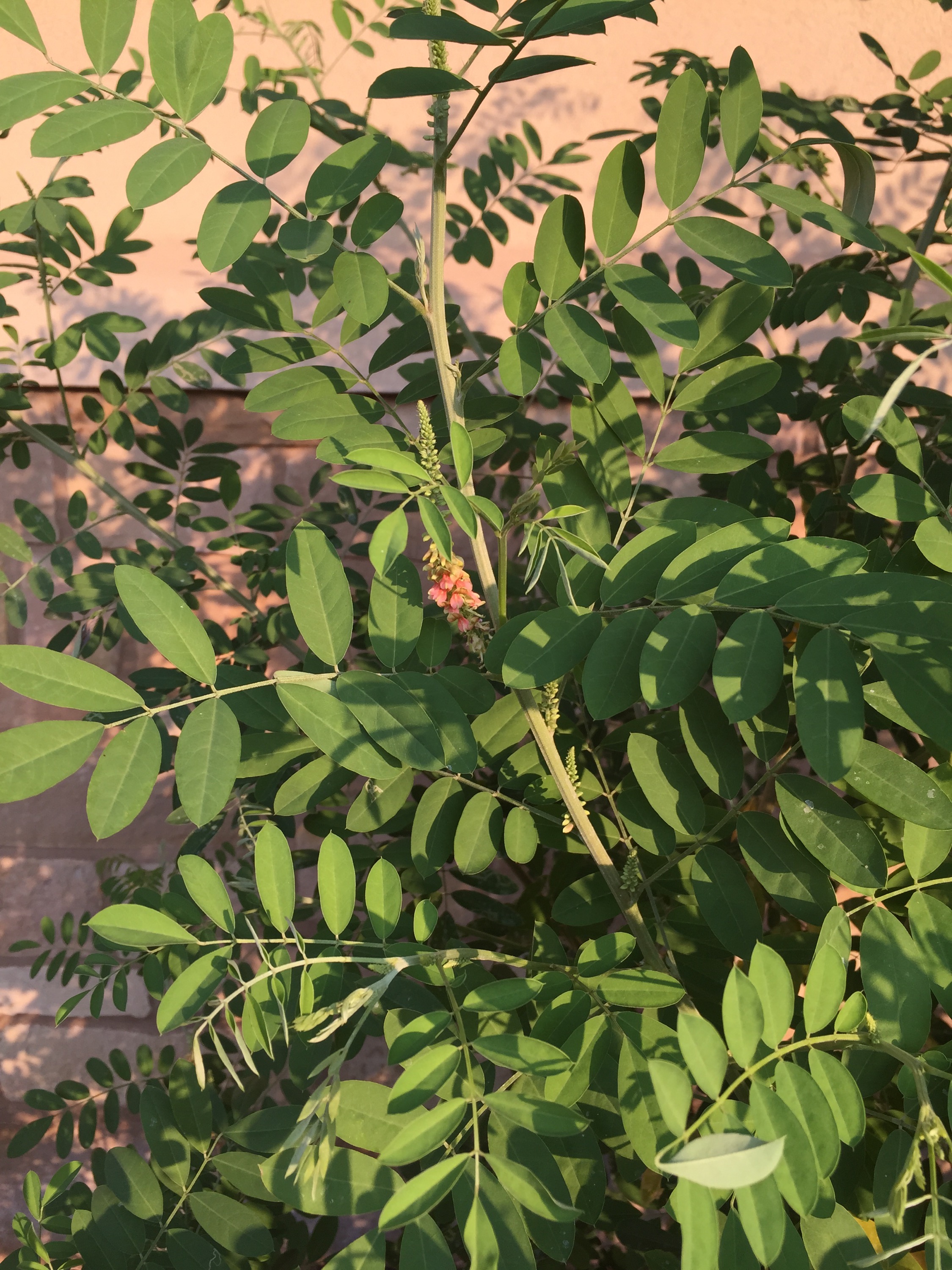
When they are happy, they grow, produce indigo leaves, flowers and finally seeds.  The curved pods resemble banana bunches.  My shrubs have usually lasted 3 years. Very hard freezes can take them out. The prior season shrubs put out new branches fairly early.  I pull the dead shrubs and put in the new seedlings in to fill the space.

These shrubs fill in nicely, can take east and west exposures with irrigation.  I am testing them this year to see if the deer will much on them.   My crops are grown in a protected area the deer cannot access.   The flowers are lovely and the birds love the branches thru the winter to perch on.  The hummingbirds use them for launching sites in the early spring.  They are pleasant plants to have in the garden, they add height and take trimming in stride.  But of course, it is all about the leaves!  I trim my shrubs to shape and strip the leaves off of the smaller stems.  I weigh my stripped leaves at this point to keep track of the color intensity yielded.

If you use fresh leaf extraction you are limited by the leaves you’ve harvested.  I tend to do several harvests a year and dye skeins over the year.  Building the layers as the leaves grow.  Be patient.  Of course you can also extract the pigment and save it for one annual dye bath.  I simply prefer to continue to experiment with what each harvest gives me.

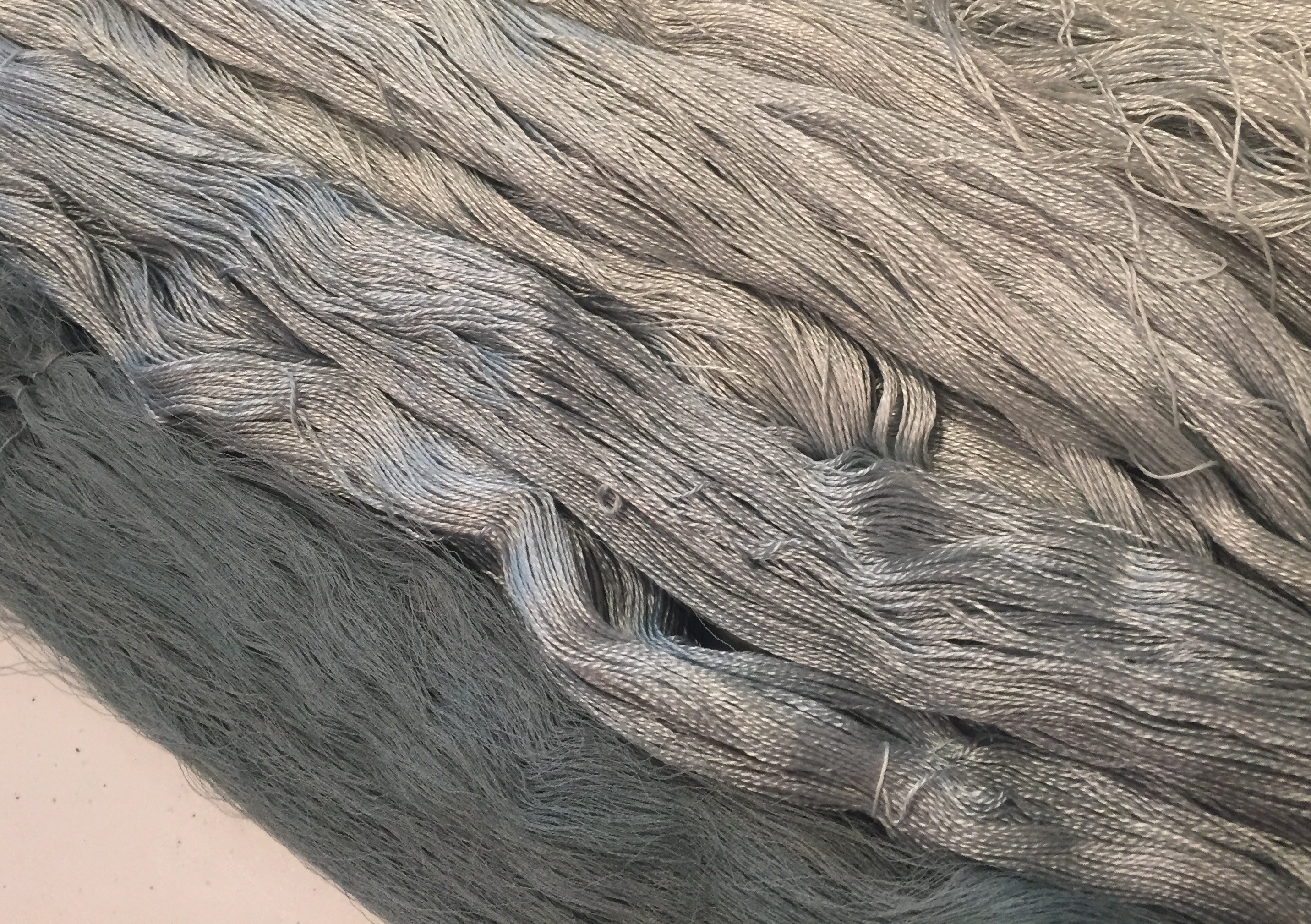
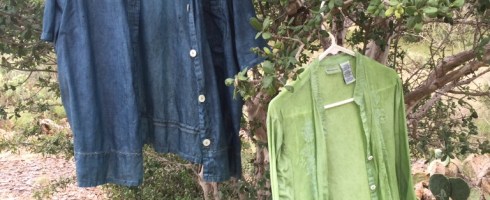
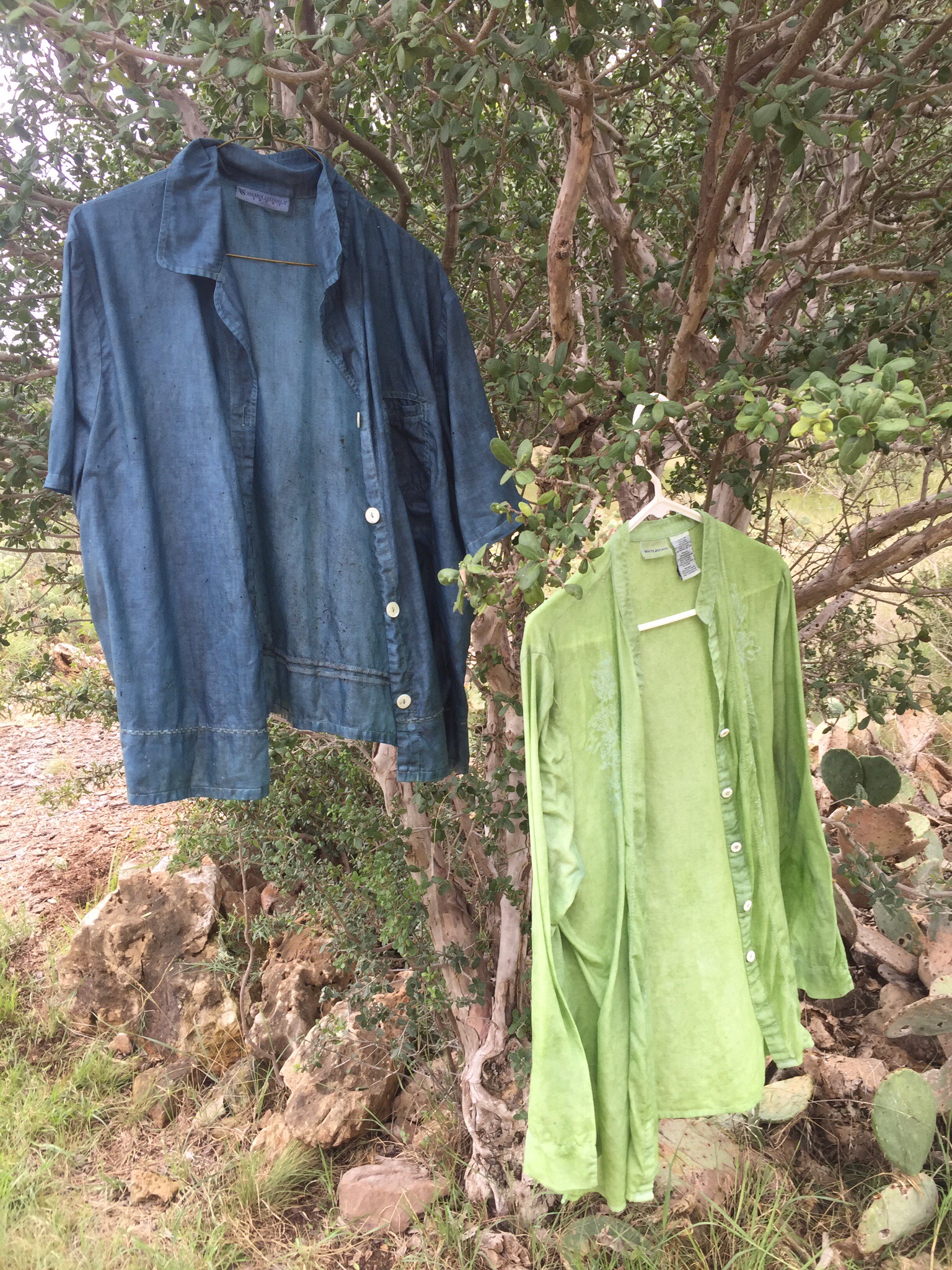
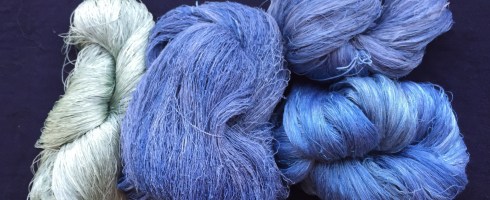
   This shirt and silk skeins are from one dip in the fresh leaf fructose vat.  One of the skeins has been dipped twice.

IMG_7553

I am also experimenting with drying this indigo species leaves to see how it work for indigo leaf storage and fructose pot production.  That will show up on my blog also when I have a few more results to add.
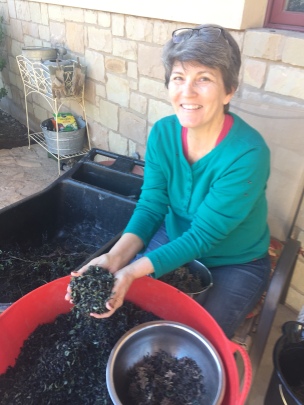
img_1233

Freeze dried Indigo Suffruticosa leaves waiting for experimentation. 

Indigofera Suffruticosa seeds for sale in my Etsy Shop, ColorsOfMy Valley, which is located here.  SOLD OUT FOR 2018! One packet should be plenty to get you started with questions and leaves for you to experiment with!
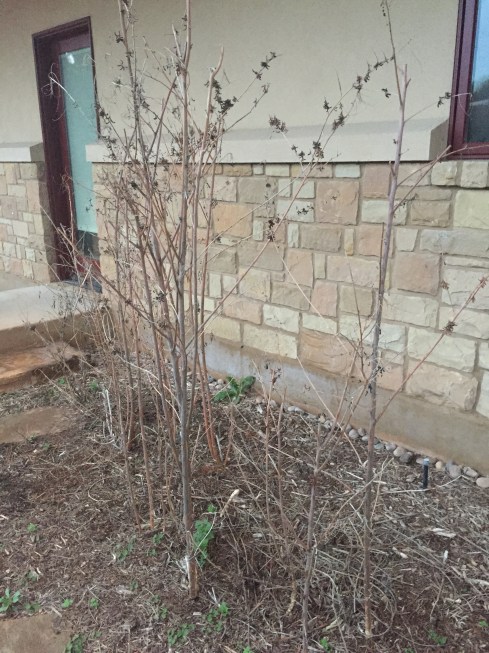
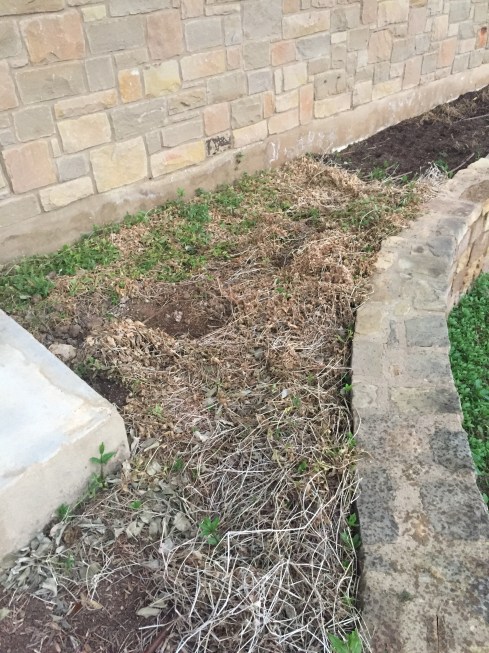
Sharing a Texas Winter Dye Garden

25 Feb

Today I hosted 3 UT Art Graduate students and showed them the winter dye garden. Even though all outside was frozen or dormant there was plenty of color in the studio to show them. It was a fun 3 hours of give and take and seeing the art world thru their eyes.

The indigo suffruticosa is cut back and dormant but the seed pods were beautiful.

The madder root bed was frozen back but we weeded and looked at the roots gleaming with color.

The Japanese Indigo beds lay fallow waiting for their early spring turning of the soil. Some frozen indigo leaves showed their true colors.

Final Harvest

11 Jan

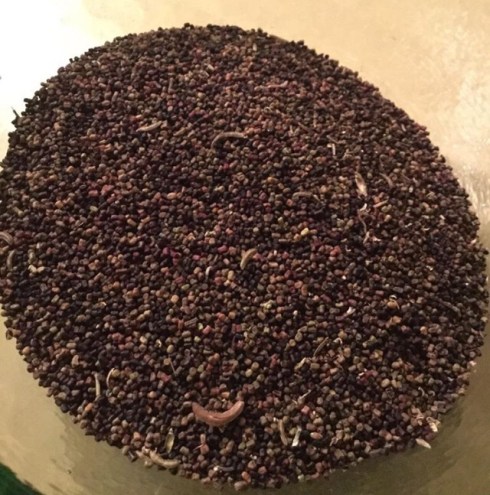
Finally! All indigofera suffruticosa seed polls cracked, hulled & winnowed except for a couple of renegade pods. The winds were useful today. Next up winnowing Japanese Indigo seeds.

Moonlight Harvest

31 Dec

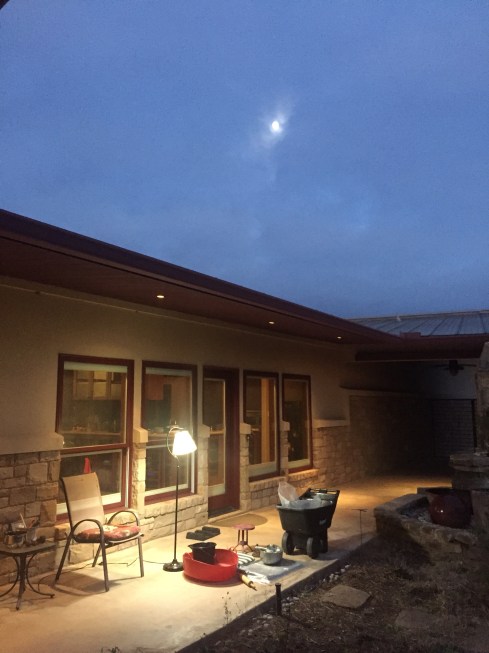
The big freeze comes tomorrow to the Texas Hill Country. I am finishing my indigofera suffrucitosa seed harvest by moonlight.

Those of you familiar with my back surgery recovery should know this is a good thing, requiring bending and limited twisting. Yahoo!

Frozen indigo suffruticosa & test bed sites

9 Dec

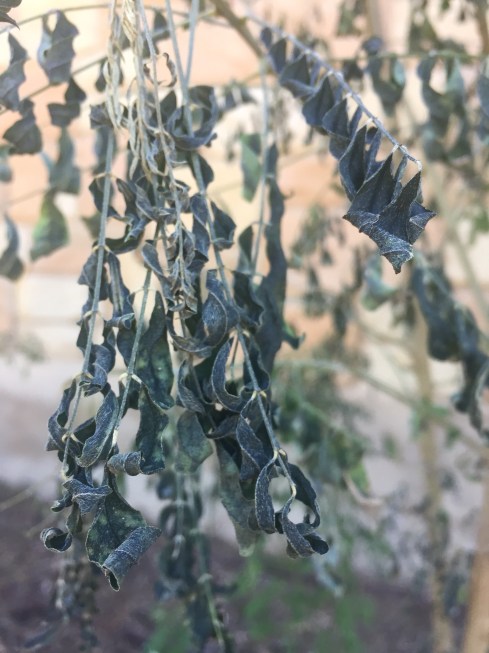
After the great Texas blizzard of 2017 the remaining frozen indigo needs some attention. You can see how much indigo remains in the Indigo Suffrucitosa. I will pick and strip them before the winds take them down for me.

My day will be spent slowly trimming more branches in anticipation of the winter winds.
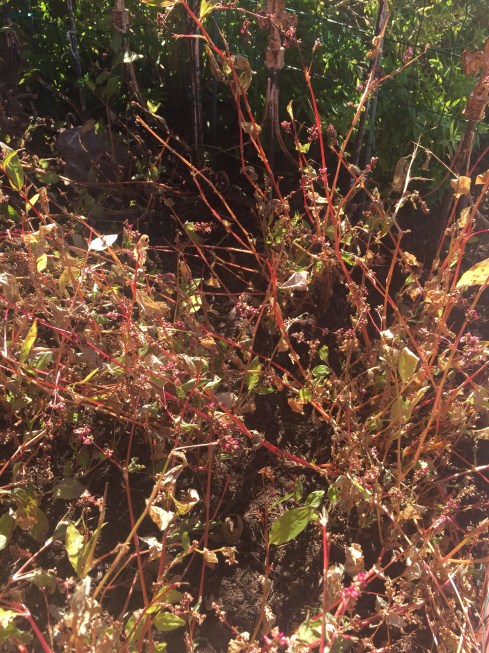
Slow is the operative word as I am still recovering from an October back TLIF surgery. I’ve graduated from my cane, I can start driving in a limited basis and start physical therapy next week to restore my core strength. I had a major victory this morning when I could lace my boots myself. My husband is glad to see me further along the recovery road also. I had a set back earlier this week when I tried to do too much too soon. My body set me straight yesterday. Patience is not one of my virtues. Gardening and the dye pot help some.

Besides harvesting the frozen leaves indigo the seeds have matured and need to be gathered, dried and winnowed.

I am amazed to report that this year’s volunteer crop outside the fence line did not get a nibble this season from the ever insatiable deer herd. Next year I will get more ambitious and purposely plant seed along the irrigation line.

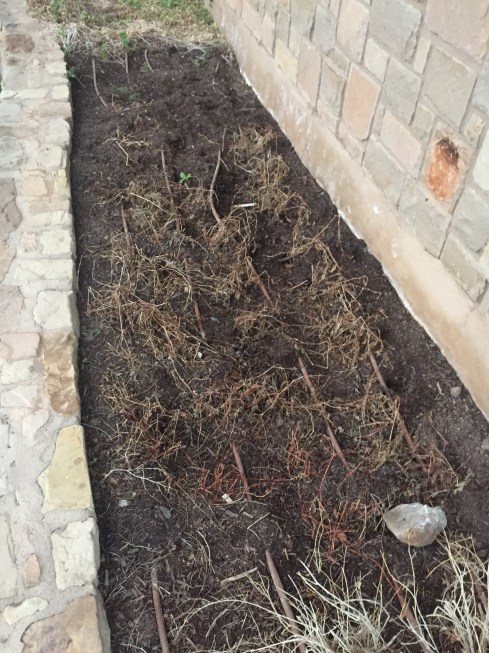
The test bed on the west side did well above my expectations. It was exposed to the hot August and September sun and held up. More will be planted there next year. I think regular irrigation will make that a viable bed for future use.

The Japanese Indigo has gone for the season. The seeds are drying and the bed needs to be cleared.

The critter that cannot be caught waited politely thru the growing season before making an incursion under my Fort Indigo fence. We will continue our quest to capture & relocate the grub digger.

Wishing everyone a Happy Holiday and a New Year as the year draws to an end. If I decide to sell seeds for next spring I will post here. Enjoy your garden dreams for 2018.

End of Season Indigo Chores

25 Oct

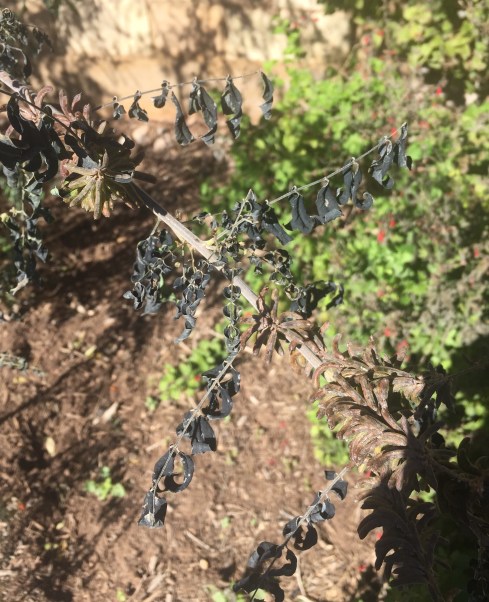
We have frost in our Hill Country weather forecast this weekend. With my recent back surgery I can’t go into physical overdrive but with my husband’s help I can pull in both indigo species seeds for drying and trim some Indigo Suffruticosa leaves to dry.

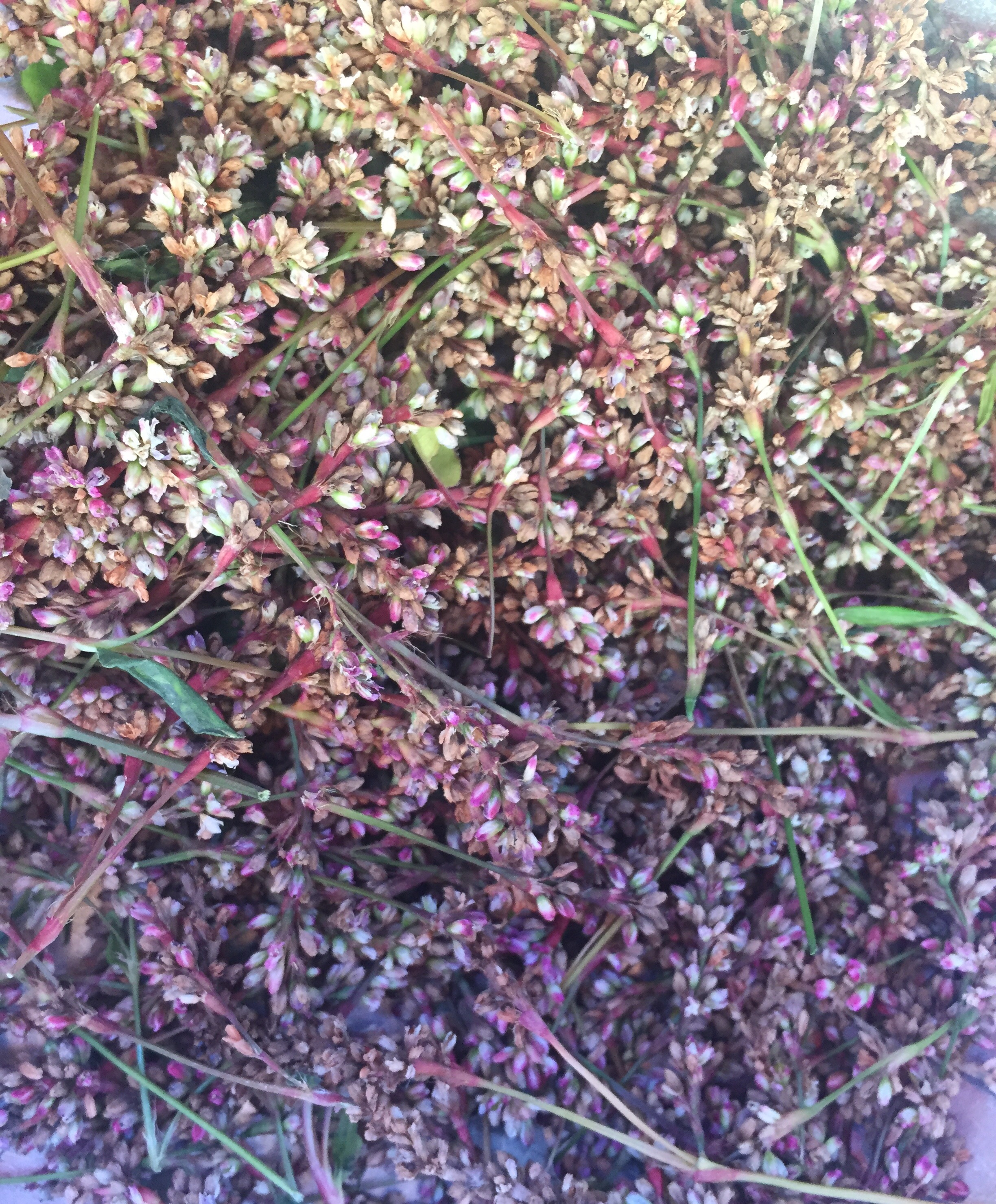
The Japanese Indigo seeds below are set out to dry before separating from blooms. There is another leaf bed to harvest but I am saving those for a John Marshall study group project. Hopefully, the freeze is just a forecast not a reality.

Above are the banana shaped Indigo Suffrucitosa seed pods. See the black seeds peeking at you?

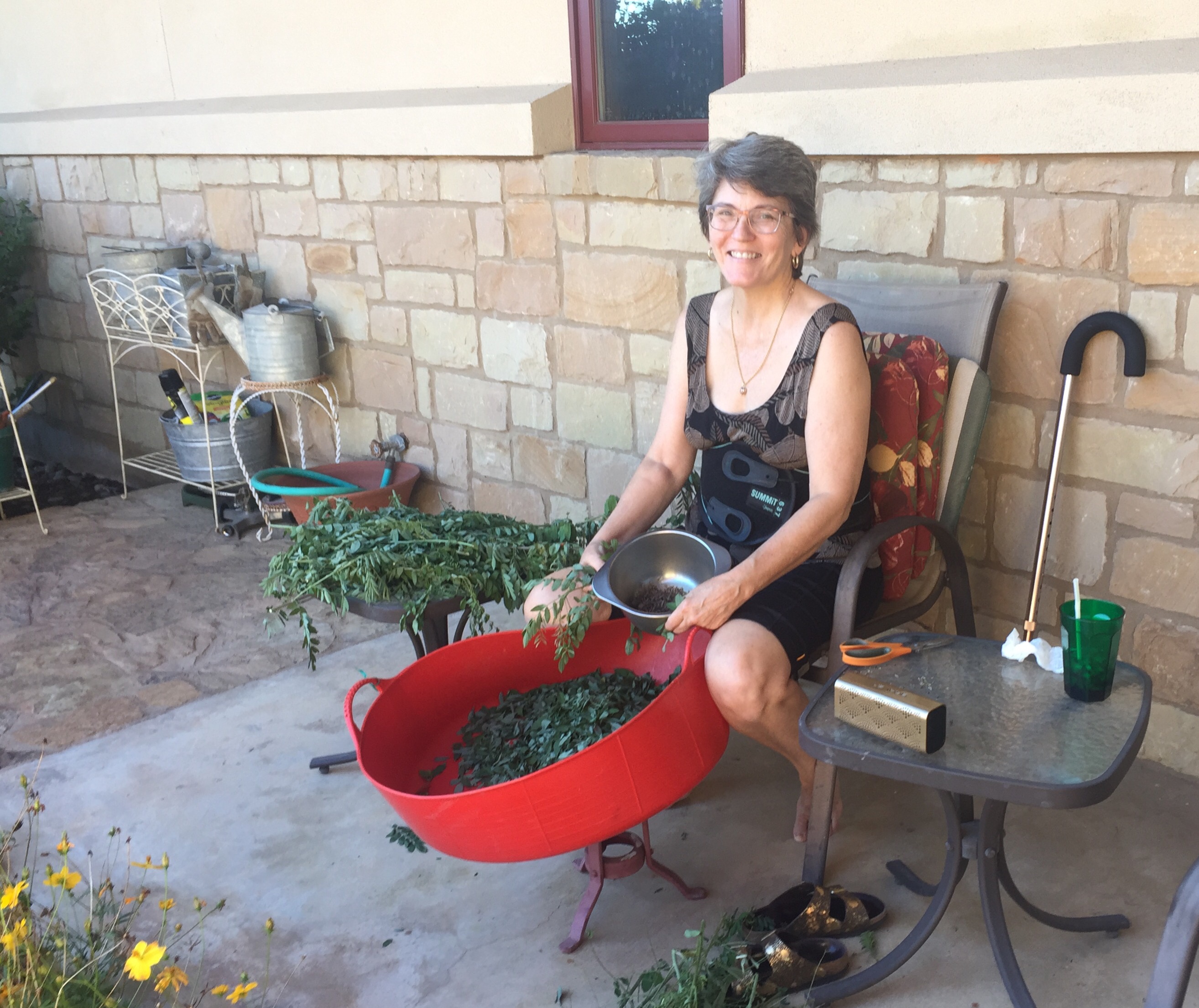
And finally the leaf stripping station. Truly high tech, I strip the leaves off the stems. Easier now rather than later. The fresh leaves will be weighed and after drying I’ll weigh the yield. Like that back brace? It will be my friend for the next 90 days while my bone grafts heal. Oh goodie.

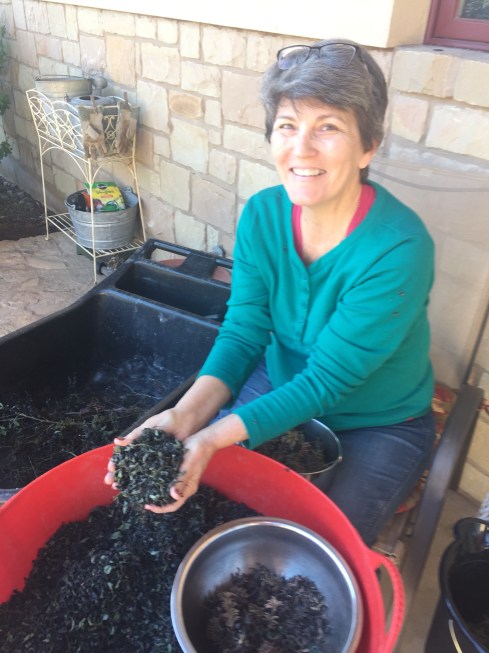
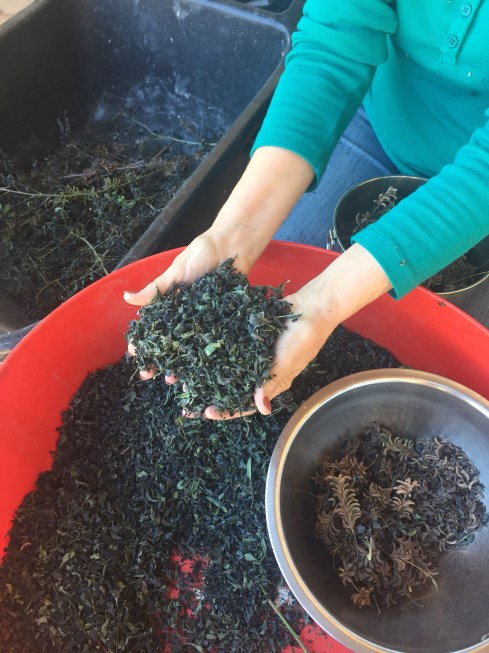
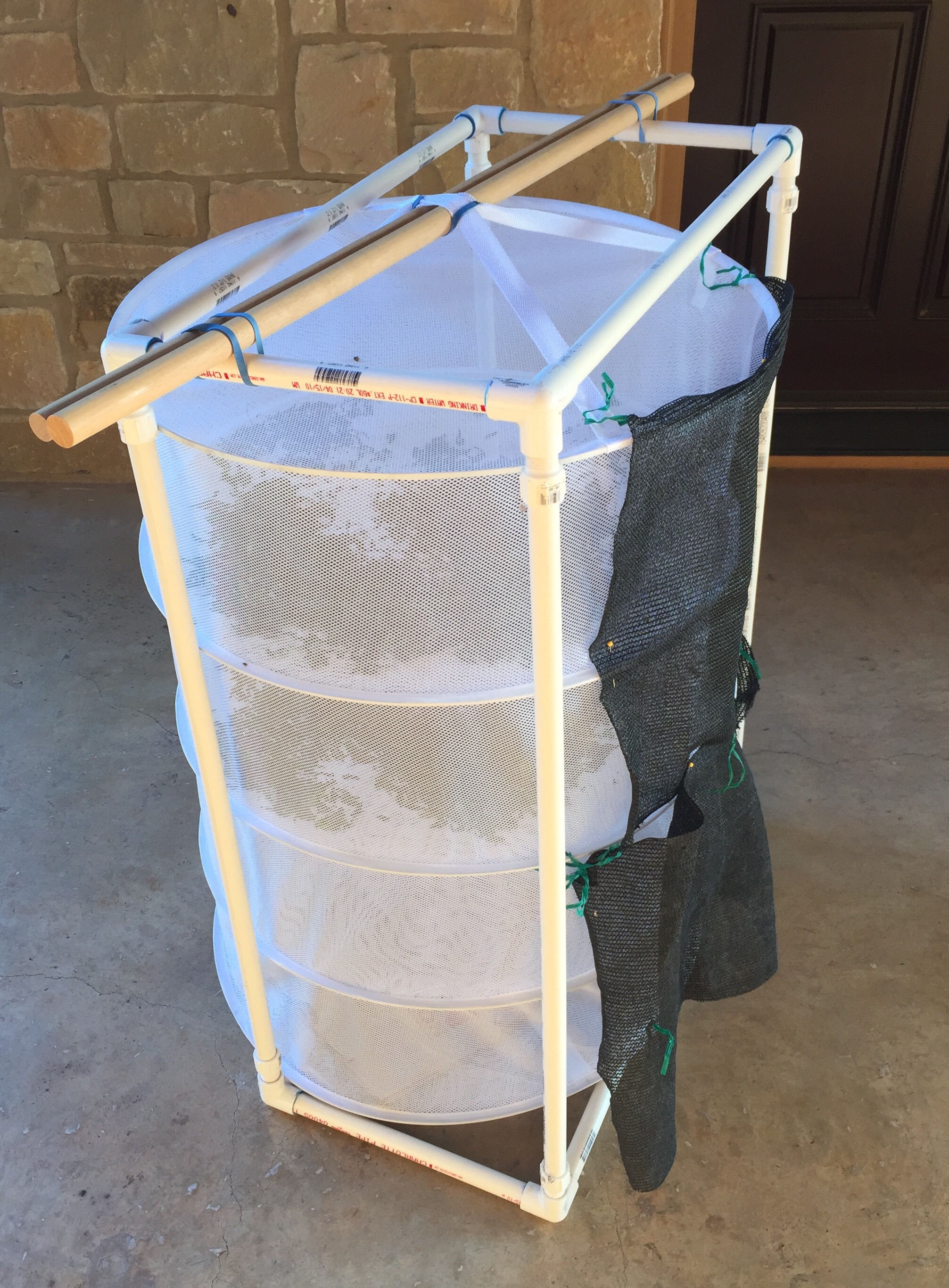
This batch will go into my leaf drying mesh bag and left out for a couple of days. By then the bugs will decamp and I can transfer the batches to rubber tubs for long term drying indoors.

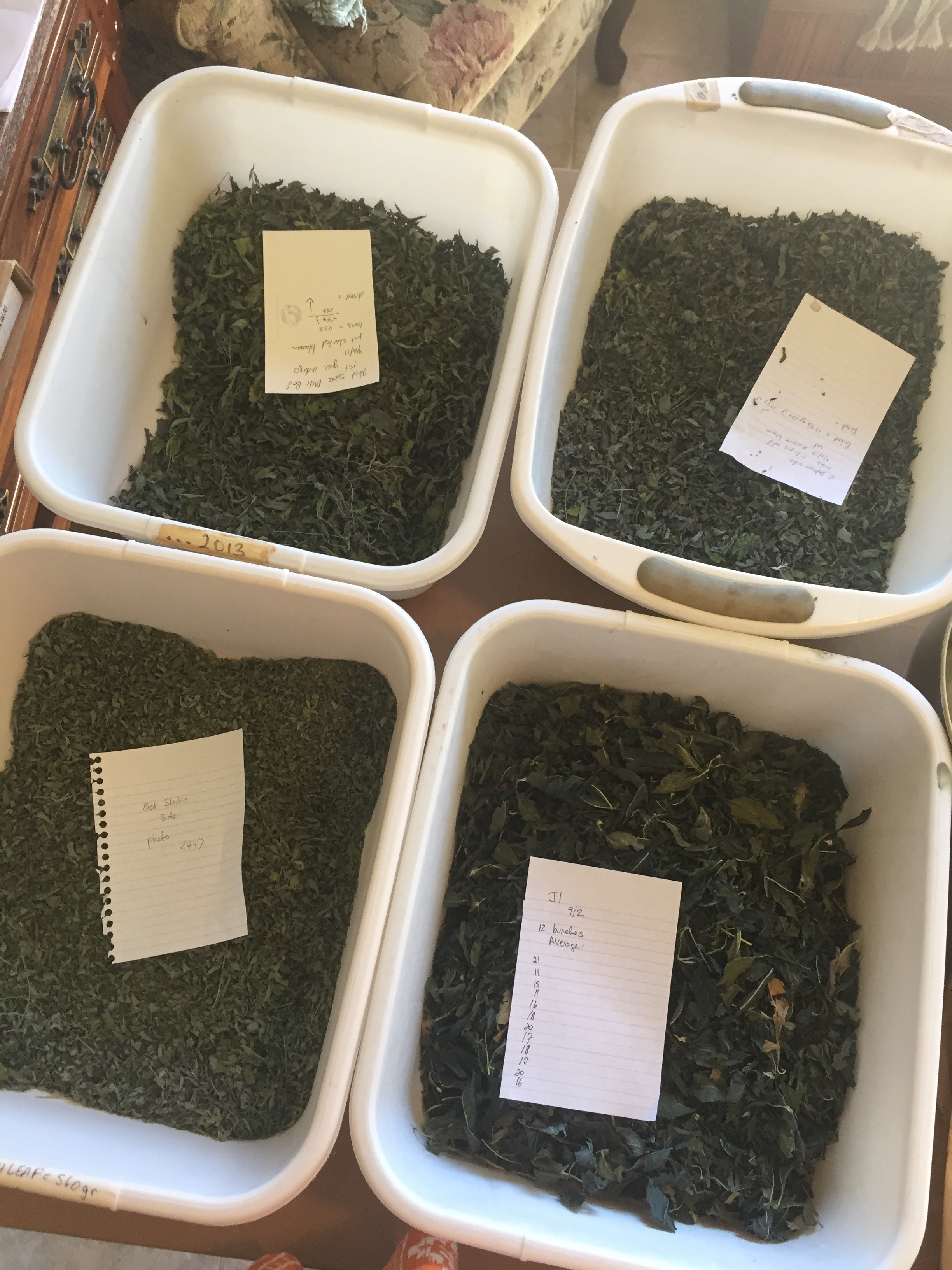
These tubs show dried batches from earlier this year. All are Indigo Suffrucitosa except the lower right hand which is Japanese Indigo.

In the end the process is easy to fit into my lifestream and I can focus on growing the indigos, dry them and run dye pots later. Its all about focus at the proper time. I’ve been collecting quantity stats to see what amount of color I can expect each season. The indigo left on my plants today will probably be my freeze dry stash for the year. We trimmed the plants for the winds so here’s hoping for a dry hard freeze when old man winter does hit.

Here is a photo from last year’s freeze dry experiment. It worked! 100 grams yielded this color on 340 grams of silk. Granted it is not a dark blue but I am testing the process for my Indigo Suffruticosa that works for dried Japanese Indigo. It worked well enough that next time I am cranking up the dry leaf quantity to see how blue I can go with dried indigo, more words on that in another blog entry. And of course, these skeins will go in to get darker.

In the larger scheme of dye life it is about what colors you can grow, the easiest process to use what one harvests and how to get darker colors and fitting it into your daily rhythm. We do it because we can. Enjoy your harvest.

Volunteer Indigo

25 Aug

Out inspecting the indigo status in my gardens. Marveling at the huge volunteer Indigo Suffrucitosa outside my dye patio that has defied the deer. I think I better trim it before Harvey's wind & rains arrive.

Indigo & Indigo

18 Aug

With overcast skies and lower temps (mid-80’s) it was time to tackle the garden and trim down the indigos. I had been down from some surgery and after a month recovery I actually have some energy to tackle the garden and try to catch up. Both the Japanese Indigo and the Indigo Suffruticosa have been playing nicely together in the prime bed.  The Suff can be a bully and shade out the JI. If my alternate indigo bed works out on the west side of the house my prime bed will go back to Japanese Indigo. In the meantime there is trimming to do. Here’s the start…


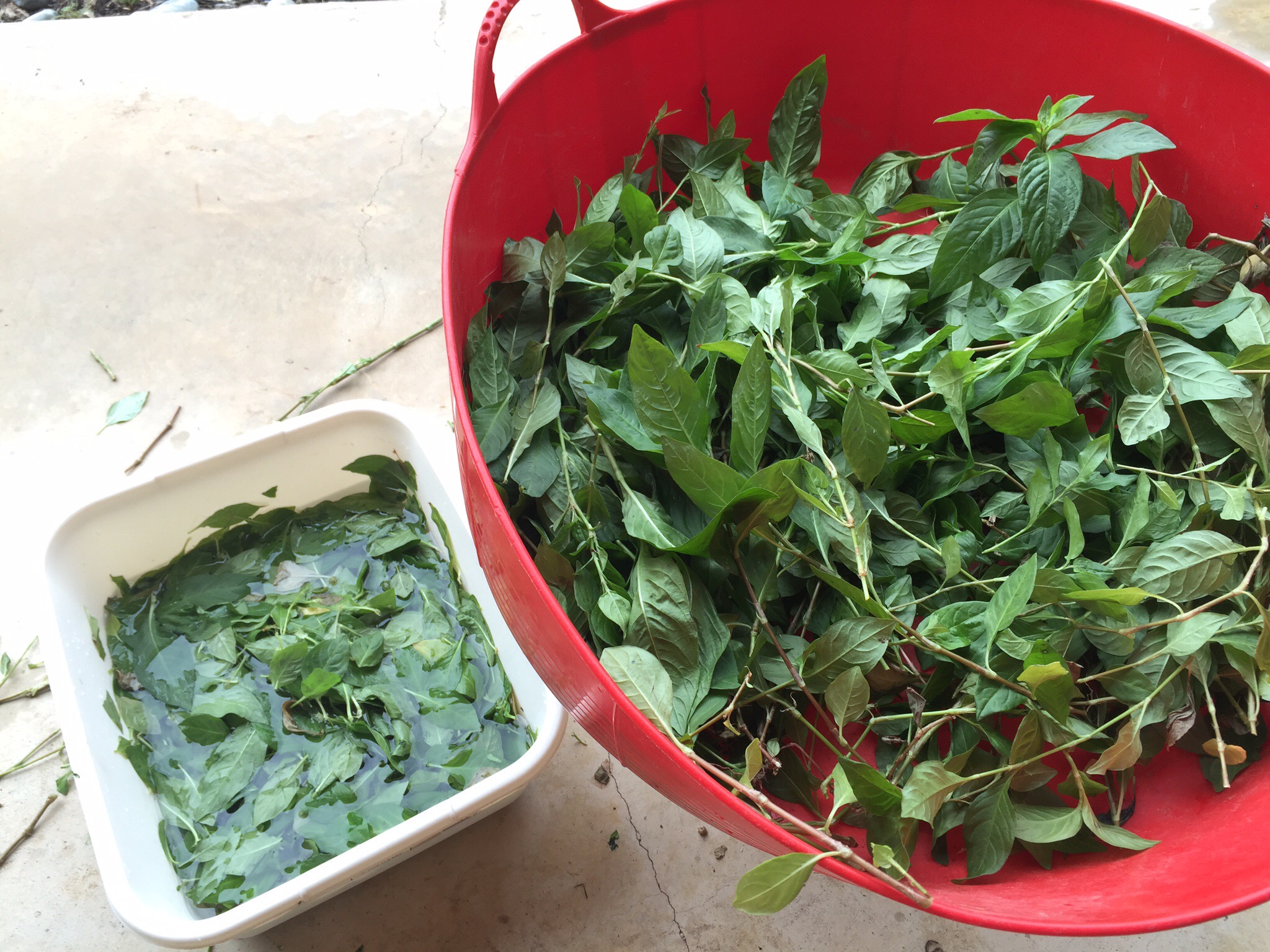
The cage is to keep the raccoons from digging for grubs around my Japanese Indigo.  I ended up with eight bundles of JI to dry.  These leaves will dry over the next week as our temps jump back up and be stored for more dried leaf dye experiments.

I used the shorter cuttings and trimmings to do some blender indigo. I couldn’t bear to let any indigo leaf go to waste!


I keep the JI leaves in iced water until I could get to them.  I then trimmed out my Indigo Suffrucitosa to put another batch into a soak.


That trimming  yielded about 1700 grams of leaves.  They’ve been tucked in a tall pot, given water and sat aside to soak a couple of days to free up the indigo from the leaves….rot it out!

There was another IS batch prepped this week and proved itself an indigo pot.  I added slaked lime and some solar ground madder root I had on hand to help reduce the pot, looking back at yesterday I tested some napkins and the pot proved ready to work.   Here’s yesterday’s results from Indigo Suffrucitosa reduced with rotten madder root with a ph kick of slaked lime.


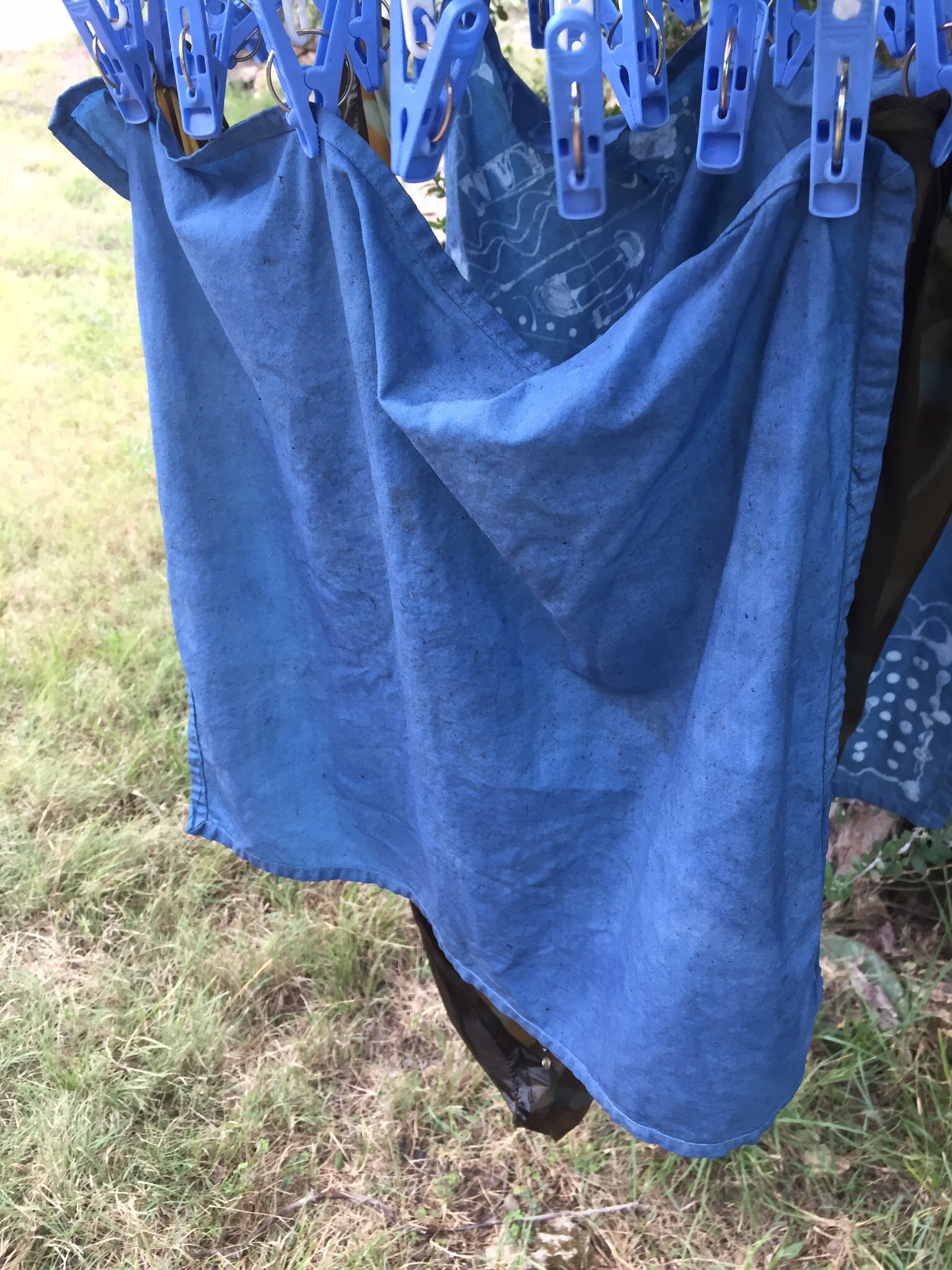
Today I dipped a linen shirt I found in a Santa Fe thrift shop, it came out a great dark blue after two five minute dips and a hour oxidation between the dips.


Turning my attention back to the iced Japanese Indigo I popped it thru the blender and filtered it to keep the mashed leaves out of my dye bath.  I had an indigo shirt which had faded with washing so I wanted to freshen the color.  It will show as green but will shift to indigo blue slowly. It is another white shirt I picked up at a thrift store that needed a new life.


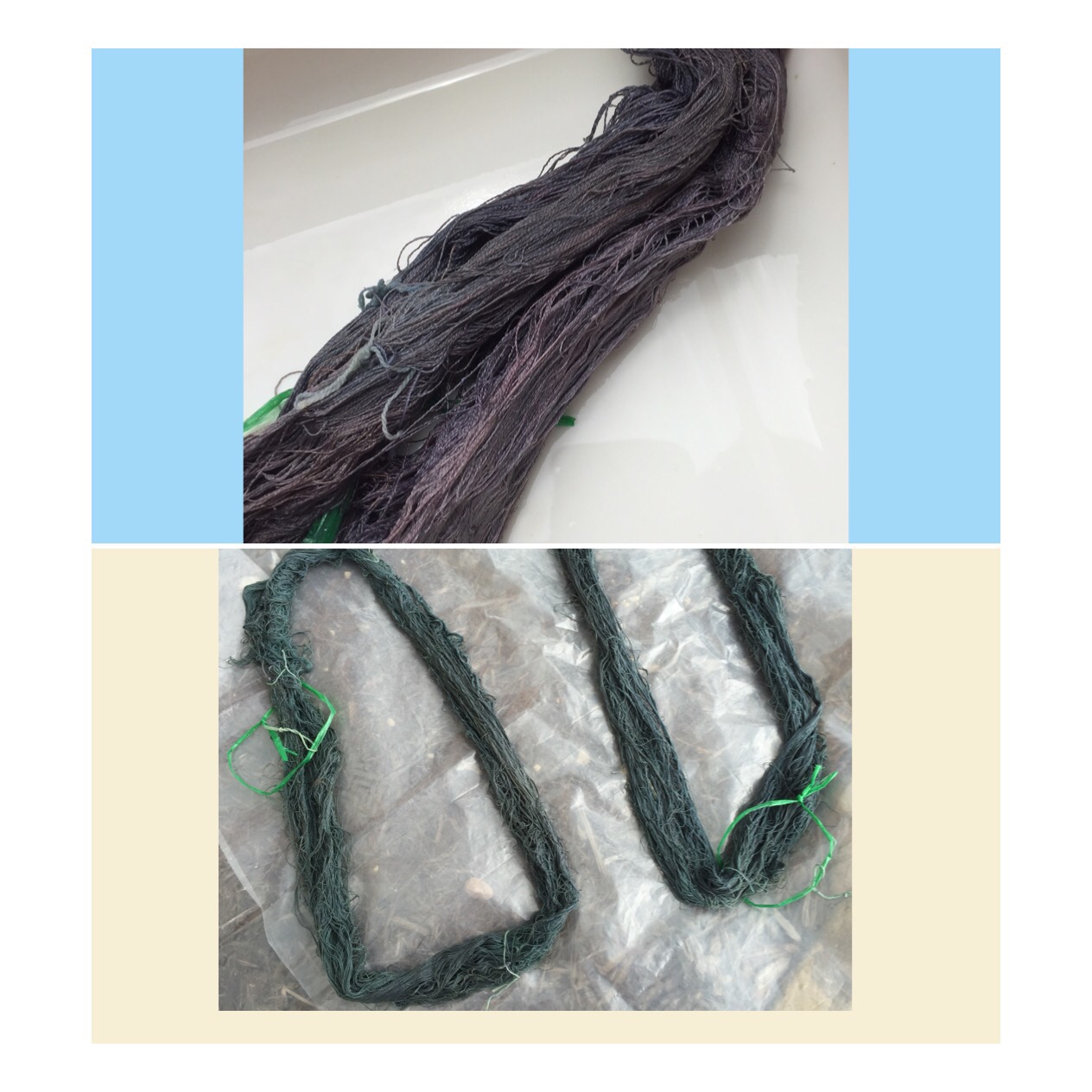
Finally, earlier this year I believe I posted my silk skeins that turned a mystery purple/lavender.  I popped those in the blender indigo to overdue the lavender to shift to the more traditional indigo blue.  Here’s the before & after!


These skeins might go into the IS pot with some other skeins from last year. Layering the blues makes them so rich! Or I might stop with this blue. It depends on how they level out after washing.

So….from my Indigo Suffrucitosa on the left I get the deep blue and on the right I get my Japanese Indigo green. It will slowly shift to the indigo blue we know. All of my materials are oxidizing now to strengthen the indigo bond and I will neutralize all with vinegar bath tomorrow so the slaked lime high ph will not weaken the goods.  A good day clearing the garden and catching up on some dyeing!

August Indigo in the Texas Hill Country

29 Aug

Walking a 3 legged cat gives one plenty of garden inspection time.
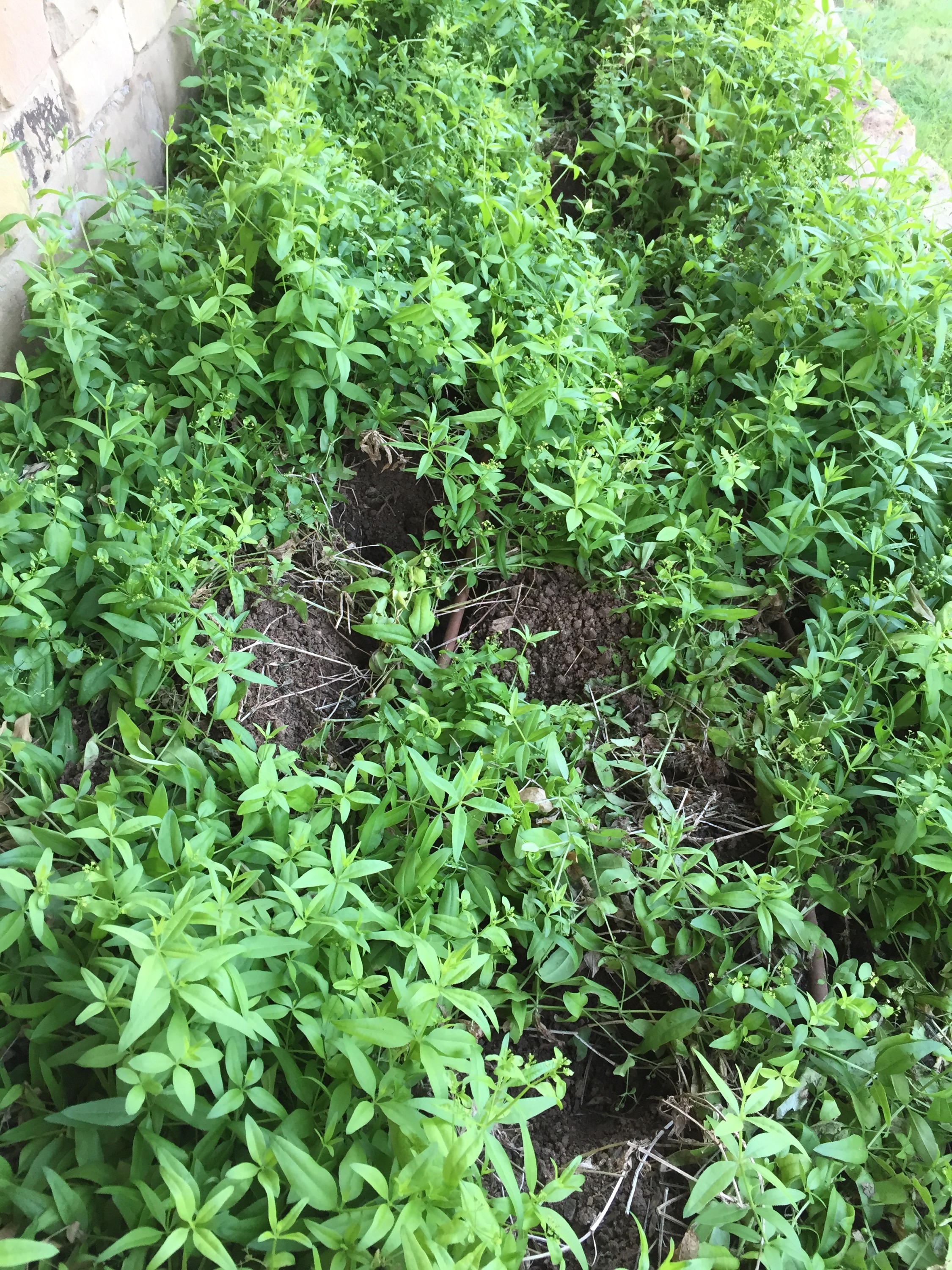
1.  The raccoons have been digging in the madder & japanese indigo beds. Where’s my live trap?! But who can blame them digging up the irrigation lines for water.

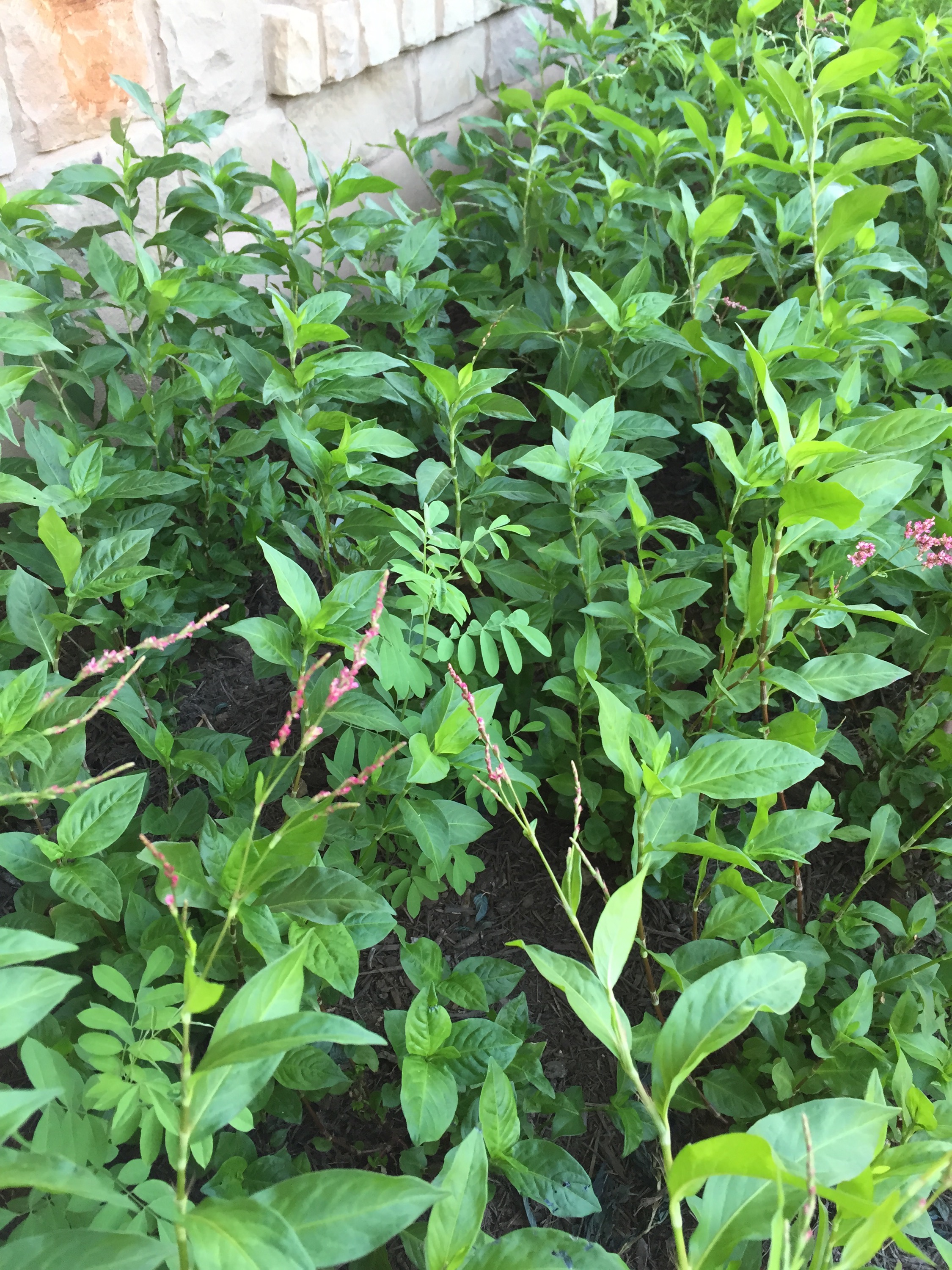
2. The Japanese Indigo is coming into bloom and the Indigo Suffricotosa planted among the JI is coming along. Will be interesting next year to see if they can coexist in the summer heat.

3. The indigo suffruticosais also coming into bloom and seed.  Last year’s plants yield great color and this year’s small plants yielded color also.  I will say these plants got way bigger than expected but my husband has given them a pass because the hummingbirds use them as a frequent garden perch.


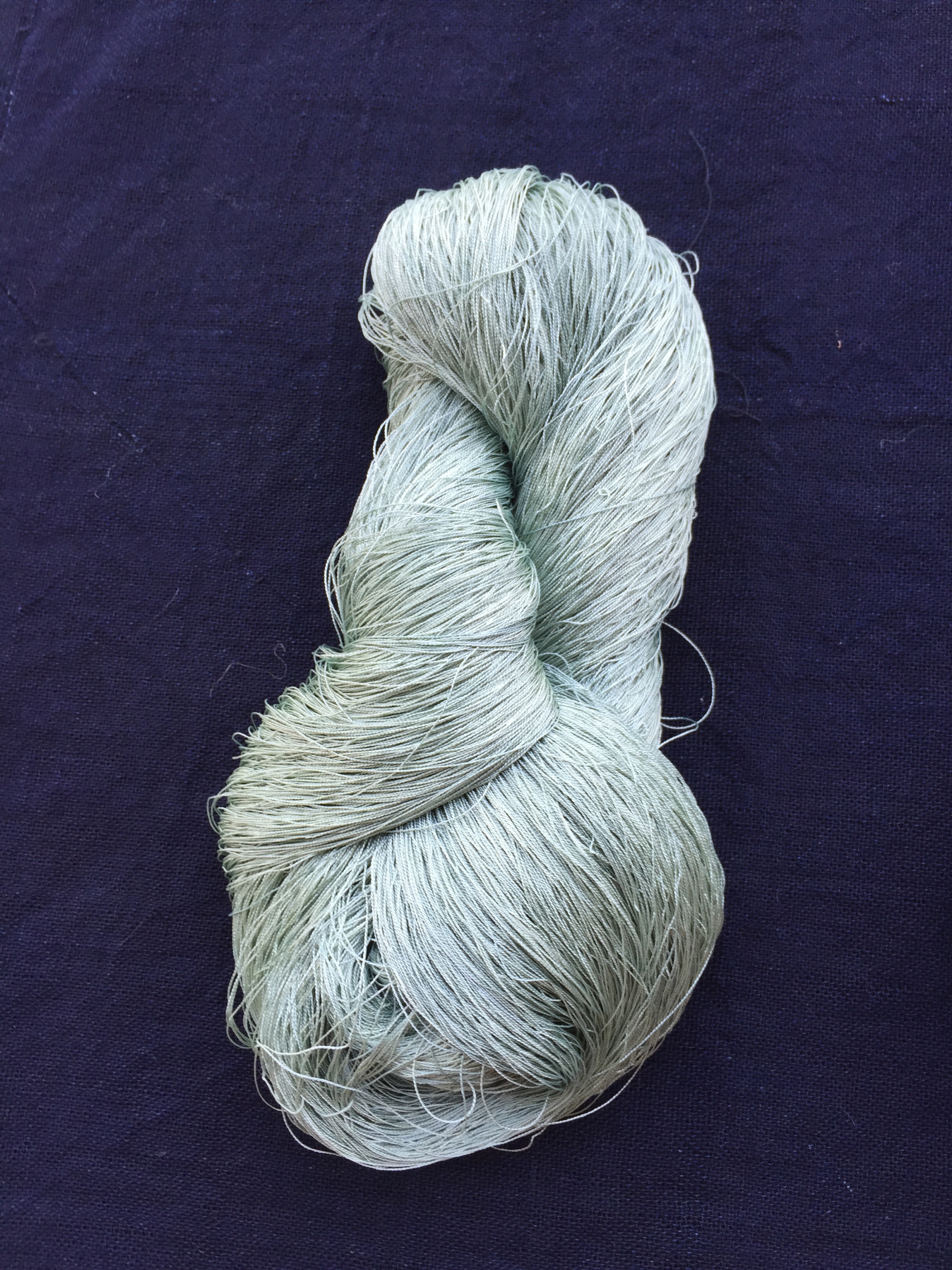
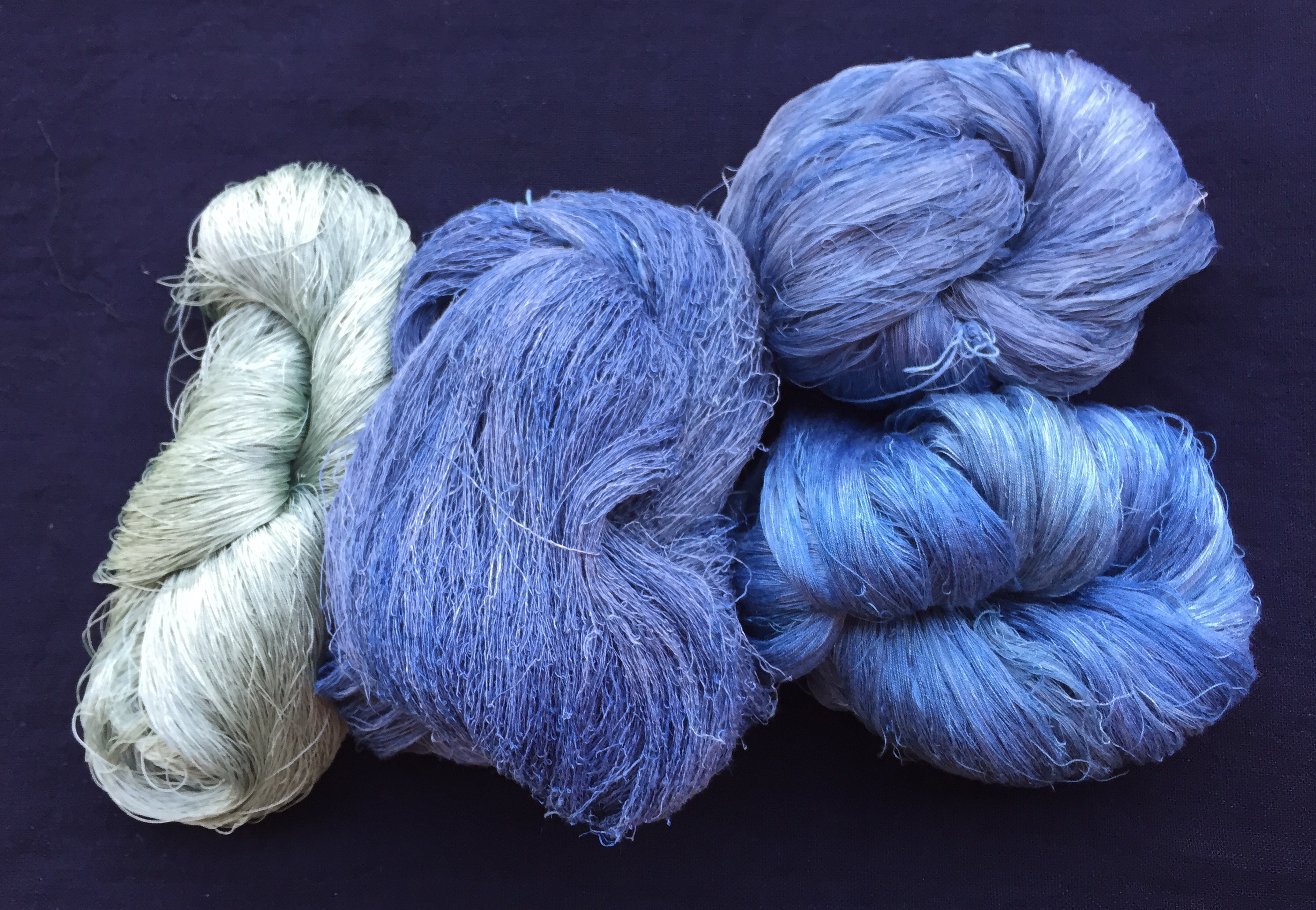
4. Finally the color, I had friends over to do Japanese Indigo blender dye scarves and had plenty dyebath left over. I had a mordanted silk skein on hand and left it in the dye bath. A beautiful mint green resulted, not sure my camera registers the color well. It is deep mint green.

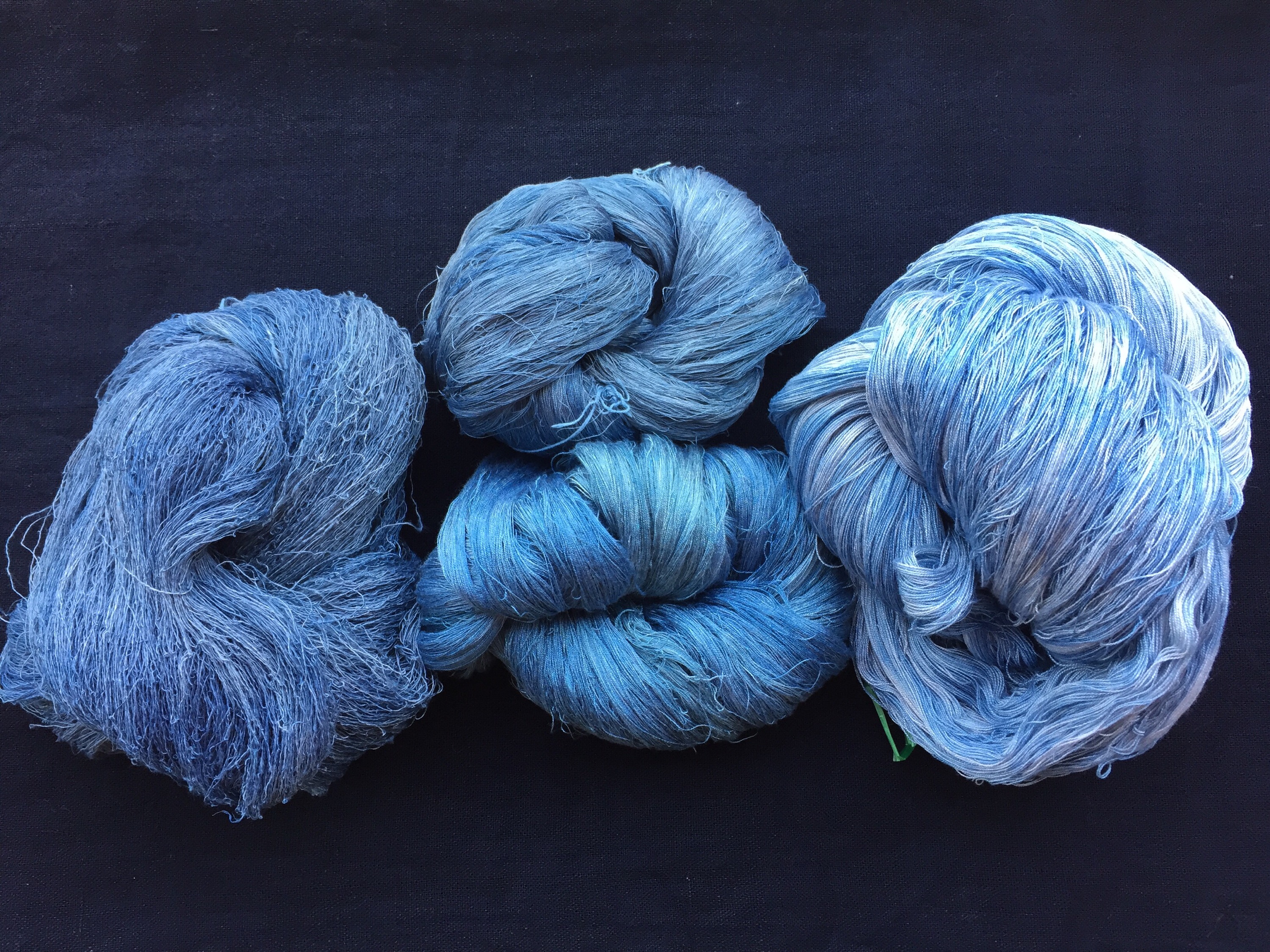
And the indigo suffruticosa yield this color in 2 dips after a thio extraction. The skein on the right was a leftover larger skein which I put in to exhaust the extracted bath. It will go back into the next indigo bath to darken it. I did many other skeins. I’ll update my leaf to substrate ratio for this bath when I am near my notes. One of the things to remember when you are leaf dyeing over the growing seasons is that your skein might revisit baths over the growing sesson in order to build color layers.